Latium vs Albion: Which Starting Province is Right for Your Playstyle in Anno 117: Pax Romana?
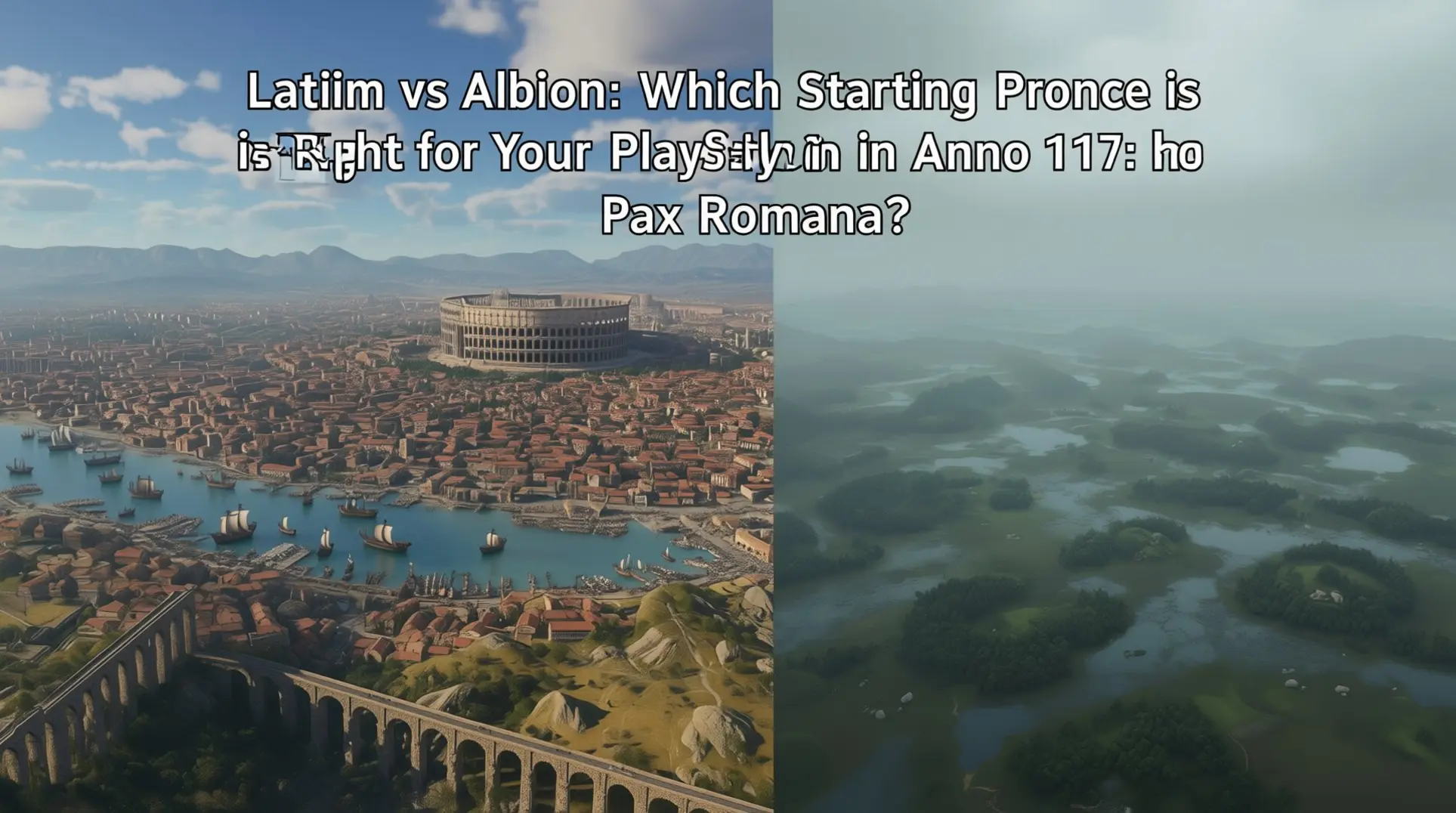
Your first major decision in Anno 117: Pax Romana sets the foundation for your entire empire-building journey. The choice between Latium and Albion isn't just about geography—it's about defining your strategic approach, cultural identity, and long-term vision for Roman expansion. Latium offers the familiar comfort of the Roman heartland, while Albion presents the untamed frontier of Celtic Britain. This comprehensive guide will help you understand how each province shapes your gameplay experience, from early resource management to late-game empire development. ## Understanding the Core Differences Your starting province choice shapes your early-game strategy and resource management. Latium offers a gentler baseline for beginners, while Albion presents a tougher frontier challenge for seasoned players. You are not permanently locked to a single province, as the game loop encourages managing and integrating both Latium and Albion over time. ### The Roman Heartland: Latium Latium serves as the Mediterranean core of the Roman Empire, featuring a sun-drenched landscape with lavender fields. This province is recommended for beginners due to its straightforward, traditional starting experience and fully Romanized civilization from the start. Liberti: These are Latium's population class, whose demands for coastal and Mediterranean goods shape the province's early production chains. Their needs drive a focused economic strategy centered on specific regional resources. Latium's dedicated production chains (tiers 1-4) center on sardines and garum: coastal Mediterranean goods demanded by Liberti from the outset. This creates a clear, predictable path for resource management and city development. * Ideal for learning core mechanics without cultural complexity * Emphasizes optimal housing placement and production-building layout * Provides a gentler baseline for early-game strategy ### The Celtic Frontier: Albion Albion represents a Celtic frontier with a misty, marshy terrain that presents a tougher challenge for experienced players. The geography of this untamed British Isles landscape requires different planning compared with Latium's Mediterranean core. Waders: Albion's starting population class whose demands revolve around eels and cockles: local resources that drive early production needs. Their production chains rely on foraging and basic agriculture, tied to the province's unique environmental conditions. At tier 3, Waders can be promoted to Smiths: the Celtic path, or Mercators: the Roman path. Players can switch between these paths later, enabling a blended long-term approach that affects production chains, military options, and diplomatic relationships. * Celtic path unlocks unique Celtic production chains and tribal alliances * Romanized path aligns with Latium's supply chains and strengthens legions, though potentially causing unrest Cultural alignment: This mechanic affects the Discovery Tree, religious buildings, and narrative outcomes in Albion. It adds strategic depth through diplomacy and influences your province's development direction. ## Strategic Implications for Your Empire ### Economic Considerations Latium offers stable trade routes with higher pirate pressure compared to Albion's frontier environment. Albion provides unique strategic materials like Tin and Wool that become valuable exports to Latium. Liberti: The population in Latium that demands Mediterranean goods such as sardines and garum, shaping early production priorities. Waders: Albion's population that requires local resources like eels and cockles, creating different early-game production needs. Latium's geography features flat, usable land that simplifies building efficient city layouts and understanding resource flow. This terrain advantage makes it easier to establish production chains and optimize trade logistics compared to Albion's more challenging frontier conditions. The cultural alignment in Albion creates distinct economic paths. Romanized Albion aligns with Latium's supply chains to improve cross-province trade efficiency. Celtic Albion develops unique Celtic production chains and specialized goods that create alternative trade opportunities. ### Military and Diplomatic Factors Albion's cultural alignment fundamentally affects military composition and diplomatic options. Choosing Celtic traditions unlocks tribal alliances, while the Roman path strengthens legions and imperial control at the risk of potential unrest. * Celtic Path: Favors tribal alliances for frontier defense * Roman Path: Strengthens legions and imperial control with potential loyalty challenges Latium emphasizes a Romanized starting point with simplified cultural dynamics. This allows players to focus on economics and logistics rather than complex diplomacy, providing faster access to Roman technologies and markets. Albion introduces a Romanization mechanic where your decisions directly affect local loyalty and productivity. This dynamic management layer is absent in Latium but adds depth to frontier governance. The long-term implications of choosing Albion include potential cross-province ripple effects and opportunities to build a culturally synthesized empire. While Latium offers a solid foundation for traditional expansion, Albion's frontier position emphasizes adaptive diplomacy and bespoke resource chains that can reshape your imperial strategy. ## Which Province Should You Choose? Your starting province choice between Latium and Albion is a pivotal decision. It shapes your early-game strategy, resource management, and overall play experience. ### Decision Matrix for Player Types The best province for you depends on your experience level and preferred playstyle. Use this matrix to guide your decision. | Player Type | Recommended Province | Why It's the Best Fit | |-------------|----------------------|----------------------| | Beginner/New to Anno | Latium | Learn core mechanics without cultural complexity | | Anno Veteran | Albion | Fresh challenge with cultural balance mechanics | | Role-Player/Story Focus | Albion | More narrative depth with cultural choices | | Min-Max Optimizer | Latium | More predictable development path | Latium: The Roman heartland province with forgiving terrain that emphasizes economics and logistics. This setting helps you learn production chains and citizen management. Albion: The Celtic frontier province featuring marshy, challenging terrain. This environment requires adaptive planning and local policy decisions. Key considerations for your choice: * You're not permanently locked in - you can eventually expand and blend strategies across both provinces * Terrain difficulty varies significantly - Latium's forgiving landscape helps beginners learn, while Albion's marshes challenge veterans * Onboarding differs by province - Latium offers extensive campaign-based teaching, while Albion provides a deeper, immediate challenge ## Advanced Tips for Each Province ### Latium Optimization Strategies Latium's flat, Mediterranean terrain supports efficient, scalable city layouts. This geographical advantage allows for streamlined resource flows and optimal settlement designs. Integrated Chain Management: Treat the production network as an interconnected system by placing related production near each other. Share warehouse capacity to reduce cart travel and boost overall throughput. Perfect Production Ratios: Rely on precise input-output balances, such as 2 Wheat Farms feeding 1 Bakery to produce Bread. This avoids idle time and bottlenecks across your economy. * Place related production buildings near each other to minimize travel distances. * Upgrade paths to roads and maintain direct routes from raw-material suppliers to processors and warehouses. * Anticipate population growth and pre-scale lower-tier goods to prevent happiness dips or production bottlenecks during upgrades. * Extend optimization beyond single chains by integrating multiple production lines and optimizing cross-chain logistics and warehouse capacity. * Utilize trade strategically by selectively importing higher-tier goods from Albion when it improves overall Latium efficiency, freeing local labor for more profitable chains. ### Albion Cultural Management Albion introduces a Romanization Mechanic where your decisions directly affect loyalty and productivity. This dynamic management layer is absent in Latium and requires careful cultural balancing. Cultural Alignment: Your choices influence the Discovery Tree and religious buildings, unlocking distinct technologies and narrative outcomes. The path you choose shapes your entire provincial development. At tier 3, Waders can be promoted to Smiths following the Celtic path or Mercators following the Roman path. You can switch later to blend strategies across regions. * A Celtic Albion develops unique Celtic production chains and buildings, while a Romanized Albion aligns with Latium's supply chains to aid cross-province integration. * The Celtic path opens access to tribal alliances, while the Roman path strengthens legions and imperial control, though this may cause potential unrest. * You are not permanently locked to a single province or path, allowing you to promote Waders to Smiths or Mercators later to blend strategies. * Long-term implications include potential cross-province ripple effects and opportunities to build a culturally synthesized empire. * Albion's challenging terrain and frontier status demand adaptive diplomacy and local policy management throughout your campaign. ## Long-Term Gameplay Considerations Your starting province choice shapes early-game priorities but doesn't permanently restrict your empire's trajectory. Players can eventually expand into both Latium and Albion, creating opportunities to blend strategies and build a culturally synthesized empire with cross-province ripple effects. The cultural alignment you establish in Albion significantly impacts your Discovery Tree and religious buildings. This unlocks distinct technologies and narrative outcomes that persist into the late game, creating empire-wide consequences for your initial choices. Romanization: This is Albion's dynamic mechanic where your cultural decisions continuously affect loyalty and productivity throughout the entire game. Strategically, each province offers different advantages. Latium typically provides faster access to Roman technologies and markets, while Albion emphasizes frontier expansion with bespoke resource chains that scale differently. Military and diplomatic options diverge based on your cultural path. Celtic traditions grant access to tribal alliances, while the Roman path strengthens legions and imperial control. These choices directly affect your late-game military composition. Production specialization also differs dramatically. Albion provides unique materials like Tin and Wool that become strategic exports to Latium, supporting cross-province trade throughout your campaign. * A Celtic Albion develops distinct Celtic production chains and buildings * A Romanized Albion aligns its supply chains with Latium to facilitate late-game integration Population Tiers: At tier 3, Waders can be promoted to Smiths on the Celtic path or Mercators on the Roman path. Importantly, you can switch paths later, allowing flexible late-game development and strategy blending. This flexibility means your initial choice serves as a foundation rather than a permanent limitation, enabling you to craft a unique empire that evolves across both provinces. Your early decisions create cross-province ripple effects that shape your empire's development while still allowing for strategic adaptation. Ultimately, your starting province choice in Anno 117: Pax Romana reflects your preferred playstyle and experience level. Latium provides the perfect training ground for newcomers, offering a gentle introduction to core mechanics with its stable Roman infrastructure and forgiving terrain. Meanwhile, Albion challenges experienced players with its complex cultural dynamics and frontier management requirements. The beauty of the game's design lies in its flexibility—you're never permanently locked into your initial choice, and both provinces eventually become accessible for strategic integration. Whether you prefer the structured predictability of Latium or the dynamic challenges of Albion, your decision will shape a unique narrative that evolves throughout your empire-building journey. Experiment with both approaches to fully appreciate the depth and richness of this historical strategy experience.
More Anno-117-Pax-Romana Guides
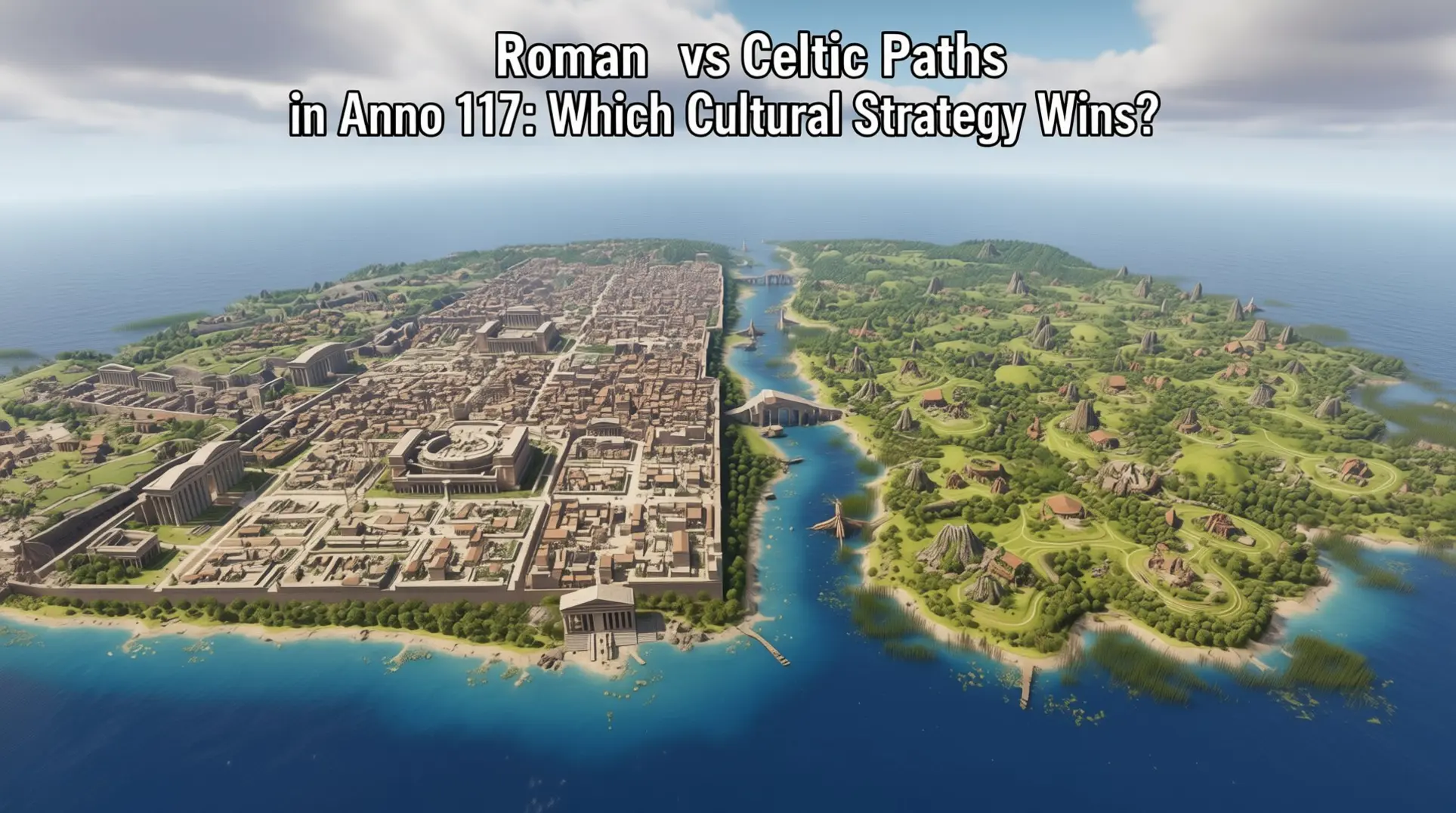
Roman vs Celtic Paths in Anno 117: Cultural Strategy Guide
Compare Roman and Celtic cultural strategies in Anno 117: Pax Romana. Learn economic, military, and diplomatic differences plus hybrid approaches for optimal gameplay.
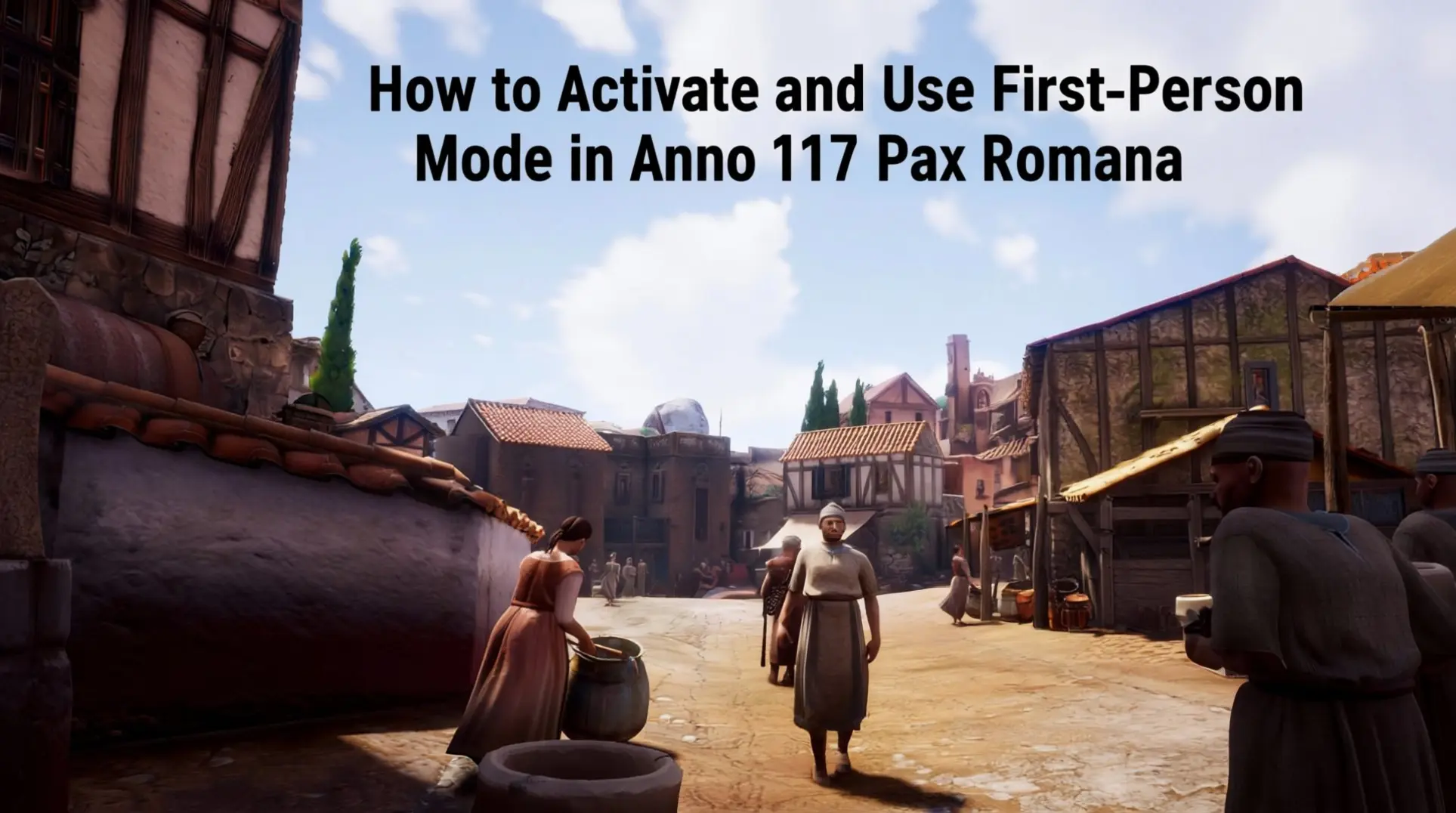
Anno 117 First Person Mode: Unverified Guide
Guide to unverified first-person mode in Anno 117: Pax Romana. Details are limited due to recent release.
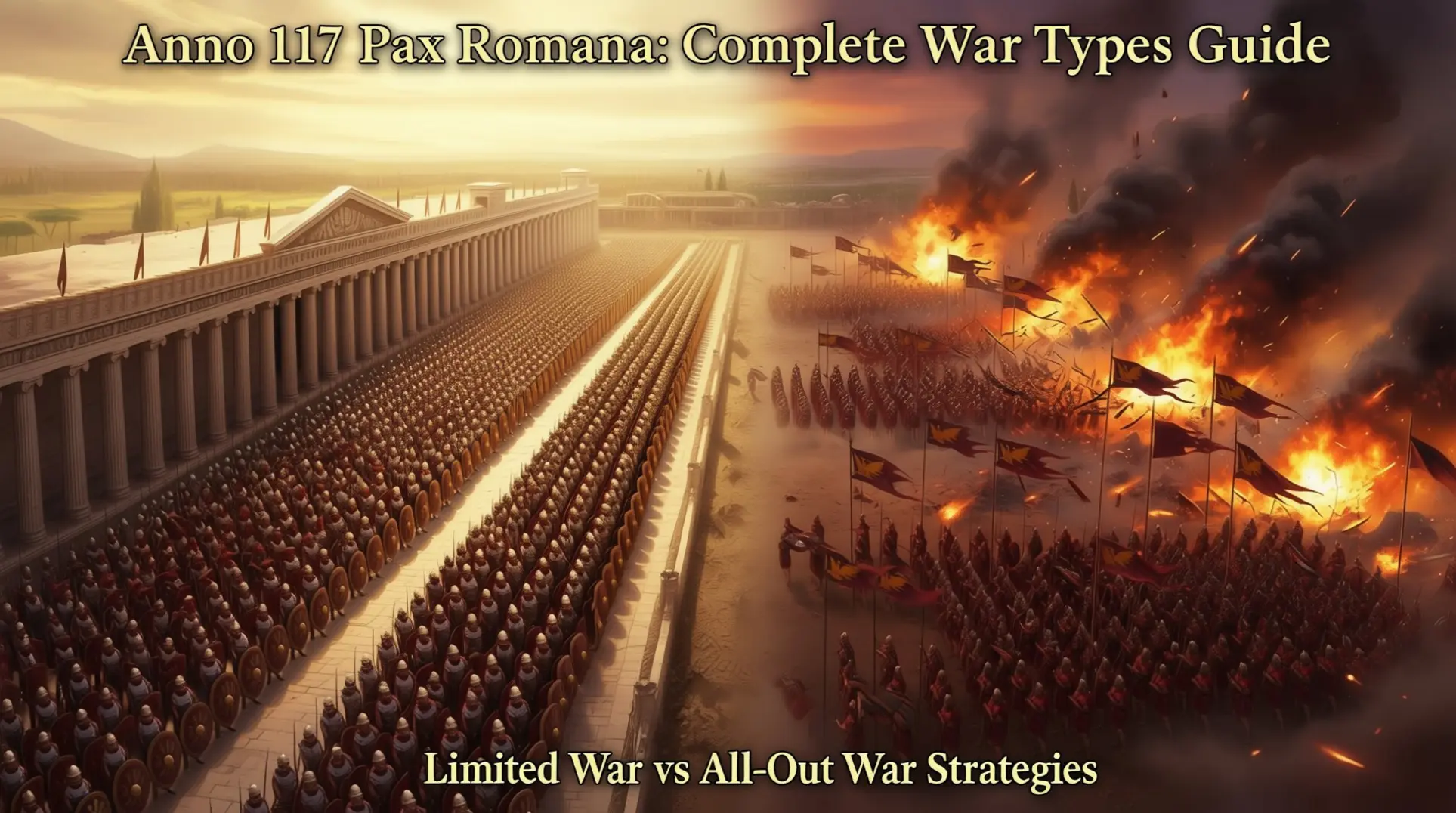
Anno 117 Pax Romana: Complete War Types Guide - Limited War vs All-Out War Strategies
Master war dynamics in Anno 117 Pax Romana with a complete guide to Limited War vs All-Out War, blending diplomacy, economy, and strategic maneuvering.
AI Tactical Companion
Consult with our specialized tactical engine for Anno-117-Pax-Romana to master the meta instantly.