BG3 Honor Mode Multiclass Builds: Ultimate Guide
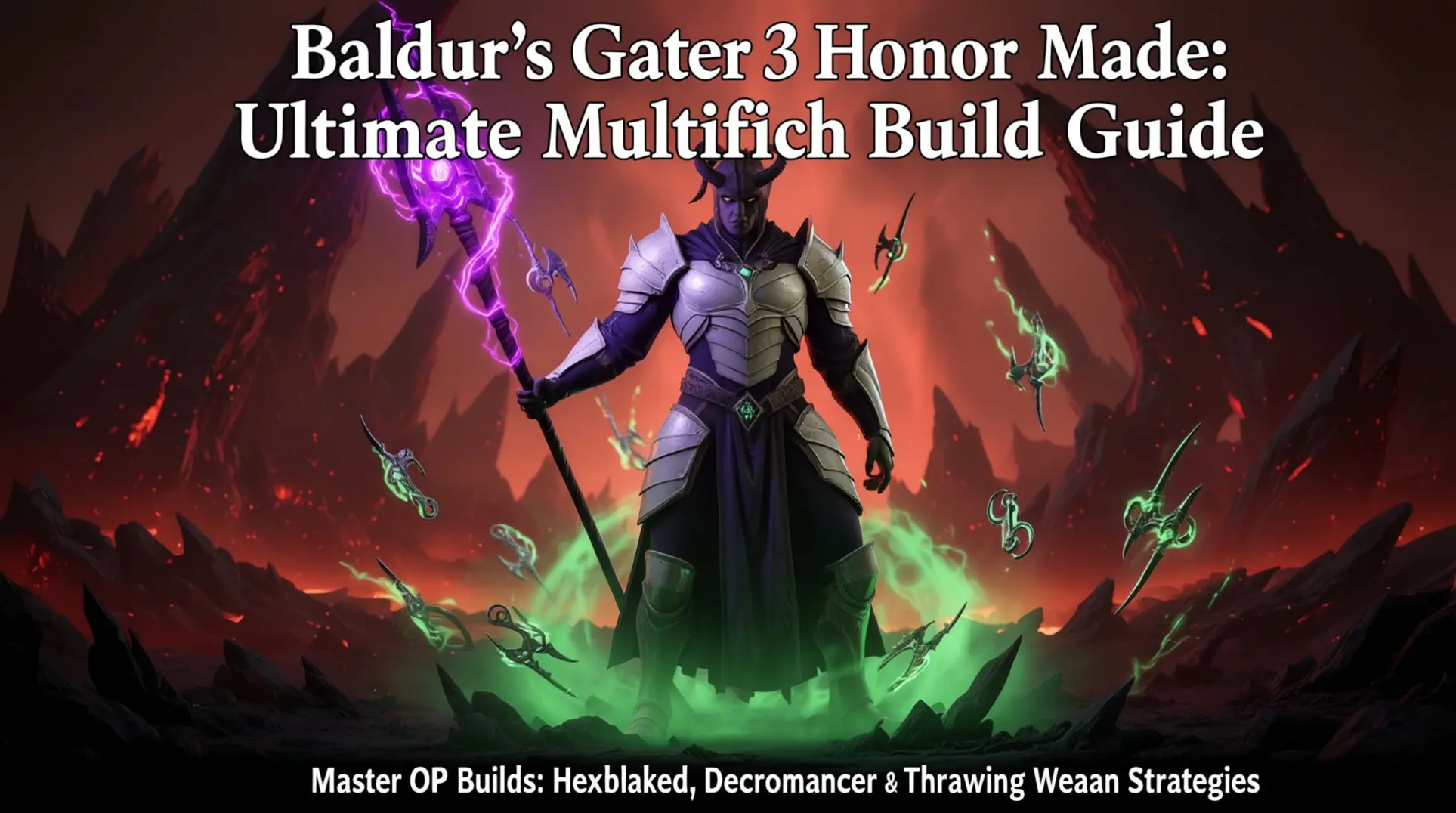
Baldur's Gate 3 Honor Mode: Ultimate Multiclass Build Guide for OP Builds
Quick Reference: 8/2 Eldritch Knight/Warlock Build Summary
🎯 Core Build Stats: 8 Eldritch Knight/4 Warlock | 90-100 damage/turn | Resource-independent | Tavern Brawler feat essential
This build delivers consistent, reliable damage without resource consumption—perfect for Honor Mode's restrictive mechanics. Primary rotation: Eldritch Blast (action) + throwing weapon attacks (bonus action).
Understanding Honor Mode Multiclass Fundamentals
Core Build Components
The Core Build Strategy
The most effective Honor Mode multiclass build combines 8 Eldritch Knight/4 Warlock specifically designed for limited-rest runs, achieving approximately 90-100 reliable damage per turn at level 10+ without expending resources. This makes it ideal for Honor Mode's restrictive mechanics where resource management is critical.
Combat Rotation and Stats
The core combat rotation relies on Eldritch Blast as your primary action, followed by throwing weapon attacks as a bonus action via the War Magic feature. This combination provides consistent damage without resource consumption, which is essential for surviving Honor Mode's challenges.
Stat Priority:
• Charisma (primary for Eldritch Blast and Warlock features) • Strength (for throwing damage and Tavern Brawler feat) • Constitution (secondary for survivability) • Dexterity (secondary for AC and initiative)
Combat Flow:
Your primary action is dedicated to Eldritch Blast, which provides reliable damage output. The bonus action utilizes throwing weapon attacks through the War Magic feature, creating a resource-independent damage rotation. This approach ensures consistent performance without requiring frequent long rests, making it perfect for Honor Mode's restrictive nature.
Performance Metrics:
At level 10+, this build achieves 90-100 damage per turn consistently. The damage output remains stable throughout encounters because it doesn't rely on limited spell slots or other consumable resources.
The Importance of Tavern Brawler
Tavern Brawler is essential for this build, providing multiple critical benefits:
• Attribute Bonus: +1 Strength or Constitution • Proficiency Enhancement: Double proficiency bonus to attack and damage rolls with thrown weapons • Unarmed Damage: Enhanced unarmed strike damage capabilities
Why This Build Excels in Honor Mode:
• Resource-independent damage output - No spell slots required for core rotation • Consistent performance without frequent long rests - Works reliably throughout extended gameplay • Damage mechanics that remain effective in restrictive mode - Not affected by Honor Mode limitations • Reliable damage output for challenging encounters - Consistent performance when you need it most
Strategic Advantage:
The damage rider mechanics are harder to abuse compared to standard difficulty, making this resource-independent approach particularly valuable for Honor Mode's challenging environment.
Adapting the Hexblade Concept
Interestingly, while this build is often called a "Hexblade" build, Baldur's Gate 3 doesn't officially include the Hexblade subclass.
Players must adapt standard Warlock features through strategic optimization. This involves careful multiclass planning and strategic item selection to achieve the desired Hexblade-like functionality.
The Adaptation Process:
The adaptation process requires Charisma-focused attribute distribution to maximize the effectiveness of both Eldritch Knight and Warlock features. This approach combines martial throwing prowess with Warlock spellcasting efficiency while remaining resource-independent.
Strategic Implementation:
This approach represents one of the most reliable damage-dealing options for Honor Mode, combining martial throwing prowess with Warlock spellcasting efficiency while remaining resource-independent.
Necromancer Multiclass Integration
Optimal Class Split
The most effective necromancer multiclass for Honor Mode follows a 9 Necromancer Wizard/3 Warlock split, delivering exceptional summoning power and defensive capabilities.
Core Synergies
The core strength comes from the Necromancer's Undead Thralls feature at wizard level 6:
• Additional corpse summon when using Animate Dead • Enhanced hit points for all undead minions • Improved damage for all undead minions
Warlock Synergy
The Darkness Spell + Devil's Sight Invocation combination creates protective zones for strategic positioning.
Attributes and Build Focus
For Honor Mode success:
• Primary Intelligence: Recommended 16 INT • Balanced Charisma: For warlock abilities
Focus Areas:
• Creating overwhelming battlefield presence through multiple enhanced undead summons • Using darkness tactics for defense • Leveraging short-rest recovery for sustained summoning capability
Equipment Considerations:
While some players question the multiclass necessity given equipment alternatives like the Eversight Ring or Helldusk Helmet, this 9/3 split remains among the top-tier builds for commanding an undead army through Baldur's Gate 3's toughest challenges.
Advanced Build Combinations and Variations
Paladin and Sorcerer Hybrids
For players seeking the ultimate challenge, these advanced multiclass combinations represent the pinnacle of optimization in Baldur's Gate 3's Honor Mode.
The Sorcadin (Paladin/Sorcerer)
The Sorcadin stands as a true "Swiss Army Knife," combining:
• Divine Smite with Metamagic for explosive damage potential • Control abilities for battlefield management • Versatility through the 6/6 split offering excellent flexibility • Martial Prowess through the 7 Paladin/5 Sorcerer distribution
The Bardadin (2 Paladin/10 Swords Bard)
For pure smite-focused devastation, the Bardadin maximizes:
• Spell slots for Divine Smite applications • Combat effectiveness through the College of Swords features
Ranged and Min-Maxed Options
The Sorlock (2-3 Warlock/9-10 Sorcerer)
Ranged combatants can excel with the Sorlock, which leverages:
• Eldritch Blast with Quickened Spell for enhanced action economy • Six beams per turn for maximum ranged damage • Exceptional resource-efficiency for Honor Mode's unforgiving nature
The 3SB Hybrid (6 Sorcerer/4 Paladin/2 Bard)
For true min-maxers, the innovative 3SB represents cutting-edge optimization:
• Combines smiting power with arcane versatility • All builds prioritize Charisma as primary stat • Backed by Dexterity for AC and initiative bonuses • Remains effective throughout all three acts
Gear and Itemization for Ultimate Power
The Essential Feat
The cornerstone of this build's devastating power lies in its itemization, with the Tavern Brawler feat being non-negotiable.
Benefits:
• Doubles your Strength modifier for both attack and damage rolls when throwing • Creates a massive damage foundation that scales phenomenally well • Transforms mundane thrown weapons into instruments of destruction • Allows you to leverage your primary stat to its absolute limit
Weapon Progression Path
| Weapon | Availability | Benefits | Notes |
|---|---|---|---|
| Returning Pike | Act 1 | Convenience as first returning weapon | Early game staple |
| Nyrulna | Endgame | 3d4 thunder AoE, auto-returns | Late game powerhouse |
| Dwarven Thrower | Dwarf characters only | Highest single-target damage | Dwarf-exclusive option |
Critical Accessories
To push your damage into the stratosphere, specific accessories are critical:
• Ring of Flinging: Adds another 1d4 damage to every single thrown attack • Risky Ring: Makes your attacks almost never miss • Gloves of Uninhibited Kushigo: Generate lightning charges for an additional 1d4 damage per hit
Synergy Optimization:
These items complete your suite of essential offensive gear and work synergistically with the Tavern Brawler feat to maximize your damage output.
Practical Honor Mode Playthrough Strategies
The Early Game Challenge
📊 Success Rate Reality Check: Only 2% of players successfully complete Honor Mode and earn the Foehammer achievement. This ultimate challenge demands a fundamentally different approach to Baldur's Gate 3.
Brutal Statistics:
• Experienced players often need multiple attempts • Sometimes as many as 12 attempts to triumph • The golden rule for levels 1-4: avoid ALL boss encounters • Act 1 is notoriously "the hardest part of Honour Mode by a huge margin"
Safe Encounters and Leveling
Recommended Early Game Activities:
• Beach Intellect Devourers: With careful positioning • Goblins at the Gate: Utilizing high ground advantages • Rescuing Arabella: Through dialogue solutions • Exploring Withers' dungeon: While completing grove quests
Leveling Strategy:
These activities should help you reach level 3 safely without risking your Honor Mode run.
Tactical Mindset for Success
Strategic Principles:
• Positioning: Always seek high ground for improved accuracy and defense • Environmental Awareness: Use hazards to your advantage against groups like the "paladins" of Tyr • Enemy Knowledge: Understanding enemy mechanics and legendary actions is essential • Risk Management: Identify the most dangerous non-boss threats
Survival-First Approach:
• Bypass combat through dialogue when possible • Maximize non-combat experience gains • Prioritize survival-oriented abilities • Remember: patience and tactical preparation often trump brute force
Critical Success Factors:
The key to Honor Mode success is understanding that every decision matters. Unlike other difficulty modes, you cannot simply reload and try again.
This means playing conservatively, avoiding unnecessary risks, and always having an escape plan. The most successful players approach each encounter with careful planning and multiple contingency strategies.
Conclusion
Honor Mode in Baldur's Gate 3 represents the ultimate test of strategic thinking and build optimization. The multiclass builds outlined in this guide—particularly the 8 Eldritch Knight/4 Warlock and 9 Necromancer/3 Warlock combinations—provide the resource efficiency and damage output necessary to overcome this challenging mode's restrictions.
Key Takeaways
• Resource Independence: Builds that don't rely on frequent long rests excel in Honor Mode • Consistent Damage: Focus on abilities that work every turn, not just during short bursts • Strategic Caution: Early game survival takes absolute priority over speed • Equipment Synergy: Tavern Brawler and specific accessories can transform good builds into exceptional ones
Final Thoughts:
Success in Honor Mode isn't just about having the strongest build—it's about playing smart, knowing when to fight and when to flee, and adapting your strategy to the mode's unforgiving nature.
With patience, preparation, and the right multiclass optimization, you can join the elite 2% who claim the Foehammer achievement.
Remember: in Honor Mode, every decision matters, every resource counts, and survival is the ultimate victory.
More Baldurs-Gate-3 Guides
BG3 Patch 8 Subclasses Guide: Complete Tier List & Analysis
Complete guide to Baldur's Gate 3 Patch 8 subclasses with tier rankings, mechanics breakdown, and build recommendations for all 12 new classes.
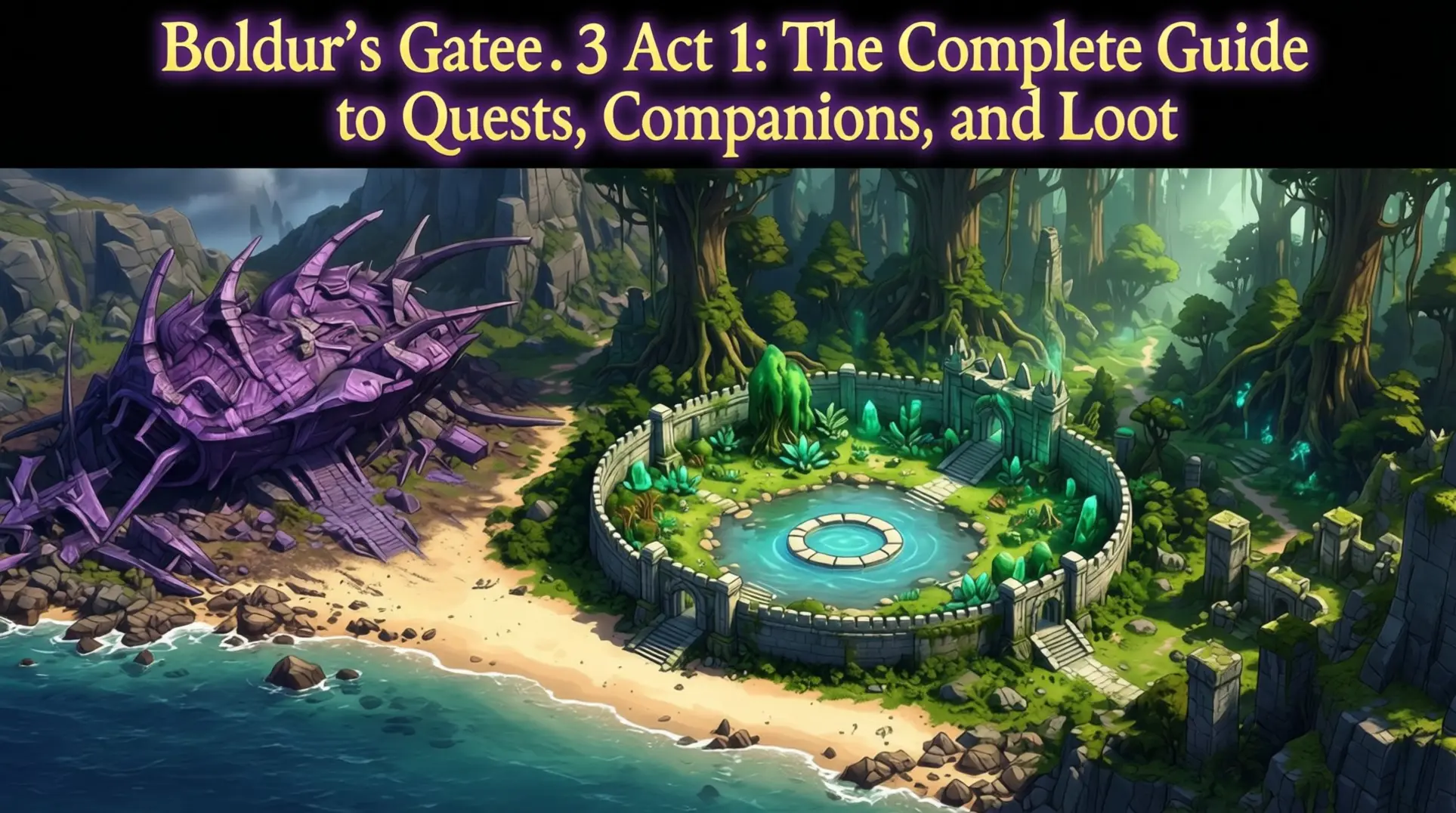
Baldur's Gate 3 Act 1: The Complete Guide to Quests, Companions, and Loot
Master Baldur's Gate 3 Act 1 with our exhaustive guide. Covering essential quests, companion arcs, hidden treasures, and optimal progression to avoid missed content.

Baldur's Gate 3 Evil Playthrough: Ultimate Guide to Endings & Strategy
Master Baldur's Gate 3's evil playthrough with our comprehensive guide covering endings, quest order, party composition, and difficulty strategies.
AI Tactical Companion
Consult with our specialized tactical engine for Baldurs-Gate-3 to master the meta instantly.