BG3 Race Guide: Dragonborn, Tiefling, Drow & Githyanki
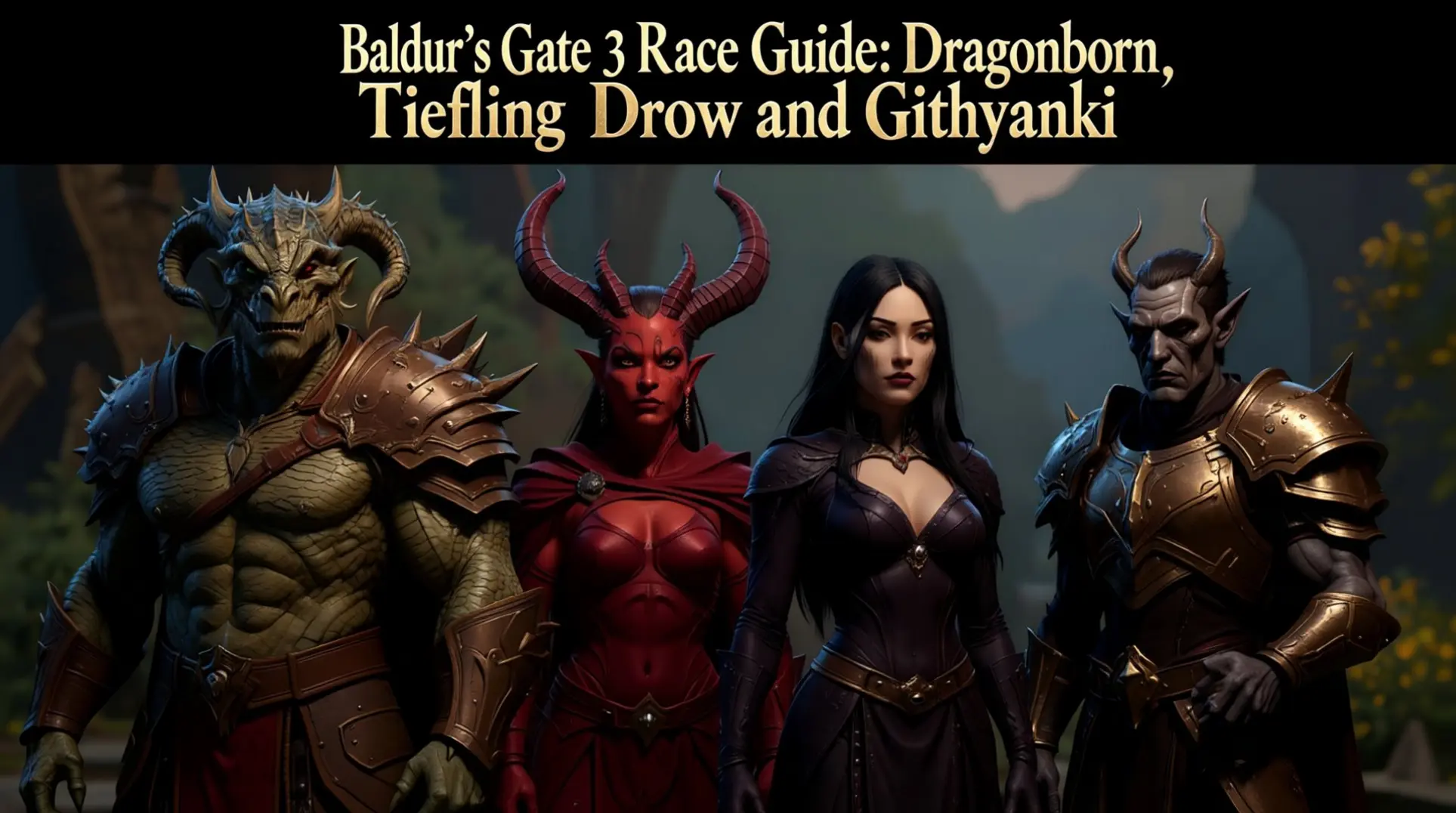
Choosing Your BG3 Race: Beyond Aesthetics
When selecting your race in Baldur's Gate 3, the impact extends far beyond cosmetic appearance. The game features a sophisticated tiered reactivity system where certain races unlock dramatically different narrative experiences.
Based on comprehensive player research, Drow (particularly Lolth-Sworn) and Githyanki stand out for their exceptional story impact.
Top-Tier Reactive Races
Drow characters can essentially "waltz into the goblin camp and most goblins treat you like royalty" in Act 1. Surface dwellers react to Drow with fear and suspicion.
The subrace distinction matters significantly:
- Seldarine Drow can reassure NPCs they aren't evil
- Lolth-Sworn can lean into their intimidating reputation
However, their unique dialogue becomes less prominent in later acts.
Githyanki maintain strong racial dialogue throughout all three acts, treated as "fish-out-of-water" in Faerûn with many NPCs being "very hesitant/hostile around you." They also enjoy unique companion dynamics, with Lae'zel treating Githyanki player characters "slightly nicer" with special interactions.
Moderate Reactivity Options
For meaningful but more moderate reactivity, Tieflings connect well with the central refugee crisis narrative. Meanwhile, races like Dragonborn and High-Elves were noted by the community as having minimal racial interactions.
Your racial choice affects faction reactions, quest alternatives, companion relationships, and overall narrative consistency. According to player research spanning the Reddit Community, Steam Community Discussions, and GameFAQs Community, the difference between top-tier and lower-reactivity races can significantly shape your journey.
Dragonborn
The dragonborn race in Baldur's Gate 3 offers players a visually striking option, complete with draconic ancestry and a signature breath weapon.
Combat Viability
Based on a modified version of the D&D 5e ruleset, players can select from various subraces:
- Chromatic Dragonborn with damage types like acid, fire, and cold
- Lightning-born variant noted for Honor Mode
A notable limitation is the absence of a holy/radiant breath weapon, a curious omission given the game's numerous undead foes.
When it comes to combat viability, the dragonborn's racial abilities are often considered less than optimal. Community feedback suggests that for players focused on min-maxing, other races may provide more significant advantages. One user noted that the dragonborn racial abilities "kinda suck".
Narrative Impact
The most significant drawback lies in story reactivity. Disappointingly, dragonborn characters receive minimal companion reactions and very few race-specific dialogue options. Even well into Act 2, interactions remain limited to minor comments about their scales or appearance.
Build Recommendations
Ultimately, the dragonborn race appears to be a choice driven more by aesthetics and roleplaying preference than by substantial mechanical benefits or narrative depth. They work best with Charisma-based classes that can leverage their natural presence.
Tiefling
Tieflings in Baldur's Gate 3 are descendants of devils from the Nine Hells, granting them distinctive infernal traits that shape both their abilities and narrative experience.
Combat Viability
All tieflings share core features like Darkvision (seeing 12m in darkness) and Hellish Resistance, reducing fire damage by half.
The game features three distinct subraces, each tied to different archdevil bloodlines:
- Asmodeus tieflings gain spells like Hellish Rebuke
- Mephistopheles tieflings wield icy magic such as Burning Hands
- Zariel tieflings focus on combat with Searing Smite and gain advantage on intimidation checks through Thaumaturgy
While rated C Tier for optimization, tieflings excel in Charisma-based classes like Warlocks and Bards.
Narrative Impact
Beyond mechanics, tieflings face widespread prejudice throughout Faerûn, creating compelling narrative depth. This discrimination fosters strong camaraderie with fellow tiefling NPCs like Alfira and Mol, offering unique dialogue and roleplaying opportunities.
Build Recommendations
Their journey through societal rejection and infernal legacy provides one of the most immersive racial experiences in the game. Perfect for players who want to explore themes of redemption and overcoming prejudice.
Drow
The Drow of Baldur's Gate 3 carry a complex legacy from their subterranean origins, defined by a stark choice between two subraces.
Combat Viability
Both Lolth-Sworn and Seldarine Drow share identical mechanics but offer wildly divergent roleplaying experiences.
Both subraces benefit from several key abilities:
- Superior Darkvision: An 80-foot range
- Keen Senses: Granting Perception proficiency
- Fey Ancestry: For charm resistance
Their innate spellcasting—Dancing Lights, Faerie Fire, and Darkness—uses Charisma, making them exceptional for Warlocks, Bards, and Paladins.
Narrative Impact
The true depth lies in their narrative divergence:
- Lolth-Sworn Drow embrace the evil spider goddess Lolth, unlocking intimidating dialogue options and unique interactions with characters like Minthara. This is perfect for evil playthroughs
- Seldarine Drow reject Lolth's influence, seeking redemption. This path resonates deeply with companion arcs, allowing players to mentor Shadowheart or relate to Astarion's trauma
Surface NPCs react with fear or curiosity, while the Underdark pulses with reactivity—from Deep Gnome terror to Duergar tension.
Build Recommendations
Choose Lolth-Sworn for evil playthroughs and intimidation-focused builds. Select Seldarine for redemption stories and support-oriented characters who want to connect with companion narratives.
Githyanki
The Githyanki Warrior Culture in Baldur's Gate 3 is defined by exceptional psionic power and martial prowess, creating one of the game's most formidable racial options.
Combat Viability
Their signature ability, Githyanki Psionics, provides three scaling spells that recharge after a long rest:
- An invisible Mage Hand at level 1
- Triple-distance jumping at level 3
- Misty Step teleportation at level 5
This combination offers unparalleled tactical mobility and utility that many players consider overpowered.
Their Martial Prodigy trait grants proficiency with greatswords and light/medium armor. The unique Astral Knowledge ability lets them temporarily master all skills tied to one ability score once per long rest.
Narrative Impact
This racial package naturally synergizes with martial-caster hybrid classes like Monks and Swords Bards.
Beyond mechanics, Githyanki warrior culture profoundly impacts companion relationships, particularly during the Creche Y'llek storyline. Lae'zel's loyalty hinges on whether she perceives actions as aligning with Githyanki ideals.
Build Recommendations
Perfect for players who want maximum tactical flexibility and strong companion integration. Their psionic abilities work exceptionally well with Monk and Bard builds, while their martial proficiencies support frontline combat roles.
Character Creation Synergy
Baldur's Gate 3 backgrounds are far more than just flavor text—they fundamentally shape your character's capabilities and narrative journey.
Background Integration
With thirteen distinct backgrounds available, each provides two skill proficiencies that directly influence dialogue options and NPC reactions. Unlike earlier versions of D&D, BG3 has eliminated racial stat modifiers, shifting the meta to prioritize racial features over traditional ability score bonuses.
Optimal Background Pairings
The key to optimal character creation lies in aligning your background with your class's primary statistics:
- Wisdom-based classes like Druids and Clerics benefit from the Folk Hero background (Survival, Animal Handling)
- Charisma-focused Paladins and Bards should consider Noble (History, Persuasion) or Acolyte (Insight, Religion)
- Intelligence-based Wizards naturally synergize with the Sage background (Arcana, History)
The Inspiration System
Beyond mechanical advantages, backgrounds significantly impact gameplay through the Inspiration system. This system rewards players who stay true to their character's narrative themes, creating a beautiful synergy between combat effectiveness and roleplaying depth.
Ultimate Race Selection Conclusion
Your choice of race in Baldur's Gate 3 extends far beyond mere aesthetics—it fundamentally shapes your entire adventure.
Whether you embrace the intimidating legacy of Drow, navigate the prejudice faced by Tieflings, wield the psionic power of Githyanki, or choose Dragonborn for their visual appeal, each race offers unique opportunities for storytelling and gameplay.
The key is understanding that your racial choice creates ripples throughout your journey, affecting everything from companion relationships to quest outcomes. Choose not just for power, but for the story you want to tell in the Forgotten Realms.
More Baldurs-Gate-3 Guides

Baldur's Gate 3 Act 1: The Complete Guide to Quests, Companions, and Loot
Master Baldur's Gate 3 Act 1 with our exhaustive guide. Covering essential quests, companion arcs, hidden treasures, and optimal progression to avoid missed content.
Baldur's Gate 3 Fandom: Discord to AO3 Community Culture
Explore how Baldur's Gate 3 fans connect across Discord, AO3, and TV Tropes, creating vibrant community culture from memes to fanfiction.
BG3 Strange Ox Secrets & Hidden Vault Puzzles Guide
Discover the secrets behind Baldur's Gate 3's Strange Ox, Owlbear Cave puzzles, and hidden vaults. Complete guide to solving these mysteries.
AI Tactical Companion
Consult with our specialized tactical engine for Baldurs-Gate-3 to master the meta instantly.