BG3 Best Class Builds: Ultimate Tier List Guide
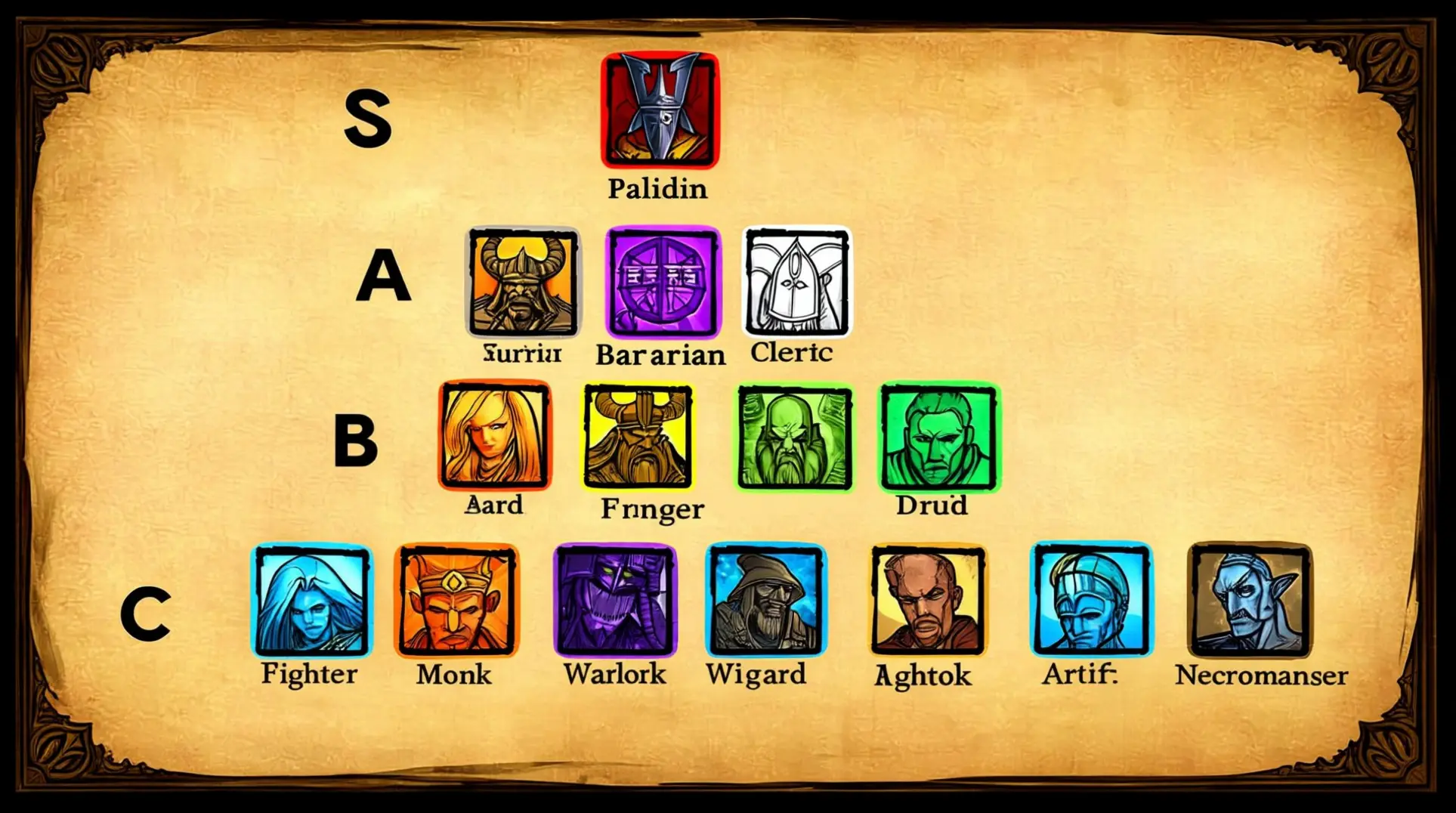
Choosing the right class build in Baldur's Gate 3 can make or break your adventure through the Forgotten Realms. With 12 distinct classes—each offering unique playstyles, abilities, and optimization paths—the decisions you make at character creation ripple throughout your entire campaign.
This comprehensive tier guide breaks down every class from S-tier must-plays to D-tier experimental options. Whether you're a newcomer or veteran seeking optimal performance on Tactician difficulty, we'll help you find the perfect build.
We'll explore meta-defining combinations like Paladin Oathbreaker and Sorcerer Storm Sorcery, while also highlighting niche picks that cater to specific playstyles and preferences.
S-Tier Classes: Must Play Builds
For players seeking the most powerful builds in Baldur's Gate 3's current meta, the S-tier classes represent the pinnacle of effectiveness on difficulties like Tactician and Honor Mode. Consistently ranked at the top, the Paladin and Sorcerer offer unparalleled versatility and raw power, making them must-play options for any player looking to optimize their party.
Oathbreaker Paladin
The Oathbreaker Paladin is a force to be reckoned with, blending frontline durability with devastating offensive capabilities. This aggressive subclass, which must be unlocked by breaking a sacred oath during your playthrough, allows you to control the undead while smiting your foes.
Core Stats:
- Strength: 17 (16 base + 1 from background)
- Charisma: 16 (15 base + 1 from background)
- Constitution: 14
- Wisdom: 10
- Dexterity: 12
- Intelligence: 8
Key Progression:
- Level 2: Divine Smite unlocks incredible burst damage
- Level 4: +2 Strength for 19 total
- Level 8: Great Weapon Master feat
- Level 12: Savage Attacker feat for maximum damage rolls
Essential Equipment:
- Helmet of Smiting (+1 to attack and damage rolls)
- Sword of Justice (versatile, extra damage on crits)
- Cloak of Protection (AC and saving throw bonuses)
- Amulet of the Devout (extra Channel Divinity uses)
This build solidifies its place as an S-tier threat through consistent high damage output and excellent survivability.
Sorcerer
The Sorcerer stands as the undisputed king of pure spellcasting. Their true power lies in Metamagic abilities, which fundamentally alter how spells function.
Core Stats:
- Charisma: 17
- Constitution: 14
- Dexterity: 13
- Wisdom: 12
- Intelligence: 10
- Strength: 8
Metamagic Options:
- Quicken Spell: Cast spells as bonus actions for game-changing action economy
- Twinned Spell: Target two creatures with the same spell for party-wide buffs
- Subtle Spell: Cast without verbal or somatic components
- Extended Spell: Double spell duration for efficiency
Optimal Builds:
- Pure 12-level Storm Sorcerer: Access to high-level spells like Chain Lightning and Lightning Bolt
- Tempest Cleric 2/Draconic Sorcerer 10: Specializes in devastating lightning damage with Destructive Wrath
Essential Equipment:
- Ring of Free Action (immunity to difficult terrain)
- Cloak of Charisma (+2 Charisma)
- Amulet of the Devout (extra Channel Divinity for Tempest build)
- Spellcrux Amulet (advantage on concentration checks)
This unparalleled spell enhancement is why the Sorcerer is considered an S-tier class.
A-Tier Classes: Top Contenders
While the Fighter class often claims the top spot in Baldur's Gate 3, Ranger, Rogue, and Bard builds consistently rank in A-tier and above. They offer exceptional versatility and power in specialized roles, especially when optimized through multiclass combinations.
Gloomstalker Ranger
The Gloomstalker Ranger stands out as a premier A-tier option with S-tier potential, excelling at stealth, ambush, and ranged combat. This build allows players to deal devastating damage before enemies can engage, making it perfect for those who enjoy tactical positioning and surprise attacks.
Core Stats:
- Dexterity: 17
- Wisdom: 16
- Constitution: 14
- Intelligence: 12
- Strength: 10
- Charisma: 8
Progression Path:
Early Levels (1-5) Focus on Gloomstalker for Umbral Stalk and Dread Ambusher. This foundation provides crucial bonus damage and initiative bonuses that set the stage for the entire build.
Mid Levels (6-11) Transition to Hunter for Horde Breaker and Volley. This progression adds area-of-effect capabilities and additional attack patterns that scale excellently into later content.
Final Level (12) Take 1 level War Cleric for bonus action attacks, completing the build's action economy optimization.
Essential Equipment:
- Bow of the Banshee (+2 damage, fear effect)
- Gloves of Archery (+2 damage with ranged weapons)
- Cloak of Protection (AC bonus)
- Amulet of the Devout (extra Channel Divinity)
Fire Archer Variant: The Hunter Ranger Fire Archer build reaches S-tier status by combining 11 levels of Hunter Ranger with 1 level of War Cleric. It utilizes abilities like Horde Breaker and Volley with specialized ammunition for incredible damage output.
Rogue
Rogues shine with the Gloomstalker Assassin multiclass build (Gloomstalker Ranger 5 / Assassin Rogue 4 / Champion Fighter 3). This build achieves an astounding 6 attacks per turn under optimal conditions.
Core Stats:
- Dexterity: 17
- Wisdom: 16
- Constitution: 14
- Intelligence: 12
- Strength: 10
- Charisma: 8
Key Features:
- Guarantees critical hits on surprised enemies
- Excels at eliminating high-priority targets before vanishing back into the shadows
- Superior critical range (19-20) from Champion Fighter
Essential Equipment:
- Dagger of Venom or Ring of the Mystic Scoundrel
- Cloak of Protection
- Gloves of Thievery (advantage on Sleight of Hand)
- Boots of Speed (bonus action Dash)
Bard
Bards prove their worth through the College of Swords subclass, which creates a formidable martial-spellcaster hybrid.
Core Stats:
- Charisma: 17
- Dexterity: 16
- Constitution: 14
- Wisdom: 12
- Intelligence: 10
- Strength: 8
Key Features:
- Full access to the Bard spell list
- Bardic Inspiration for support and extra damage
- Blade Flourish abilities for melee combat versatility
- Can function as both melee and ranged combat specialists
Essential Equipment:
- Lute of the Merry Jester (advantage on Performance checks)
- Cloak of Charisma (+2 Charisma)
- Ring of Protection (+1 AC and saves)
- Boots of Speed
Multiclass Options: Their versatility extends to powerful multiclass options like the S-tier Bardadin (Bard/Paladin) and various specialized builds that adapt to different combat situations.
B-Tier Classes: Solid Options
While not topping the tier lists, B-tier classes in Baldur's Gate 3 offer capable and versatile playstyles for discerning adventurers.
Circle of Stars Druid
The Druid consistently falls into this category across multiple sources, with the Circle of Stars subclass being highlighted as the primary B-tier option. Though considered capable but not top-tier in the current meta, Circle of Stars Druids can be optimized for effective support functions.
Core Stats:
- Wisdom: 17
- Constitution: 14
- Dexterity: 13
- Intelligence: 12
- Strength: 10
- Charisma: 8
Key Features:
- Star Map provides ranged attacks and healing
- Guiding Bolt for consistent damage
- Spirit Guardians for battlefield control
Essential Equipment:
- Staff of the Everflame (fire damage and light)
- Cloak of Protection
- Ring of Protection
- Amulet of the Devout (extra Channel Divinity)
Fighter (Arcane Archer)
The Arcane Archer Fighter, described as "a sharpshooter with some magical twist," is specifically classified as B-tier.
Core Stats:
- Dexterity: 17
- Intelligence: 14
- Constitution: 14
- Wisdom: 12
- Strength: 10
- Charisma: 8
Key Features:
- Arcane Shot abilities for magical ranged attacks
- Limited uses per short rest
- Requires careful resource management
Essential Equipment:
- Longbow of Accuracy (+2 attack rolls)
- Gloves of Archery (+2 damage with ranged weapons)
- Cloak of Protection
- Amulet of the Devout
Fighter (Battle Master)
The Battle Master Fighter provides tactical combat options through Superiority dice, offering valuable control and utility in battle.
Core Stats:
- Strength: 17 or Dexterity: 17
- Constitution: 14
- Wisdom: 12
- Intelligence: 12
- Charisma: 10
- Strength: 8 (if Dex-based)
Essential Equipment:
- Longbow of Accuracy (+2 attack rolls)
- Gloves of Archery (+2 damage with ranged weapons)
- Cloak of Protection
- Amulet of the Devout
These B-tier options remain completely viable for completing the game on any difficulty, including Tactician and Honor Mode. They represent solid choices for players who appreciate specific playstyles or enjoy the challenge of optimizing builds to reach their full potential in the ever-evolving meta.
C-Tier Classes: Niche Picks
In the current Baldur's Gate 3 meta, the Warlock class sits at the bottom of the barrel with a C-tier ranking, making it the weakest class overall. While Monk as a class shows more versatility with subclasses like Shadow Monk reaching A-tier and Way of Open Hand achieving S-tier potential, specific paths like Way of the Four Elements and Drunken Master consistently land in C-tier.
Monk (Way of the Four Elements)
Core Stats:
- Dexterity: 17
- Wisdom: 16
- Constitution: 14
- Strength: 12
- Intelligence: 10
- Charisma: 8
Key Weaknesses:
- Limited ki points for elemental abilities
- Expensive spell point costs
- Requires specific build optimization
Essential Equipment:
- Gloves of Soul Catching (+2 AC, damage reduction)
- Boots of Speed (bonus action Dash)
- Cloak of Protection
- Ring of Protection
Monk (Drunken Master)
Core Stats:
- Dexterity: 17
- Wisdom: 16
- Constitution: 14
- Strength: 12
- Intelligence: 10
- Charisma: 8
Key Weaknesses:
- Unpredictable mechanics
- Requires specific tactical positioning
- Less consistent than other monk subclasses
Warlock
Core Stats:
- Charisma: 17
- Constitution: 14
- Dexterity: 13
- Wisdom: 12
- Intelligence: 10
- Strength: 8
Primary Weaknesses
The primary weaknesses holding these options back are significant:
Warlock Issues:
- Extremely limited spell slots compared to other casters
- Heavy reliance on Eldritch Blast for damage output
- Short rest dependency for spell recovery
- Limited spell selection
Monk Issues:
- Struggle with Ki point management
- Require specific build optimization to reach effectiveness
- Lower damage output compared to martial classes
- Vulnerable to crowd control effects
While Monk/Warlock multiclass builds exist—particularly the Shadow Monk/Warlock combination using Darkness and Devil's Sight—they remain niche rather than meta-defining strategies. When compared to S+ tier classes like Paladin or popular multiclass options such as Sorcadin and Bardadin, the performance gap is substantial.
However, these C-tier options can still appeal to players seeking unique playstyles or those willing to invest in specialized builds that leverage their distinctive mechanics, despite their lower competitive standing.
D-Tier Classes: Advanced Only
When it comes to niche multiclass combinations in Baldur's Gate 3, the Wizard Artificer Necromancer build stands out as an experimental choice that's rarely discussed in tier rankings. Comprehensive research reveals that this specific combination receives minimal coverage in build guides, suggesting it's not considered among the game's optimized builds.
The Wizard Artificer Necromancer Build
Unlike established S-tier combinations like Storm Sorcerer or Sorcadin, which dominate tier lists, the Wizard Artificer Necromancer blend appears to be an under-explored option.
Core Issues:
- The lack of specific guides for this combination is telling
- Optimal necromancer builds typically pair with classes like Spore Druid or Death Cleric rather than Artificer
- These alternatives synergize better with necromantic abilities
Mechanical Mismatch:
- While both Wizard and Artificer share Intelligence as their primary stat
- Their core mechanics don't naturally complement each other as effectively as other multiclass options
- Limited spell progression and unclear mechanical synergy
Theoretical Strengths:
- Double Intelligence focus for skill checks
- Artificer's utility infusions like Bag of Holding
- Access to both spellcasting traditions
Essential Equipment:
- Spellcrux Amulet (advantage on concentration)
- Cloak of Protection
- Ring of Protection
- Headband of Intellect (19 Intelligence)
- Gloves of Missile Snaring (AC bonus)
For advanced players seeking a challenge, this build offers theoretical strengths through double Intelligence focus and Artificer's utility infusions. However, limited spell progression and unclear mechanical synergy place it firmly in D-tier territory. This combination is best approached as a fun alternative rather than a meta-competitive choice, requiring significant optimization knowledge to make viable in higher difficulties.
Conclusion
Remember that Baldur's Gate 3's flexible respeccing system means you're never locked into your choices. While tier rankings provide valuable guidance for optimal performance, the best build is ultimately the one that matches your preferred playstyle and brings you the most enjoyment.
Whether you choose an S-tier powerhouse like the Oathbreaker Paladin or Storm Sorcerer, or decide to experiment with a D-tier build like the Wizard Artificer Necromancer, the Forgotten Realms await your unique adventure. The key is finding the playstyle that resonates with you while understanding the mechanical strengths and weaknesses of each option.
For new players, we recommend starting with S or A-tier builds to learn the game's mechanics. Veterans can explore the more experimental options for fresh challenges. Most importantly, don't be afraid to respec and try different combinations—the beauty of BG3 lies in its flexibility and the countless ways to approach each encounter.
Quick Reference Summary
| Tier | Classes | Key Strengths | Recommended For |
|---|---|---|---|
| S-Tier | Oathbreaker Paladin, Storm Sorcerer | Highest damage output, excellent versatility | New players, Tactician/Honor Mode |
| A-Tier | Gloomstalker Ranger, Rogue, Bard | Strong specialized roles, great multiclass potential | Experienced players, tactical combat |
| B-Tier | Circle of Stars Druid, Arcane Archer Fighter, Battle Master Fighter | Solid performance, unique mechanics | Players seeking specific playstyles |
| C-Tier | Four Elements Monk, Drunken Master Monk, Warlock | Niche builds, requires optimization | Advanced players, roleplay focus |
| D-Tier | Wizard Artificer Necromancer | Experimental, theoretical potential only | Challenge runs, theorycrafting |
Best Starting Builds: Oathbreaker Paladin, Storm Sorcerer, Gloomstalker Ranger
Best Multiclass Options: Bardadin (Bard/Paladin), Sorcadin (Sorcerer/Paladin), Gloomstalker Assassin
More Baldurs-Gate-3 Guides
Baldur's Gate 3 Act 1: The Complete Guide to Quests, Companions, and Loot
Master Baldur's Gate 3 Act 1 with our exhaustive guide. Covering essential quests, companion arcs, hidden treasures, and optimal progression to avoid missed content.

Baldur's Gate 3 Evil Playthrough: Ultimate Guide to Endings & Strategy
Master Baldur's Gate 3's evil playthrough with our comprehensive guide covering endings, quest order, party composition, and difficulty strategies.

Ultimate BG3 Character Creation Guide: Build Your Perfect Hero
Master Baldur's Gate 3 character creation with our comprehensive guide covering race-class synergies, visual customization, essential tools, and beginner mistakes to avoid.
AI Tactical Companion
Consult with our specialized tactical engine for Baldurs-Gate-3 to master the meta instantly.