Deadpool VR Meta Quest 3 Performance Fix: Complete Optimization Guide
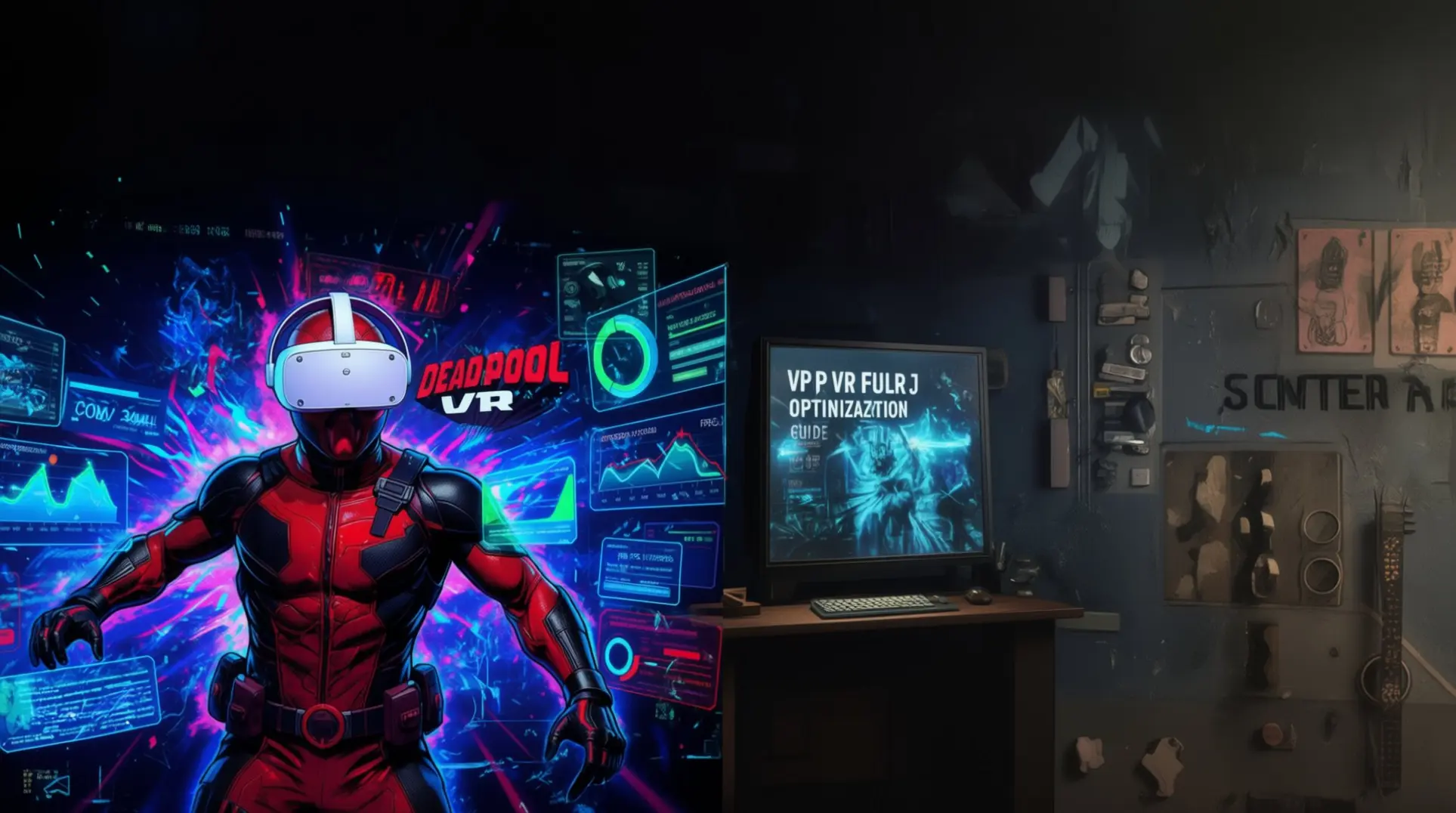
Deadpool VR's chaotic action demands flawless performance, but Meta Quest 3 users are facing a perfect storm of glitches and stutters. Recent software updates have introduced bugs that break immersion, from persistent green dots to frame-killing pink spikes. This guide delivers systematic solutions—from network tweaks to third-party optimizers—to restore smooth, responsive gameplay and keep you slicing through enemies without interruption.
Introduction: Understanding Deadpool VR Performance Challenges
Nothing kills the thrill of a chaotic VR spectacle faster than your headset stuttering mid-slice. Deadpool VR throws you into relentless waves of enemies, demanding split-second reactions and perfect tracking. When the hardware falters, the illusion shatters—and lately, that’s been happening a lot.
Meta Quest 3 owners felt the sting first. The v77 software update rolled out with known bugs, turning headsets sluggish and breaking casting features mid-session. Meta’s CTO admitted the company shipped it anyway, despite earlier promises to tighten quality control. For a game that already risks feeling “disposable and instantly forgettable,” those frame drops and pink spikes in SteamVR graphs are the last thing players need.
Common Deadpool VR Issues on Meta Quest 3
Screen Glitches and Visual Artifacts
Players diving into Deadpool VR on Quest 3 are encountering a range of disruptive visual problems. These issues tend to spike right as the game launches, turning the headset’s home environment into a glitchy mess.
- Green dots & lines: Persistent specks and streaks that survive factory resets often signal a hardware defect requiring replacement.
- Flickering corners & tearing: Menus flicker at the edges, while in-game landscapes tear apart mid-action.
- Split-eye distortion: One eye shows a warped view, the other a solid green screen—especially under SteamVR.
- Factory-reset survivors: If the artifacts remain after a full wipe, Meta support usually issues an RMA.
Performance Stutters and Frame Rate Drops
Smooth Deadpool VR gameplay can be derailed by micro-stutters and sudden frame drops. The culprit frequently lies in mismatched refresh rates and runtime overhead.
- SteamVR overhead: OpenXR delivers markedly smoother performance than SteamVR, which introduces extra latency.
- 72 Hz sweet spot: Locking the Quest 3 to 72 Hz and capping in-game FPS to 75 eliminates most stuttering for PCVR users.
- Pink spikes: Performance graphs show pink spikes that correlate with visible hitches in demanding scenes.
- Cross-generation issue: Both Quest 2 and Quest 3 exhibit identical stutter patterns when running Deadpool VR via PCVR.
PCVR Connection Failures
Getting Deadpool VR to launch at all can be half the battle, thanks to recent Link software hiccups and hardware incompatibilities.
- v79.134 registration bug: After this update, the headset often fails to register with the PC, blocking game launches entirely.
- Error codes 200/203: Frequent disconnections pop these codes mid-session, forcing a restart.
- D-Link VR Air Bridge sunset: Firmware support ended in December 2024, leaving wireless users with no official fixes.
- Wired & wireless lag: Both Link cable and Air Link suffer from severe visual degradation and input lag until runtime is switched to OpenXR.
System Restart and Software Updates
A proper restart is often the fastest cure for Quest 3 glitches. Press and hold the power button for 3–4 seconds until the Power Off menu appears, then tap Restart. If the headset is frozen, hold the power button for at least 10 seconds until it vibrates or shuts down.
For stubborn freezes, combine the power button with the volume-down key: press both for 30 seconds to trigger a hard reboot. This deeper reset clears more cache and can revive headsets that ignore a normal restart.
Staying Current with Meta Updates
Meta’s v72 update caused widespread bricking—headsets that refused to boot—especially units left idle for weeks. Meta acknowledged the flaw and offered free replacements, even for out-of-warranty devices.
To avoid surprises, check updates manually: open Settings > System > Software Update and tap Update if one is listed. Games update separately—open the Apps library and look for the Updates section. Always keep the battery above 50 % and leave the headset plugged in during any update.
Router and Network Optimization
Air Link lives or dies by your router. A dedicated Wi-Fi 6 (AX) router—ideally Wi-Fi 6E (AXE) for the 6 GHz band—prevents household devices from stealing bandwidth. Plug your PC into the router via Ethernet, then connect the Quest 3 to the 5 GHz or 6 GHz radio for the cleanest stream.
Rebooting for a Fresh Connection
Before you touch the router, fully shut down both the Quest 3 and your Windows PC. Unplug the router for at least 30 seconds—this lets capacitors discharge and clears lingering connection states. After plugging it back in, wait until all status lights stabilize (2–5 minutes), then power on your PC and headset.
Quick Bandwidth Checklist
- Use 5 GHz only—2.4 GHz is too slow and crowded for VR.
- Pause 4K streaming or large downloads while in Air Link.
- Reboot monthly to keep the router’s memory fresh and latency low.
PCVR Optimization for Deadpool VR
Graphics Card Driver Updates
Updated GPU drivers are critical for PCVR performance, providing the latest features and fixing graphical issues that can break immersion. Always perform a Clean Install during driver installation to remove previous files and prevent conflicts. Additionally, check for BIOS and firmware updates for your motherboard and hardware components to improve overall system stability.
Driver Update Instructions by Manufacturer
- NVIDIA: Download the latest drivers from the official website or use the NVIDIA App for automatic updates
- AMD: Download drivers from AMD's official support page with tools for both Windows and Linux systems
- AMD Stability Note: Research stable driver versions as newer Adrenalin drivers can cause 10-20% VR performance loss
VR Platform Software Management
SteamVR connection issues with Oculus Quest often stem from software conflicts after Oculus app updates. When troubleshooting, switching between beta and stable versions of the Oculus PC app can resolve persistent SteamVR connection errors.
To manage Oculus software versions, access beta channels via Settings > Beta > Public Test Channel enrollment. If switching versions, use the 'Repair' function for the Oculus app from Windows Settings > Apps menu. For optimal compatibility, set the Oculus app as your default OpenXR runtime in Settings > General.
Before launching Deadpool VR, ensure Oculus Link is enabled in your headset when connecting to PC for SteamVR functionality. If other troubleshooting methods fail, reinstall both the Oculus PC app and SteamVR to resolve persistent conflicts.
Third-Party Optimization Tools
Quest Games Optimizer (QGO)
Quest Games Optimizer (QGO) is a third-party application that unlocks the full potential of Meta Quest headsets by allowing users to tweak performance settings for individual games. The app pushes Meta Quest 3 to its limits by delivering higher resolutions and smoother frame rates in an all-in-one customizable package.
Users report that with QGO, the Quest 3 feels like getting an "updated Quest 3.5" with games looking "incredibly sharp" and no performance issues. The application can significantly boost graphics by increasing resolution and improving frame rates for a more immersive VR experience. QGO allows users to play native Quest games in resolutions that are typically only known from PC VR streaming.
SideQuest for Advanced Settings
SideQuest provides free access to hidden Quest 3 settings that can significantly improve VR experience by unlocking advanced system parameters. The platform allows users to adjust resolution, framerate, and performance profiles to push Quest 3 hardware beyond default limitations.
Users can install SideQuest directly onto their VR headset, desktop PC, or laptop to access these advanced settings for free. SideQuest's recent updates include a web-based installer and the ability to tweak settings directly from the headset without PC connection. The Quest Game Tuner app available through SideQuest automatically adjusts hidden system parameters to improve resolution and framerate for all VR apps.
Meta Quest 3 System Settings for Better Performance
Built-in System Settings
Navigate to Settings > System > Display to unlock the Quest 3’s core performance levers. The menu houses two primary dials—Refresh Rate and Render Resolution—that directly influence how smooth and sharp Deadpool VR feels.
| Setting | Impact on Deadpool VR | Trade-off |
|---|---|---|
| 120 Hz | Smoother motion tracking for rapid sword slashes and gunplay | Higher battery drain and GPU load |
| 90 Hz | Balanced smoothness with lower power draw | Slightly less fluid motion |
| 1.4× Native Resolution | Crisper HUD text and enemy outlines | Risk of frame drops during heavy combat |
| 1.0× Native Resolution | Stable frame rate at 120 Hz | Softer visuals, harder to spot distant targets |
Remember: Quest 3’s panels need roughly 1.4× native resolution for optimal clarity, but pushing that high at 120 Hz can destabilize frame timing.
Advanced Optimization Tools
When the stock settings aren’t enough, third-party utilities step in. Quest Game Optimizer (QGO) is the standout, letting you override per-game defaults without rooting the headset.
| Tool | Key Capability | One-Click Benefit |
|---|---|---|
| QGO Cloud Profiles | Pre-tuned configs for popular titles | Instant “Deadpool VR” profile with balanced 120 Hz + foveated rendering |
| SideQuest | Access experimental flags like GPU level 5 | Unlock hidden performance headroom |
| QGO Manual Mode | Force higher resolution or uncap frame rate | Tailor visuals to your exact tolerance for battery drain |
Caution: QGO requires sideloading and broad permissions—only install from trusted sources.
Performance Balancing Strategies
Deadpool VR demands sharp, stable, and fog-free visuals to keep up with its chaotic action. The sweet spot depends on whether you value buttery motion or eye-popping detail.
| Priority | Recommended Combo | Session Length Impact |
|---|---|---|
| Maximum Smoothness | 120 Hz + 1.0–1.1× resolution + dynamic scaling | ~1.5 hrs on internal battery |
| Maximum Clarity | 90 Hz + 1.4× resolution + foveated rendering | ~2 hrs; pair with an external pack |
| Balanced Play | 120 Hz + 1.2× resolution + GPU level 4 | ~2 hrs; ideal for competitive runs |
Enable dynamic resolution scaling and foveated rendering to let the headset drop detail only where you’re not looking, preserving frame rate when grenades start flying.
When to Contact Meta Support
Identifying Hardware vs. Software Issues
Screen glitches with green dots or lines on Meta Quest headsets can stem from either hardware malfunctions or software errors. Software issues are often temporary and may be triggered by bugs in recent system updates, corrupted application data, or operating system conflicts. These problems typically resolve after troubleshooting steps.
Hardware malfunctions, however, are consistent and persistent. They appear in the same location on the screen or after physical impact, and they won't disappear with standard fixes. This distinction is crucial for determining your next steps.
Basic Troubleshooting Checklist
Before reaching out to support, complete these essential steps:
- Restart the device completely
- Check for software updates and install any available
- Clean the lenses thoroughly to rule out debris-related artifacts
When to Escalate to Meta Support
Contact Meta Support immediately when persistent problems like green dots continue after all troubleshooting steps, including restarts and updates. Suspected hardware failure with constant, unchanging visual artifacts should prompt support contact for advanced diagnostics or replacement.
Additionally, if a software update 'bricks' your headset making it unresponsive, Meta has offered free replacements in such cases. The standard warranty covers defects in materials and workmanship, with the process typically involving either warranty replacement (refurbished/new unit) or warranty service (repair) for confirmed hardware defects.
Visit meta.com/help to access support guides and submit warranty claims, which serves as the primary channel for initiating the support process.
Conclusion: Maintaining Optimal Deadpool VR Performance
A systematic approach to Deadpool VR performance optimization starts with consistent system maintenance. Regular restarts, proper storage management, and preventing overheating help avoid thermal throttling that can degrade your gaming experience.
Meta's commitment to continuous improvement means software updates arrive regularly with performance boosts, bug fixes, and enhanced CPU/GPU clock speeds specifically for Quest headsets. These firmware updates aren't optional—they're essential for system stability and often contain critical performance enhancements that directly impact VR gameplay.
Optimal Deadpool VR performance requires a three-pronged approach: stay current with Meta's patches, fine-tune your graphics settings, and maintain your device properly. By combining these strategies—from OpenXR runtime switches to QGO profiles—you'll prevent performance degradation and ensure your sessions remain fluid and immersive. Keep your headset updated, your network optimized, and your settings balanced for long-term stability.
More Deadpool-VR Guides
Deadpool VR: Ultimate Beginner's Survival Guide & Pro Tips
Master Deadpool VR with our complete guide! Learn combat, movement, audience engagement, and secret strategies for Meta Quest 3.
Deadpool VR Complete Guide: Game Length, Combat Tips, and 100% Completion
Master Marvel's Deadpool VR with our comprehensive guide covering 5-10+ hour playtimes, combat strategies, secret unlocks, and platform performance tips.
Deadpool VR Ultimate Combat Guide: Master Weapons, Upgrades & Advanced Techniques
Complete guide to Deadpool VR combat systems, weapon upgrades, Big Money Time strategies, and advanced movement combos for dominating every encounter.
AI Tactical Companion
Consult with our specialized tactical engine for Deadpool-VR to master the meta instantly.