Europa Universalis IV Army Composition Guide: Optimize Your Forces for All Eras
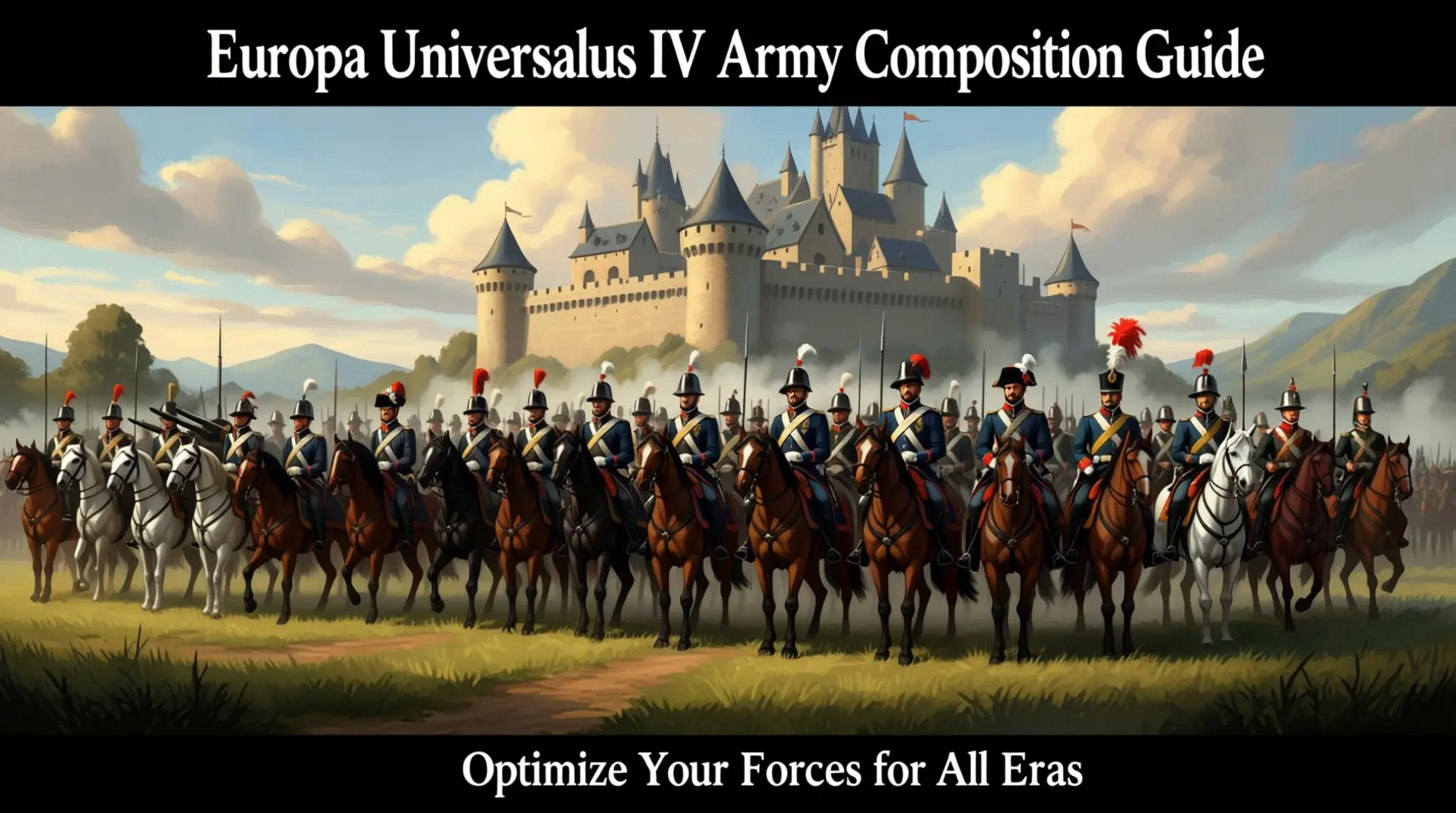
Your army composition in Europa Universalis IV is fundamental to success. It determines your military effectiveness across different technology levels and combat scenarios. This single factor can decide the fate of empires, making it the most critical strategic element to master.
The right structure means victory against larger foes. The wrong structure means defeat despite numerical advantage. Technology levels constantly reshape what's optimal, and each combat scenario demands a different tactical approach.
Every era brings new challenges to the battlefield. What dominates in one century will fail in the next. You must continuously adapt your forces or watch your empire crumble.
This guide provides specific ratios for each game era. You'll learn exactly how to optimize your forces to dominate every combat scenario. These timeless principles ensure your armies remain effective from start to finish. Master composition and you master EU4.
Understanding Core Combat Mechanics
Combat Width Explained
Combat Width: The maximum number of units that can actively fight in a battle at the same time. This represents the physical front line where swords clash and muskets fire, creating a strict limit on how many regiments can engage directly.
Military technology levels unlock increased combat width throughout your campaign. As you research new military technologies, the battlefield gradually expands, allowing larger armies to deploy more troops in the front rank. This is the foundation of army composition. Every decision about unit ratios and total army size must begin with a clear understanding of your current combat width limits.
- Failing to fill your combat width leaves you vulnerable to enemy flanking
- Exceeding combat width results in reserves that cannot contribute immediately
- Tech progression is the primary way to increase base combat width, but it is also affected by terrain modifiers, leader maneuver, and national ideas
The Combat Phase System (Fire/Shock)
The combat phase system in EU4 revolves around dice rolls modified by leader pips, unit discipline, and terrain penalties. Each day of battle, the system calculates casualties and morale damage based on these factors, creating unpredictable but skill-influenced outcomes.
Army Morale: The psychological staying power of your forces. When morale hits zero, your army retreats from the battlefield, potentially triggering a chaotic pursuit phase where heavy losses occur.
Unit types have different specializations that make them more or less effective in specific phases. Infantry forms the reliable backbone, cavalry excels during shock phases, and artillery provides fire support from the rear.
- Leader pips directly modify daily dice rolls
- Discipline enhances both damage dealt and morale protection
- Terrain penalties can significantly disadvantage attackers
Flanking and Unit Positioning
Flanking Range: The ability of cavalry to attack enemy units not directly opposite their position. This unique capability lets them apply pressure beyond the immediate front line, making them valuable for breaking enemy formations.
Artillery fires from the back row and deals half damage from that position; if the front row is missing and they are forced to the front, they deal full damage but take double damage. Positioned safely behind infantry, cannons bombard the enemy, but they become far less effective when forced into direct combat. Terrain types like mountains and forests impose combat penalties that affect movement and effectiveness. These natural obstacles can negate numerical advantages and should factor heavily into your positioning strategy.
- Flanking range increases with military technology
- Artillery requires infantry protection to function optimally
- Always check terrain before committing to battle
Early Game Army Composition (Tech 3-10)
The 4:2:0 Ratio (Infantry:Cavalry:Artillery)
Early game combat width is typically limited to 15-20 units. This constraint makes the 4:2:0 ratio of infantry to cavalry to artillery particularly effective for maximizing your army's potential.
Combat Width: The maximum number of units that can actively fight in a battle line. Early game limits mean you must prioritize the most cost-effective units. Cavalry excels during shock phases at early technology levels, dealing significant damage to enemy lines. Artillery remains expensive and underwhelming before tech 7-8, making it a poor investment for most nations early on. Your primary focus should be filling the combat width with reliable infantry and shock-capable cavalry to win decisive early battles.
Early Game Unit Types by Nation Group
Different nation groups require slight adjustments to the 4:2:0 framework based on their unit strengths:
- Western European units: Offer balanced stats with good discipline, making them reliable for the standard 4:2:0 ratio
- Eastern European units: Feature strong cavalry with decent infantry, allowing you to potentially increase cavalry beyond the standard ratio
- Muslim units: Provide excellent cavalry with good shock pips, making the cavalry component of your army even more critical
- Nomad units: Boast superior cavalry but weak infantry, suggesting a higher cavalry ratio might be optimal despite the cost
When to Start Adding Artillery
Artillery becomes viable around technology level 7-8. At this point, you can begin adding small amounts to your armies. Start with 2-4 artillery pieces in larger armies to provide backline fire support without breaking your treasury. Remember that artillery requires infantry protection to remain effective in combat. The cost-benefit analysis shows artillery becomes truly worthwhile only when you can afford to fill entire backlines while maintaining sufficient infantry to protect them.
Mid Game Army Composition (Tech 11-19)
The Standard 10:4:10 Ratio
Combat width expands significantly to 25-30 units during the mid-game period. This expansion creates new opportunities for army composition optimization, making the 10:4:10 ratio of infantry to cavalry to artillery the workhorse composition for most nations.
Artillery Backline Mechanics: Artillery units fire from the back row and deal half damage from that position; if the front row is missing and they are forced to the front, they take double damage and fire at full damage. This positioning requirement means you need sufficient infantry to protect your cannons while maximizing their firepower output. The 10:4:10 ratio maximizes mid-game effectiveness by filling both combat width layers. Ten infantry provide a solid front line, four cavalry offer flanking capabilities, and ten artillery pieces create a devastating backline that can turn the tide of battles. This composition becomes particularly effective around military technology 16, when combat width reaches its mid-game peak and artillery damage output becomes truly significant.
Artillery's Growing Importance
Artillery damage scales dramatically with technology levels during the mid-game. What was once a supporting role becomes a decisive factor in battle outcomes. Artillery becomes essential for army effectiveness around technology 13-14, when their firepower output justifies their cost and positioning requirements. At this point, armies without adequate artillery support will struggle against properly composed enemies. Beyond battles, artillery plays a crucial role in siege warfare. Specialized siege stacks with maximum artillery can reduce siege times dramatically, allowing you to capture provinces much faster and maintain military momentum.
Specialized Compositions for Different Nations
Certain nations require deviations from the standard 10:4:10 ratio based on their unique characteristics and national ideas.
Cavalry-Heavy Builds for Hordes: Nations like the Mongols, Timurids, and other horde governments benefit from cavalry-heavy compositions. Their unique mechanics and unit bonuses make cavalry more cost-effective, allowing ratios like 8:8:8 or even more cavalry-focused approaches.
Infantry-Focused Compositions: Some Western European nations with strong infantry bonuses can afford to reduce cavalry slightly in favor of more infantry or artillery. This approach works well for nations like Prussia or those with military-focused national ideas. The key is understanding your nation's strengths and adapting the standard ratios accordingly. National ideas that boost cavalry effectiveness make cavalry-heavy builds more viable, while infantry bonuses can justify reducing cavalry in favor of other unit types.
Late Game Army Composition (Tech 20-32)
The Full Combat Width Composition
Late game combat width reaches its maximum of 60 units, creating opportunities for truly massive armies. The ideal composition matches infantry and artillery to combat width (e.g., 30:30) while completely removing cavalry, maximizing both front-line strength and backline firepower.
Managing Multiple Stacks: With such large armies, you often need to split forces into multiple stacks to avoid attrition and maintain strategic flexibility. The key is ensuring each stack maintains the optimal ratio while staying within supply limits. This composition maximizes late game effectiveness by utilizing the full battlefield capacity. The infantry screens the artillery, cavalry provides flanking opportunities, and the massive artillery backline delivers devastating firepower that can break enemy lines. Late game armies should focus on quality over quantity. With expensive units and high maintenance costs, each regiment must pull its weight in combat.
Siege Optimization and Artillery Stacking
Siege warfare in the late game requires specialized approaches. Creating dedicated siege stacks with maximum artillery can reduce siege times dramatically, often by 50% or more compared to balanced armies.
Artillery Stacking Strategy: Siege stacks should prioritize artillery above all else, often running 30+ artillery with minimal infantry screening. This approach sacrifices some combat effectiveness for massive siege speed advantages. The trade-off between siege speed and army effectiveness depends on your strategic priorities. If rapid expansion is your goal, siege-optimized stacks provide enormous value. If you're facing major powers in open combat, maintain balanced armies for maximum battlefield effectiveness.
Late Game Unit Pips and Technology Milestones
Several key technology levels dramatically change unit effectiveness in the late game:
- Military Tech 22: Unlocks advanced artillery with significantly improved firepower
- Military Tech 26: Introduces elite infantry units with superior combat stats
- Military Tech 30: Provides access to the most powerful artillery units, while cavalry becomes inferior
- Military Tech 32: Represents the pinnacle of military technology with maximum unit effectiveness
These milestones should guide your army composition decisions. When new unit types become available, they often justify rebuilding your armies to take advantage of their superior capabilities.
Advanced Army Composition Strategies
Mercenary Integration and Management
Mercenaries offer unique advantages and challenges for army composition. They provide immediate military power without draining your manpower pool, but come with higher costs and reduced long-term effectiveness.
When to Use Mercenaries: Deploy mercenaries during rapid expansion phases when your regular armies can't keep pace with conquest demands. They're also valuable for maintaining military pressure while your regular troops recover from battles. The cost-benefit analysis shows mercenaries work best when integrated into existing compositions rather than forming entire armies. A few mercenary regiments can provide crucial support without breaking your treasury.
Dealing with Attrition and Supply Limits
Attrition becomes a major concern with large armies, especially in hostile territory or during winter months. Proper army splitting strategies can minimize these losses while maintaining combat effectiveness.
Supply Limit Management: Keep armies below supply limit in hostile territory to avoid devastating attrition. Split larger forces into multiple smaller armies that can operate independently while staying within supply constraints. The key is balancing combat effectiveness with sustainability. An army that's too small loses battles, while an army that's too large loses troops to attrition.
Army Professionalism and Drill
Army professionalism affects unit quality and combat effectiveness. Maintaining high professionalism levels provides significant combat bonuses, but requires careful management of your military forces.
Drill Mechanics: Drilling armies improves their combat performance and reduces maintenance costs. However, drilling requires armies to be stationary and costs military points, creating strategic trade-offs. The optimal approach involves cycling armies between active duty and drilling periods, maintaining professionalism while pursuing expansion goals.
Nation-Specific Army Builds
Western European Powerhouses (France, England, Spain)
Western European nations benefit from balanced unit types and strong military ideas. France's military bonuses make them particularly effective with standard compositions, while England's naval focus requires careful army management. Spain's colonial empire often means maintaining separate armies for European and colonial operations. European armies can focus on traditional compositions, while colonial armies might prioritize cheaper, more mobile forces.
Eastern and Horde Nations (Poland, Russia, Ottomans)
Eastern European and horde nations excel with cavalry-focused compositions. Poland's winged hussars and Russia's Cossacks provide unique advantages that justify higher cavalry ratios. Horde governments like the Ottomans benefit from unique mechanics that make cavalry more cost-effective. Their army composition should emphasize shock tactics and rapid movement over sustained firepower.
Special Cases (Prussia, Netherlands, Ming)
Prussia's military bonuses create some of the most powerful infantry in the game. Their compositions can afford to reduce cavalry in favor of more infantry and artillery, creating devastating defensive armies. The Netherlands' commercial focus means their armies must be cost-effective and efficient. They benefit from professional, well-drilled forces rather than massive mobilization. Ming's unique mechanics and unit types require specialized approaches. Their large manpower pool allows for different strategies compared to European nations, often focusing on quantity over quality.
Frequently Asked Questions (FAQ)
What is the ideal army composition for a new player?
For new players, the most forgiving composition is a simple 2:1 ratio of infantry to cavalry with no artillery until technology 8. This approach is cost-effective, easy to manage, and provides good combat effectiveness against AI opponents. Focus on maintaining armies that match your combat width and avoid overextending your military commitments. Simple compositions are easier to manage and less prone to costly mistakes.
How does terrain affect army composition?
Mountain and forest terrain impose significant combat penalties on attackers, making defensive compositions more effective. In these terrains, prioritize infantry over cavalry and consider reducing overall army size to avoid attrition. Plains and open terrain favor cavalry and artillery, allowing for more aggressive compositions. Always check terrain before engaging enemies and adjust your approach accordingly.
When should I stop building cavalry?
Cavalry becomes cost-ineffective as early as military technology 16, becoming completely obsolete by tech 22, when their advantages diminish and their high maintenance costs become difficult to justify. At this point, focus on infantry and artillery for your core armies. However, cavalry retains value for flanking and pursuit operations even in the late game. Maintain small cavalry forces for these specialized roles rather than building large cavalry-heavy armies.
What's the maximum effective combat width?
Combat width progression follows a clear pattern: early game 15-20 units, mid-game 25-30 units, and late game 60 units maximum. These values represent the maximum number of units that can actively participate in battle. Building armies significantly larger than your combat width wastes resources on units that cannot fight effectively. Always size your armies to match your current combat width capabilities.
How do I deal with enemy artillery-heavy armies?
Counter artillery-heavy enemies by prioritizing shock tactics and rapid engagement. Cavalry-heavy compositions can close distance quickly and disrupt enemy artillery before it can deal significant damage. Alternatively, match their artillery density while maintaining superior infantry to protect your cannons. The key is either overwhelming their artillery with shock tactics or matching their firepower while protecting your own cannons.
Conclusion
Mastering army composition in Europa Universalis IV requires understanding three fundamental principles. First, always build around your current combat width limits. Second, continuously adapt your ratios as technology levels change. Third, customize compositions based on your nation's unique strengths and strategic needs.
The journey from early game's simple 4:2:0 ratios to late game's complex compositions where infantry and artillery match combat width represents the evolution of warfare itself. Each era demands different approaches, and successful players must adapt their strategies accordingly. Remember that army composition is just one element of military success. Terrain, tactics, leadership, and timing all play crucial roles in determining battle outcomes. Use these composition guidelines as your foundation, but remain flexible enough to adapt to specific situations.
Your armies are the tools that will forge your empire. Build them wisely, deploy them skillfully, and they will carry you to victory across the centuries of EU4's grand strategic canvas.
More Europa-Universalis-V Guides
Europa Universalis V Economy Mastery: Maximizing Ducats, Development & Wealth
Complete guide to mastering EU5's economic system with strategies for tax income, production optimization, trade dominance, and long-term wealth building through population management and strategic development.
Advanced EU5 Colonization Strategy: Build Your Global Empire
Master EU5's sophisticated colonization mechanics with our comprehensive guide to building global empires through strategic range, settler management, and trade optimization.
EU5 Institutions Guide: Mastering Technology Cost & Spread Strategies
Master Europa Universalis V institutions with our complete guide to technology cost penalties, spread mechanics, and the 20% adoption threshold for optimal gameplay.
AI Tactical Companion
Consult with our specialized tactical engine for Europa-Universalis-V to master the meta instantly.