Marvel's Blade: The Ultimate Guide to Characters, Factions, and Lore
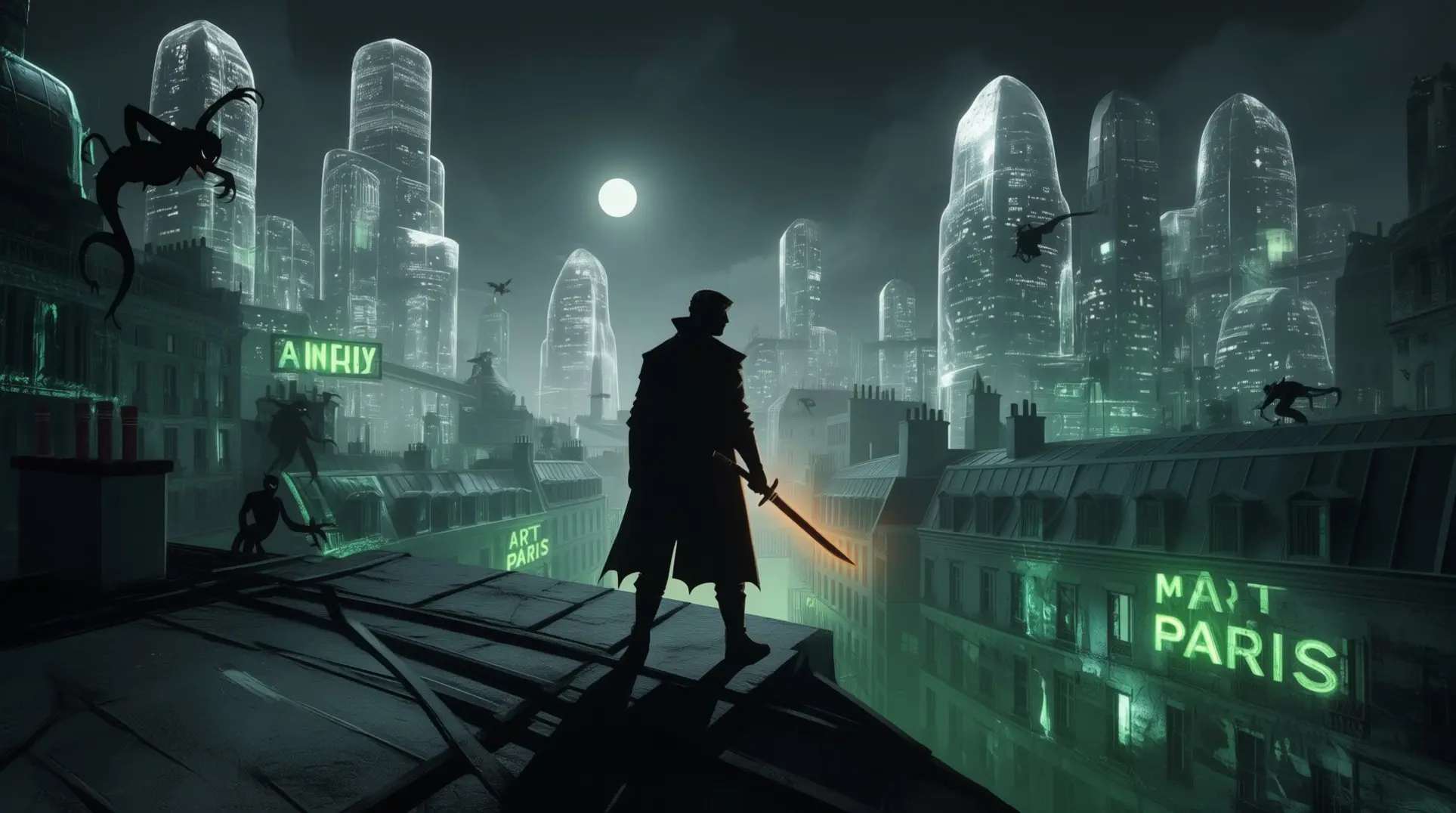
Eric Brooks, the Daywalker, is more than a vampire hunter—he's a living weapon forged by tragedy and honed by a brutal world of ancient bloodlines and corporate conspiracies. With Arkane Lyon's new game plunging him into a quarantined Paris, understanding the key players, from his allies in the Nightstalkers to the aristocratic vampire Houses, is essential. This guide breaks down the characters, factions, and lore you need to navigate Blade's dark universe.
Core Characters: Blade's World & Key Figures
Eric Brooks / Blade: The Daywalker Protagonist
Eric Brooks isn't your typical vampire hunter—he's the guy they're all afraid of. Born a dhampir (that's half-vampire for the uninitiated) when Deacon Frost bit his mother during labor, Blade inherited all the strengths of a vampire without the usual baggage. No burning in sunlight, which is why they call him the Daywalker.
Here's what you're working with:
- Strength: About 1 ton of lifting power
- Speed & Senses: Enhanced reflexes and perception that make normal humans look like they're moving in slow motion
- Healing: Rapid regeneration that patches him up mid-fight
- Immunity: Total resistance to vampire bites and that annoying hypnotic gaze they love to use
His whole deal? Eradicate vampires and avenge his mother's death. Simple, direct, and fueled by decades of pent-up rage.
Confirmed Allies & Supporting Cast
You don't hunt vampires alone, and Blade's crew is proof that it takes a village to slay an undead aristocracy. Abraham Whistler is the guy you want in your corner—he's Blade's mentor and weaponsmith, crafting everything from UV grenades to those nasty glaives and anti-vampire serum. The film version actually pulls from two comic mentors, Jamal Afari and Quincy Harker, but Whistler's the one who stuck in pop culture.
Then there's the Nightstalkers, the team Blade formed after tragedy hit. Hannibal King is a former vampire turned detective who keeps his thirst in check with a special serum—think of him as the guy who understands the enemy because he used to be one. Frank Drake is Dracula's last mortal descendant, which sounds like a raw deal, but he uses his family connection to fund operations and maintain a psychic link to the big bad himself.
The team came together after Rachel van Helsing—the great-granddaughter of the legendary Abraham van Helsing and a crossbow tactician—died. Her death was the catalyst that pushed Blade, King, and Drake to formalize their partnership into the Nightstalkers.
Game-Specific Characters: Safron Caulder & Jamal Afari
Arkane's Marvel's Blade is shaping up to be a mature, single-player, third-person action-adventure set in a quarantined Paris, and the game entered full production in late 2024. While we wait for more details, there's one confirmed comic figure making the jump: Jamal Afari.
Here's the thing—Afari is the Harlem-born vampire hunter who actually raised Eric Brooks, serving as his foster father and early mentor in the comics. He's the foundation of Blade's entire skill set.
Now, Safron Caulder is where things get weird. Multiple sources reference this name as a hematologist and armorer for the game, but here's the truth: no official sources currently mention this character. The name might be a codename, a misspelling, or just flat-out misinformation that got repeated enough to sound real. Until Arkane confirms it, treat Safron Caulder as a rumor, not a fact.
Major Villains & Antagonists
Dracula (Dagon/Drake): The Vampire Progenitor
When you're talking about Blade's ultimate nemesis, you have to start with Dracula. In Marvel comics, he's the Lord of Vampires himself, and he's been killed and resurrected more times than anyone can count. This guy's been a thorn in Blade's side since day one, but also butts heads with the Avengers and pretty much any hero who gets in his way.
Now, here's where it gets confusing. In Blade: Trinity, they call him Dagon or Drake, and he's not just any vampire—he's the progenitor of the entire species (Homines nocturnae, if you want to get technical). He's a natural-born Daywalker who predates all modern bloodsuckers, which means sunlight doesn't do squat to him. His power set is absolutely ridiculous: superhuman strength, speed, regeneration, shapeshifting, you name it. He's basically the final boss of vampire-kind.
His history stretches all the way back to 15th-century Wallachia, so we're talking centuries of scheming and violence. In Trinity, the House of Talos digs him up hoping he'll turn the tide in their favor, and he actually challenges Blade to an honorable duel. Unfortunately for him, Blade's packing the Daystar virus, and that's what finally puts him down.
Deacon Frost: Blade's Personal Nemesis
Now Deacon Frost? This one's personal. He's the vampire who turned Blade's mother, Tara Brooks, which means he's directly responsible for everything Blade is. In the comics—first showing up in The Tomb of Dracula #13 back in 1973—Frost is a scientist-turned-vampire with a nasty ability to create vampiric duplicates of his victims.
But the movie version is where things get really interesting. In the 1998 Blade film, he's a young, ambitious vampire leader with a god complex who wants to become the avatar of La Magra (we'll get to that blood god in a minute). When he bit Blade's pregnant mother, those vampiric enzymes passed to infant Eric Brooks, killing her but giving Blade his Daywalker abilities without full vampirism. That's some messed-up origin story right there.
His end comes when Blade injects him with an EDTA-based serum that completely disrupts his connection to La Magra, basically tearing him apart from the inside. It's a fitting end for the guy who created Blade.
Secondary Villains: La Magra, Nomak & Danica Talos
These three are the heavy hitters that round out Blade's rogues gallery, and they're all bad news in different ways.
La Magra is the ancient blood god worshipped by vampires in the film universe, and Deacon Frost's whole plan was to resurrect this thing to become its avatar. We're talking about a deity that would make the world a vampire paradise, so yeah, global threat level.
Then there's Jared Nomak from Blade II, the original Reaper and the real villain pulling the strings. He's a genetically engineered vampire hybrid with a bone-armored heart, rapid regeneration, and the ability to control the Reaper virus. He leads the Reaper outbreak, and his enhanced strength makes him a total nightmare to fight. What makes him dangerous is he's not just a beast—he's tactical.
And don't forget Danica Talos from Blade: Trinity, the corporate vampire CEO who runs the House of Talos, a pharmaceutical empire that secretly controls vampire society. She and her brother Asher are the ones who awaken Drake and frame Blade for murders, using their corporate resources to try and take over everything. She's proof that sometimes the most dangerous vampires wear suits and run board meetings.
The 12 Great Houses: Vampire Aristocracy
The vampire world runs on a strict aristocracy—twelve Great Houses that call all the shots, and this isn't some loose suggestion, it's hard canon from the TV series. Each house has its own unique sigil, and when you put them all together, they form a secret vampire alphabet you'll see everywhere from keyboards to HUDs to official seals.
Membership is completely hereditary, which means you don't get to shop around for a house. The moment you're turned, you're automatically locked into your sire's bloodline, no exceptions. Pure-bloods—vampires actually born, not made—sit at the top of the food chain and hold all the council seats, while turned vampires usually end up as officers or, more often, just foot-soldiers.
House Erebus acts as the de-facto capital, keeping the Book of Erebus (the vampire bible) locked away and hosting conclaves in hidden night temples. They're not just ceremonial either—any policy they pass with nine votes becomes law across the entire Nation.
Confirmed Houses in Game Lore
Let's talk about the houses you'll actually run into. House of Erebus runs on a rotating Council of 12 Pure-bloods, and any policy that gets nine votes becomes law across the entire Nation, so they're the ones pulling the strings.
House of Chthon is the elitist house that thinks they should be running everything, founded by Lord Chthon himself with his sword as a sacred relic. They're also tied to the Darkhold—the book of the damned created by the Elder God Chthon—which contains some seriously dark magic.
House of Tepes is Dracula's own bloodline, and yes, that's Vlad Tepes. Blade has been hunting these guys since his debut in Tomb of Dracula #10, so there's some serious history here.
House of Varney is weird—they're called a "ghost-house" because they're more elusive than even House Falsworth, but rumors put them deep in the modern blood trade.
House of Sheba started as a working title from early MCU Blade leaks, intended to represent Lilith and her mercenary Lilin, so this might be our first look at that faction in game form.
Vampire Sub-Species & Factions
Not all vampires are created equal. Pure-bloods are born into the aristocracy and automatically get council seats, while turned vampires are converted humans who usually serve as minions or middle management at best.
Reapers are what happens when vampires try to science their way past their weaknesses. They're a mutant subspecies created by the Reaper Strain, which means they don't care about silver or garlic, they've got armored hearts, split mandibles, and a metabolism so hyper-active they need to feed constantly. Even worse, they can infect other vampires with their viral bite.
Lilin are half-demon vampires spawned by the demoness Lilith, giving them unique powers and a mercenary mindset where they'll work for whoever pays the most.
The Bloodpack was an elite vampire strike team specifically created by the Lords of the Outer Circle to hunt down Blade, featuring dangerous members like Darius Thorn and Crimson Grace.
Paris Setting & Faction Dynamics
Parisian Vampire Emergency: The Game's Premise
Here's the setup: you're not swinging through New York or hiding in some fictional city's shadows. Marvel's Blade drops you into a very real, very messed-up Paris where military-grade barricades have sealed off an entire chunk of the city. Why? Because vampires have crawled out of whatever hole they were hiding in,
Vampire Lore & Mythology
Origins: The Darkhold & Demonic Creation
Marvel vampires didn't evolve from bats or tragic love stories—they were engineered by a demon. Specifically, the Elder God Chthon, who wrote the Darkhold as a manual for dark magic. During the Pre-Cataclysmic Age around 18,000 BCE, a cult of Darkholders found the spell they were looking for and used it on a willing Atlantean mage named Varnae, transforming him into Earth-616's first vampire. Varnae spent the next few millennia breeding new vampires and calling himself Lord of the Vampires until he finally passed the crown to Dracula. Here's the scary part: that original spell is still sitting in the Darkhold, which means anyone who reads it could potentially reboot the entire vampire race overnight. Chthon wasn't exactly picky with his curses either—he used the same book to mark infant Wanda Maximoff as a living anchor for his eventual return.
Daywalker Biology & Unique Abilities
Daywalkers like Blade hit the vampire genetic lottery. You get all the super strength, speed, and healing, but none of the classic weaknesses—sunlight, garlic, silver, and holy symbols bounce right off you. Blade's specific origin story is brutal: his mother was bitten during childbirth, resulting in an incomplete transformation that left him with living human tissue and a functioning immune system. His epidermis actually repairs UV damage faster than it accumulates, which is why he can stroll through noon sunlight without turning to ash. The trade-off? He still gets the blood thirst, but he's engineered a workaround—a serum made from porcine hemoglobin, saline, and anticoagulants that keeps the edge off. Daywalkers aren't completely invincible though; concentrated red-sun radiation can burn them by exploiting those lingering vampiric markers in their tissues.
Vampire Society & Modern Adaptations
Old-school vampire society was a simple feudal pyramid with Ancients at the top, Pure-bloods in the middle, and Fledglings at the bottom. Modern vamps have gone full corporate. The Board of Elders now functions like a Board of Directors, while Executive Clan Officers hold C-suite positions. Take VitaSanguis Corporation—they've vertically integrated the entire blood supply chain, from mobile phlebotomy vans that harvest donations to cryo-processing facilities and 3 a.m. deliveries, pulling profit margins exceeding 2,000%. They've also mastered political infiltration through dark-money PACs, embedded congressional staffers, and carefully groomed judges. In 2023, they even slipped a rider into legislation exempting 'non-living stakeholders' from campaign disclosure rules. For vampires trying to stay clean, there's Vampires Anonymous, a 12-step fellowship running 4,000 weekly meetings across 38 countries where they practice controlled feeding and moral inventory. The scale is staggering: by the end of 2025, undead-controlled entities are projected to command 18% of the global plasma market, up from just 3% a decade ago.
Potential Crossovers & Expanded Universe
Marvel Universe Connections
Blade's been around the block in the Marvel Universe, and his connections run way deeper than just hunting vamps solo. The biggest link to the X-Men came in 2010's Curse of the Mutants event, where a vampire blood-bomb hits San Francisco and turns Jubilee (along with others), which forces Blade to team up with the mutants to clean up the mess. That storyline didn't just create a cool team-up—it established a permanent connection between Blade and mutant vampire lore that Marvel keeps referencing.
But the real MCU bridge is the Darkhold, that cursed book of dark magic written by the elder god Chthon. It's the same book that popped up in Doctor Strange's story, and it turns out its vampiric roots trace all the way back to Varnae, the first vampire. So if you're wondering how Blade could show up in a Doctor Strange sequel, the Darkhold gives him a mythic reason to hunt Chthon-tainted threats alongside the Sorcerer Supreme.
And then there's the Midnight Sons, the supernatural team Blade helped found back in Ghost Rider (vol. 3) #31 (1992). When the Lilin invasion kicked off, Blade joined forces with Doctor Strange, Ghost Rider, and even Morbius to fight back. That team-up basically cemented Blade's role as Marvel's go-to guy for horror-crossover events.
Wildcard Appearances & Rumors
Things get weird when you dig into the more obscure corners of Blade's comic history. In Marvel Zombies, there's Blade Knight—a literal hybrid of Blade and Moon Knight who serves the Egyptian moon god Khonshu. It sounds ridiculous, but it actually links Blade to Khonshu's vampire-hunting legacy, and with Moon Knight's MCU show establishing that god's whole deal, this isn't as far-fetched as you'd think.
The Darkhold Redeemers connection is more concrete, though. In the 2021 one-shot Darkhold: Blade, our boy reads the cursed book and gets projected straight into Chthon's dimension, which confirms he's part of that whole crew and shows how the book can corrupt even someone like him. It's a direct line to the Doctor Strange side of things, but with more personal stakes.
And you can't talk Blade crossovers without mentioning Morbius. They've been clashing since Spider-Man #77-79 (1994), but they also reluctantly teamed up in Blade vol. 3 #1-6 (2002) to take down a synthetic vamp-bite serum. Their relationship is basically "I hate you, but you understand my life," which makes them perfect for forced team-ups.
Game Expansion Potential
Looking at Arkane Lyon's upcoming Marvel's Blade game—a third-person, single-player action-adventure set in vampire-overrun Paris—the faction system screams "DLC potential." Arkane's history with dense hub areas in Dishonored and Deathloop suggests Blade could gain or lose entire districts as post-launch chapters, which means the base game's vampire houses might just be the start.
Leaked casting documents have already hinted at a "safe-house bartender" and "Nyssa, tech-savvy vampire princess," which points to a faction hub system that could easily be expanded. If they build that infrastructure into the base game, adding new vampire houses or crossover characters becomes way more feasible.
The pattern is there, too—Marvel's Spider-Man and Marvel's Midnight Suns both dropped story DLC 8-15 months post-launch, and there's no reason Blade won't follow suit. Picture this: a Moon Knight chapter set in Egypt hunting Khonshu's vampires, or a Werewolf by Night expansion that brings in the Midnight Sons properly. The foundation's already being laid, you just have to know where to look.
From his personal vendetta against Deacon Frost to the looming threat of the vampire aristocracy and the mystical roots of the Darkhold, Blade's world is a complex tapestry of horror and heroism. Whether facing Dracula in the comics or a new crisis in Paris, his mission remains clear: protect humanity from the shadows. Now, the stage is set for his next hunt.
More marvels-blade Guides
Marvel's Blade: The Ultimate Daywalker Breakdown
Master Blade's physiology, arsenal, and combat mechanics. From 1-ton strength to advanced combat loops, here's everything you need to know.

Marvel's Blade: The Ultimate Performance Optimization Guide for Every PC
Maximize your framerate and eliminate stutters in Marvel's Blade with our hardware-specific guide. From budget PCs to 4K powerhouses, learn the best settings, .ini tweaks, and troubleshooting tips.
Blade's Arsenal: The Science, Weapons, and Tactics of the Daywalker
A deep dive into Blade's weapons, vampire weaknesses, and combat tactics in Arkane's upcoming game. Master the science and systems to become the ultimate vampire hunter.
AI Tactical Companion
Consult with our specialized tactical engine for marvels-blade to master the meta instantly.