The Berlin Apartment: Complete Collectible Guide & Achievement Walkthrough
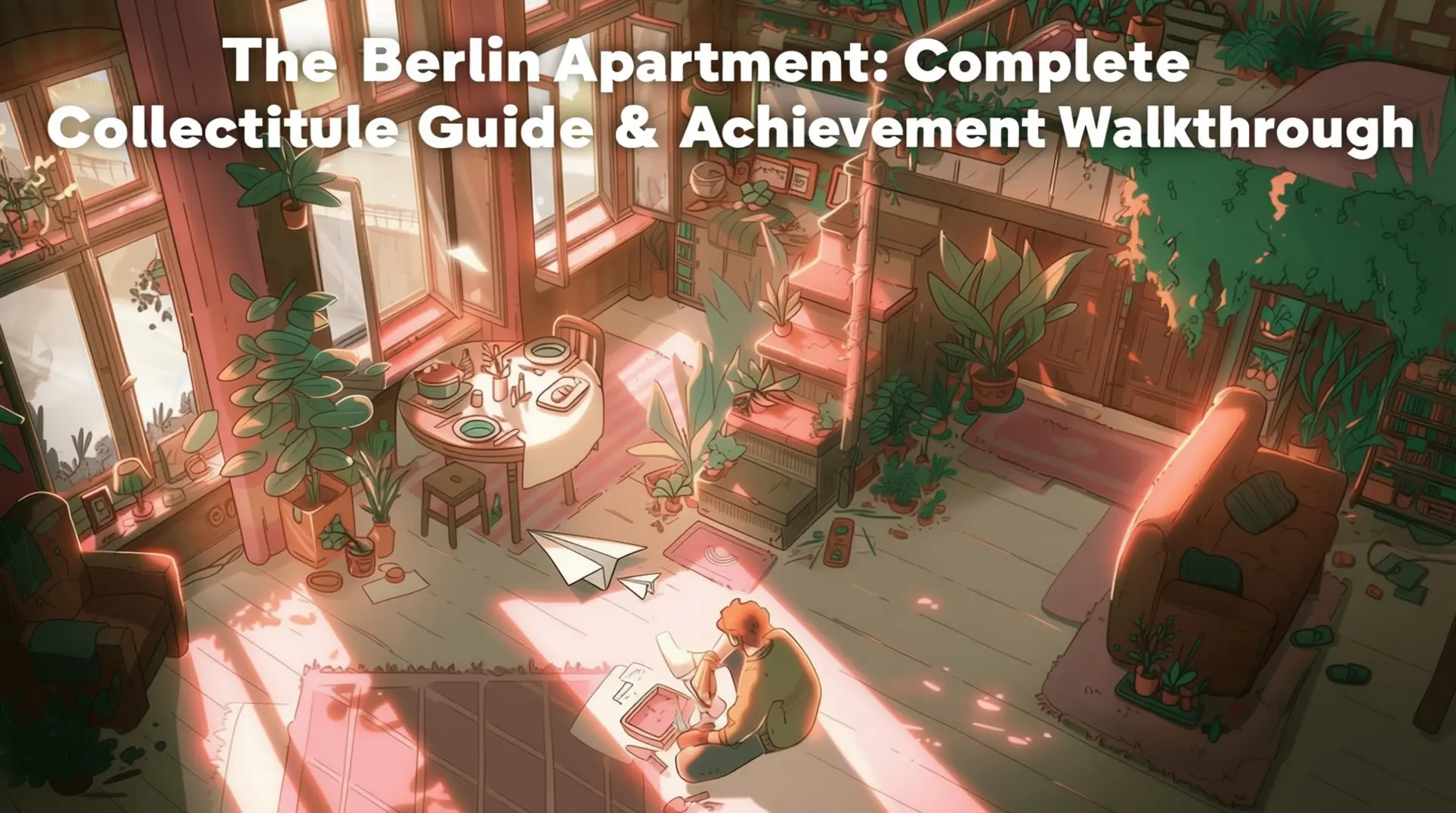
In The Berlin Apartment, every drawer opened and every relic found is more than a collectible - it's a piece of a century-spanning human story. This guide will help you navigate the game's intricate narrative system, locate every crucial item, and unlock all achievements to fully experience the lives that echoed within these four walls.
Understanding The Berlin Apartment's Collectible System
Narrative-Driven Collectibles
In The Berlin Apartment, collectibles aren't mere checklist items - they're the narrative heart of the entire experience. Each relic serves as a silent witness to over a century of Berlin's tumultuous history, transforming your renovation project into an archaeological dig through time.
The core gameplay loop revolves around first-person exploration and puzzle-solving. As you interact with the environment, you'll discover historical items that unlock poignant stories. These discoveries aren't separate from the renovation work - they're seamlessly integrated into it. Every letter, photograph, and personal effect you uncover acts as a tangible fragment of the past, creating direct connections to previous residents.
The narrative unfolds non-linearly, with each relic revealing a fragment of a story from a specific era. Together, these fragments weave tales of love, loss, fear, and hope across different decades, making history feel immediate and deeply human.
Relics as Silent Witnesses
The apartment itself becomes a museum of private lives, where artifacts serve as the only remaining voices of those who once called these walls home. These objects are described as silent witnesses because they physically endure from bygone eras, allowing the apartment's history to be pieced together indirectly through what was left behind.
With each new discovery, Malik tells his daughter the story behind these traces of past adventures. Each relic carries its own protagonists, genre, and atmosphere - yet all remain anchored within the same four walls. The game masterfully uses these narrative collectibles to explore broader historical themes through an intensely personal lens.
15 Pages and Tracking System
The in-game inventory serves as your crucial log, cataloging every relic found while providing access to the memories and stories they hold. Players must use a journal located inside a desk drawer to track collectibles, which requires dragging keys to open before it can be taken.
Finding all relics is essential to fully unraveling the complete, interconnected history of the apartment and its inhabitants across different time periods. The game's structure is built around these discoveries, with the narrative progressing as players uncover more relics that reveal fragments of stories from specific eras.
Complete Chapter-by-Chapter Relic Locations
Chapter 1: Traces - 2020 (Framing Narrative)
The 2020 chapter acts as your narrative hub. Every relic you uncover in the historical chapters (1933, 1945, 1967, 1989) is catalogued here.
Book-Tracking System
- Where: Large bookshelf in the main living room of the apartment.
- What it does: Each new book title you add represents a story thread or memory unlocked by relics found in earlier eras.
- Achievement alert: Once the shelf is full, a narrative choice appears that earns the "My book, my name!" achievement.
Chapter 2: Growing Wings - 1989
Cold-War tension hides in every corner of this 1989 apartment.
| Relic | Location | Description |
|---|---|---|
| Paper airplane | Bedroom windowsill | First message from Lu across the Berlin Wall; Tic-Tac-Toe game on the back. |
| Paper-airplane instruction book | Pile of boxes left of Kolja's bed | Needed to fold reply airplanes. |
| Fish tank with Erich | Living-room shelf | Talk to Erich after each story beat for new dialogue and the "Comrade Erich Socialist" achievement. |
| Stasi documents & letters | Various drawers and compartments | Reveal political pressure and surveillance. |
| Protest leaflets & Western media | Near windows, under furniture | Ephemeral artifacts of the era. |
Chapter 3: Silent Night - 1945
Post-war scarcity colors every collectible in this somber Christmas chapter.
- Turn on the radio in the living room for the "All I want for Christmas..." achievement.
- Snatch Lukas's hat after decorating the room - when Mom asks you to dress, grab it for the "Borrowed" achievement.
- Light all 7 candles in the forbidden room at once to unlock "Lights in the dark."
- Toy soldiers on the piano - knock them down and close the lid to use as tree ornaments.
- Chandelier piece in the damaged room - works as the tree-top star.
- Medals under a book on the far side of the piano - move the book to collect them.
Chapter 4: The Suitcase - 1933
Nazi censorship forces secrecy; every relic is either hidden or hurriedly packed.
| Relic | Location | Memory Trigger |
|---|---|---|
| Warm Jacket | Bedroom closet, right door | Josef resigning from his job. |
| Camera | Second shelf, film-reel room | Take the final photo at the door frame for "The Last One" achievement. |
| Passport | Left desk drawer (false bottom), study | Theater remodeling. |
| Lucky Shoes | High shelf in hallway; use the small ladder. | |
| Pocket Watch | Safe left of window, film-reel room; code 1-12-18-95. | |
| Razor | Bathroom sink after turning on the light | Cinema crisis. |
| Journal | Kitchen cabinet left of sink; pick the upper-right key. | |
| Stone | Thrown through window after journal memory - pack it fast before the suitcase snaps shut. |
Chapter 5: Interference from Orbit - 1967
Counter-culture rebellion echoes through psychedelic corridors and a talking robot.
- Open every door in Antonia's corridor maze to earn "Would you kindly?"
- Linger for 10 minutes inside the maze to unlock "A Space Odyssey."
- Brew coffee at the machine in the maze for "Scarcity Economy."
- Interact with K.A.R.L. in the core room to trigger a heartfelt chat with Toni's father.
- Final choice:
- Eject the story core → "My book, my name!"
- Save your story over your credit → "Ghostwriter"
With every chapter's relics gathered, return to the 2020 bookshelf to watch the complete family saga take shape.
The Berlin Apartment Achievements & Missables
Missable Trophies (Chapter Select Limitations)
⚠️ Warning: Several trophies can be permanently missed if not earned during your first playthrough. Chapter select only covers 1989, 1945, 1933, and 1967 - 2020 chapter trophies may not be replayable.
The following trophies fall into this missable category:
- Destroyer
- Bully
- Rampage
- Brotzeit
- Intermittent fasting
Plan your route carefully; once you advance past these moments, there's no going back.
Story Progression Achievements
Each main episode rewards you automatically upon completion. Here's the full list:
| Achievement Name | Unlock Condition |
|---|---|
| Our story | Complete the first episode |
| Let's get out of here! | Complete the second episode |
| Merry Crisis | Complete the third episode |
| Bestseller | Complete the fourth episode |
| Tear down this wall! | Complete the final episode |
Hidden Interaction Achievements
These require specific actions that are easy to overlook. Follow the steps below to secure each one.
Bullseye
- Locate the paper plane in the apartment.
- Aim carefully and hit your target on the first throw.
- If you miss, reload the last checkpoint and try again.
- Important: After earning this, finish the current save before starting a fresh one to avoid conflicts with "Comrade Erich, Socialist."
With Style
- Wait until Kolja's closet becomes accessible.
- Open the closet and try on every outfit displayed.
- The achievement unlocks once all clothing items have been worn.
One Heavy Suitcase
- In the 1933 chapter, open the suitcase.
- Pack all listed items plus the stone.
- Arrange everything so the lid closes properly - order matters.
Completionist
- During any visit to Josef's apartment, open every single drawer.
- No item needs to be taken; simply interacting with each drawer is enough.
Pro Tips for 100% Completion
Exploration Strategy: Leave No Stone Unturned
The Berlin Apartment rewards meticulous, patient exploration within a single, compact apartment. Collectibles are often small, mundane objects that hold great narrative significance.
- Interact with every highlighted object - even seemingly insignificant items can trigger memories
- Examine all corners - check shelves, drawers, tables, and windowsills thoroughly
- Read the room - observe how objects are arranged and note changes in decor to infer hidden item locations
- Take your time - rushing is the enemy of completion; players praise the ability to explore leisurely
In Josef's 1933 chapter specifically, you must interact with every drawer in the apartment:
- Kitchen: 8 drawers
- Darkroom: 2 drawers
- Living room: 6 drawers
- Bedroom: 5 drawers
- Office: 8 drawers
- Film storage: 4 drawers
Using Chapter Select Effectively
The Time Capsule feature serves as your chapter selection menu, allowing you to revisit time periods 1989, 1945, 1933, and 1967 for cleanup. However, the 2020 chapter is not accessible via Chapter Select and contains no missable trophies.
Step-by-step guide for effective cleanup:
- Finish each chapter in one sitting to avoid technical issues
- Use Time Capsule before picking up the key photo - proceeding past this point may lock you out
- Focus on historical chapters (1933-1989) as they contain all collectible-related achievements
- The 2020 chapter serves only as a narrative framework with no missable content
Tracking Your Progress
Progress tracking centers around collecting book pages on the second floor during the 2020 storyline. This activity progresses the story while helping Dilara and her father Malik renovate the apartment.
The Activity Book System:
- Locate the child's activity book within the apartment - it contains drawings and instructions for your collection quest
- Follow the clues - including tasks like creating paper airplanes
- Throw the paper airplane onto the neighboring balcony as shown in the book
- Watch for memories - successful completion triggers story segments viewed from the apartment window
Rather than a traditional counter, your progress is reflected in the gradual completion of the activity book's challenges and the unfolding narratives of past inhabitants.
Historical Context of Key Relics
Political Artifacts (1933-1945 Era)
The Berlin Apartment transforms everyday objects into vessels of resistance during Germany's darkest decade. Players discover how banned books and hidden pamphlets became lifelines for those trapped under totalitarian rule.
In the 1933 chapter, Josef's menorah stands defiantly in his window while red Nazi flags dominate the street below. This single image captures the impossible choice facing Jewish families: flee or resist. The apartment itself becomes a character, its secret compartments holding forbidden texts that whisper of better worlds.
By 1945, Mathilda searches through rubble for Christmas decorations in a ruined apartment. Each ornament she finds carries the weight of family secrets - someone who collaborated, someone who resisted, someone who simply disappeared. These aren't just collectibles; they're fragments of lives shattered by ideology.
The game's genius lies in how it makes global catastrophe intimate. Every hidden document, every banned book, every whispered conversation plays out within four walls that witnessed both horror and hope.
Personal Mementos (1967-1989 Era)
As the Iron Curtain descended, love letters became dangerous contraband and family photographs turned into weapons of memory. The Cold War era transforms the apartment into a vault of impossible longings.
In 1967, Antonia struggles as a science-fiction writer under East German censorship. Her manuscripts hide between floorboards, each page a rebellion against creative suffocation. The apartment absorbs her frustration, becoming both prison and sanctuary.
The 1989 chapter introduces Kolja, who exchanges messages via paper airplanes thrown across the Berlin Wall. These fragile vessels carry more than words - they carry the weight of separation itself. Each letter represents a small victory against division, a whisper that somehow found its way through concrete and barbed wire.
Family photographs from this era freeze moments of wholeness before the wall split lives in half. They're not just images; they're accusations against history, proof that once, this city breathed as one.
The 15 Pages: Connecting Threads Through History
The Berlin Apartment's 15 pages function as narrative DNA, encoding 120 years of human experience into collectible fragments. Each page represents an episodic chapter, but together they form something greater than the sum of their parts.
These aren't mere collectibles - they're time machines. Josef's 1933 story bleeds into Mathilda's 1945 trauma, which echoes in Kolja's 1989 desperation. The 1967 chapter with Antonia creates ripples that reach Dilara in 2020, who notices traces of former inhabitants in the same space.
The framing story in 2020 reveals the apartment as a memory vessel, containing physical traces of lives that once filled these rooms with laughter, fear, hope, and despair. Each artifact - whether a banned book, a love letter, or a child's toy - serves as a crucial thread connecting inhabitants across decades.
What emerges is not just a game but a meditation on how places remember us long after we're gone. The 15 pages collectively argue that history isn't something that happens to cities - it's something that happens in kitchens, bedrooms, and living rooms, one impossible choice at a time.
Completing The Berlin Apartment is a journey through intimate history, where each discovered object weaves another thread into the tapestry of its inhabitants' lives. By meticulously exploring every era and connecting the stories across decades, you don't just finish a game - you bear witness to a century of resilience, love, and memory preserved within a single home.
More The-Berlin-Apartment Guides
The Berlin Apartment: A Narrative Journey Through 120 Years of German History
Discover how The Berlin Apartment game uses a single apartment to weave personal stories into major historical events, from Nazi Germany to the Cold War.
Blue Backpack: How a German Indie Studio is Redefining Narrative Games with The Berlin Apartment
Explore Blue Backpack's journey from btf spin-off to indie powerhouse, their collective development model, and the making of The Berlin Apartment.
The Berlin Apartment: A Walking Simulator for 120 Years of German History
Explore 120 years of German history through the Berlin Apartment, a walking simulator that ties personal artifacts to monumental moments.
AI Tactical Companion
Consult with our specialized tactical engine for The-Berlin-Apartment to master the meta instantly.