The Outer Worlds 2 Romance Guide: Why Companions Stay Platonic
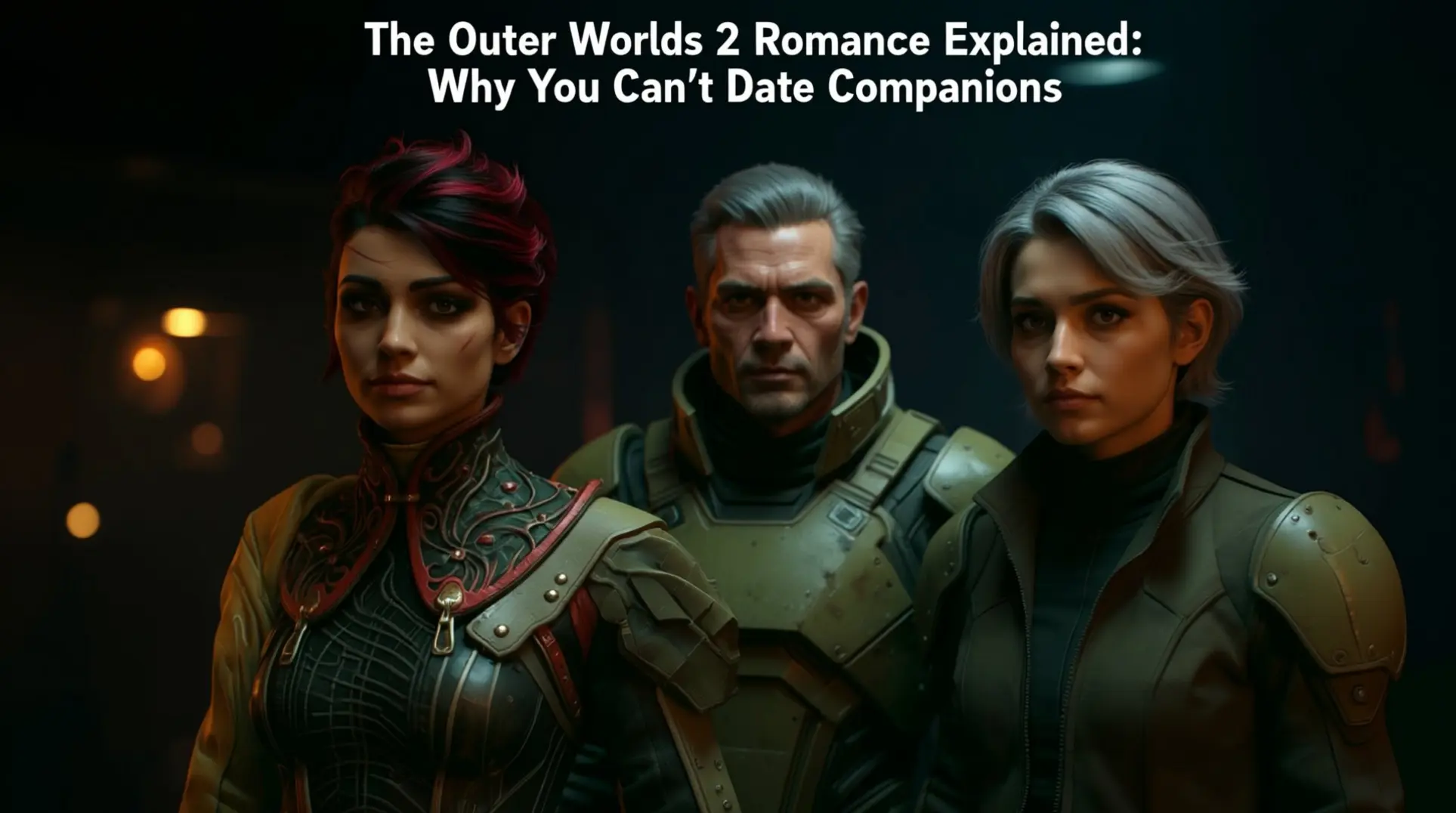
Obsidian's Design Philosophy: Narrative Over Romance
Obsidian has cultivated a distinct design philosophy emphasizing 'found family' dynamics. This approach shapes how players connect with party members. By treating party members as surrogate family, games foster emotional attachment without romantic complications.
The 'found family' concept is reinforced by intentional design where every element feeds the main narrative. Each companion interaction supports the central story. This integration ensures relationships enhance the overall experience.
Found Family: A narrative structure where characters form bonds resembling familial relationships through shared experiences rather than blood ties, emphasizing trust, loyalty, and shared goals over romantic tension.
Companions as Narrative Anchors
Developers describe companions as providing:
- More perspectives in stories
- Grounding the narrative in people a player can relate to
- Shining a light on parts of the world and lore
These characters function as narrative tools that offer varied viewpoints. They help players understand complex world-building through personal connections. Companions ground the narrative in people a player can relate to, making the story more accessible. They shine a light on parts of the world and lore.
Strategic Resource Allocation
Obsidian can allocate more development resources by avoiding romance. This strategic decision allows the team to focus their efforts more effectively.
Key resource allocation benefits:
- Quest Design: More intricate quest structures and branching narratives
- World-building: Rich environmental storytelling and lore development
- Gameplay Mechanics: Enhanced RPG systems and player choice consequences
- Character Development: Deeper non-romantic companion relationships
This concentration of resources strengthens the core RPG experience significantly.
By focusing on non-romantic companion relationships, Obsidian creates space for more nuanced character development. This approach reflects broader industry trends toward meaningful, non-romantic companion relationships. Developers recognize that emotional depth doesn't require romance mechanics.
How Companion Relationships Actually Work in The Outer Worlds 2
The Outer Worlds 2 features six companions with unique skills available for recruitment throughout your journey. Players can maintain a crew of multiple companions, though only up to two can actively join missions and dialogue at any given time.
Each companion possesses complex personality with unique quirks, abilities, and personal motivations. These individual traits directly determine how they respond to your leadership style and decision-making in the field.
Active Companions: The two characters who join you in missions and can participate in conversations and combat.
The Organic Approval System
The companion approval system operates without a visible meter, making it more organic and immersive.
This design choice forces players to pay attention to companion reactions rather than monitoring numerical values on a screen.
The hidden system affects dialogue throughout the game, with higher approval companions offering more supportive dialogue. Your choices continuously shape these interactions, creating a dynamic relationship that evolves based on your behavior and decisions.
Approval: The hidden metric that tracks how companions feel about your choices and actions throughout the game.
Loyalty and Consequences
Personal companion quests serve as the cornerstone of the loyalty system, automatically unlocking after completing introductory missions. These specialized missions provide the primary way to deepen bonds and unlock deeper story involvement with each character.
Companions may leave the party permanently if approval gets too low, creating real consequences for your actions and choices. To maintain loyalty, gaining positive reputation with a companion's faction earns their approval and keeps them invested in your cause.
The Approval System Mechanics
The approval system in The Outer Worlds 2 operates without visible meters. This intentional design choice creates a more organic experience where players must pay attention to companion reactions and dialogue to understand their standing.
You must carefully observe how companions respond to your decisions. Their immediate reactions in conversation and subtle behavior changes in the field serve as your only feedback mechanism for tracking approval.
Several factors influence your companions' opinions:
- Specific dialogue choices during key conversations
- Actions you take while exploring the world
- Decisions made during main and side quests
Low approval carries serious consequences. Companions can leave the field temporarily, refusing to fight alongside you or assist with exploration until you mend the relationship.
This system is core to the overall story arc. Your relationships aren't optional side content—they fundamentally shape the narrative experience and determine how your journey unfolds throughout the entire game.
Organic Approval Tracking: An invisible system where approval changes based on dialogue choices and actions rather than quantifiable metrics, forcing you to read social cues instead of numbers.
Loyalty Consequences and Story Integration
Higher approval directly translates to stronger companion loyalty over time. This relationship strengthening happens naturally as you consistently make choices that align with your companions' values and worldviews.
Loyal companions provide significant advantages throughout your journey. They grant access to additional dialogue options during critical moments and make new quests available that wouldn't appear with neutral or low approval.
Companion Loyalty: The bond that forms when approval reaches high levels, unlocking deeper narrative content and tangible gameplay benefits that reward investment in relationships.
The impact extends far beyond individual conversations. Companion loyalty actively influences major plot points, potentially changing how key story moments play out and altering the game's ending.
Loyalty missions are seamlessly integrated into the main storyline. Unlike traditional RPGs with separate companion questlines, these missions feel like natural extensions of the central narrative rather than optional side content.
The game deliberately avoids separate romantic arcs. The focus remains squarely on story progression and meaningful character development rather than pursuing isolated romance subplots that distract from the main experience.
The "Found Family" Concept vs Traditional Romance
The game emphasizes "found family" dynamics where companions represent different factions and perspectives. This allows for more complex character development focused on trust, loyalty, and shared goals rather than romantic tension.
By treating party members as surrogate family, games foster emotional attachment without romantic complications. This creates deeper narrative cohesion compared to optional romance subplots. It aligns with the game's themes of corporate oppression and survival in a hostile universe.
The approach ensures companion relationships serve the central narrative rather than existing as separate romantic threads. Many players appreciate that companions feel more like genuine allies rather than potential romantic conquests. The system encourages considering companion perspectives in decision-making, creating more meaningful role-playing experiences.
This makes player choices more impactful and creates authentic bonds based on shared values and objectives. The found family approach in The Outer Worlds 2 creates distinct narrative advantages that traditional romance systems often lack.
Character Development and Emotional Depth
The found family approach allows for more complex character development focused on trust, loyalty, and shared goals rather than romantic tension. These deeper bonds emerge naturally from shared adversity and mutual dependence in dangerous situations.
By treating party members as surrogate family, games foster emotional attachment without romantic complications that can distract from the main story and individual character growth arcs.
Thematic Resonance with the Setting
This companion design aligns perfectly with the game's themes of corporate oppression and survival in a hostile universe. When characters unite against overwhelming systemic forces, their bonds feel earned through mutual struggle rather than narrative convenience.
This creates authenticity in relationships and reinforces the game's anti-corporate narrative about finding humanity in dehumanizing conditions across the colony worlds.
Enhanced Roleplaying and Player Connection
Many players appreciate that companions feel more like genuine allies rather than potential romantic conquests. This shifts focus to camaraderie and mutual respect, making each character feel valuable for their unique skills and personality.
The system encourages considering companion perspectives in decision-making, creating more meaningful role-playing experiences that reflect true leadership and group cohesion in challenging circumstances.
Key benefits include:
- Companions offer unique viewpoints based on their backgrounds and experiences
- Player choices impact group dynamics and trust levels throughout the journey
- Relationships develop through shared missions and meaningful dialogue interactions
Platonic Bonds: Relationships based on friendship, loyalty, and mutual respect rather than romance. The system actively encourages considering companion perspectives in decision-making.
Player Reactions and Community Response
The announcement that The Outer Worlds 2 would lack romance options sparked immediate community discussion across gaming forums. Players who consider romance systems an essential component of modern RPG experiences expressed disappointment with this design choice.
Some players organized campaigns to voice their concerns about the missing romance features. These efforts demonstrate how design decisions can become significant points of discussion within the gaming community.
Community Perspectives
The controversy has created discussion within the RPG community about which features constitute a complete and satisfying RPG experience. Community sentiment shows mixed reactions, with some players expressing disappointment while others defend Obsidian's decision to prioritize platonic relationships.
This split represents a fundamental disagreement about game design philosophy and player expectations in modern RPGs.
Critical Reception
Professional reviewers have noted the absence of romance options in their assessments of The Outer Worlds 2. This professional criticism adds weight to community discussions about the feature's importance.
The widespread mention of missing romance options across reviews suggests the feature's absence is considered a substantial gap in the RPG experience by some critics.
Positive Reception of Platonic Relationships
Many players appreciate that companions feel more like genuine allies rather than romantic conquests. This design choice fundamentally changes how players engage with companion characters, creating more meaningful role-playing experiences that prioritize friendship and loyalty over romantic tension.
Players must weigh their allies' values and motivations without the lens of romantic pursuit, which strengthens the sense of genuine alliance. This approach resonates strongly with players who value story-driven gameplay.
The focus on platonic bonds allows for deeper exploration of loyalty, trust, and camaraderie. Companion arcs stand on their own narrative merits rather than as stepping stones to romance.
Players report that removing romantic options makes relationships feel more authentic. The emphasis on friendship creates a refreshing alternative to games where romance feels obligatory or gamified.
Alternative Perspectives
Some players feel the absence of romance limits character depth and player agency. They argue that romance systems can enhance RPG narratives without compromising integrity when implemented thoughtfully and as optional content.
Well-written romance can provide powerful storytelling opportunities and meaningful character development that complements platonic storylines rather than undermining them.
Key concerns include:
- Limited character development opportunities
- Reduced player agency in relationship choices
- Missing narrative depth that romance can provide
- Comparison to games with comprehensive romance systems
Player Agency: The player's ability to make meaningful choices that affect their character's relationships and story outcomes. This perspective suggests that romantic options add valuable complexity to character relationships.
Comparison to Other RPG Romance Systems
Players have drawn comparisons between The Outer Worlds 2's lack of romance and games like Baldur's Gate 3 and Mass Effect, which are praised for their comprehensive romance systems. These discussions highlight a growing expectation among RPG fans that deep relationship mechanics are essential rather than optional features.
The contrast becomes particularly evident when examining how these other franchises integrate romantic storylines into their core narratives.
The Narrative Power of Romantic Storytelling
Well-written romance can provide powerful storytelling opportunities and meaningful character development that complements platonic storylines. Many successful RPGs integrate both romance and friendship without either feeling compromised or underdeveloped.
This balance demonstrates that romantic content need not detract from other relationship types when handled with care and attention. These systems can create memorable moments that resonate beyond the main campaign and linger in player memory.
Players often cite romantic arcs as some of their most impactful and emotionally engaging experiences in games like Mass Effect and Baldur's Gate 3.
Comprehensive Romance Systems: Deep, integrated relationship mechanics that allow for romantic pursuit of companions and significantly impact character development throughout the game.
Divergent Design Philosophies in the RPG Genre
Comparisons to games like Baldur's Gate 3 show different approaches to integrating romance without compromising narrative integrity. This highlights how different studios prioritize different elements in their RPG design philosophy and resource allocation.
The existence of successful examples suggests the challenge is one of implementation rather than inherent incompatibility between romance and strong storytelling. Obsidian's approach reflects a deliberate choice to focus resources on other aspects of the game.
Other developers demonstrate that romance can coexist with compelling narratives, revealing the diversity of valid creative approaches within the genre.
Player Agency: The ability of players to make meaningful choices that affect character relationships, story outcomes, and their sense of investment in the game world.
What This Means for Player Agency and Storytelling
The platonic system fundamentally redirects how players interact with the narrative. By removing romantic preferences as a factor in decision-making, it encourages choices based on character alignment and moral frameworks rather than personal attraction.
This creates a more principled approach to role-playing where decisions reflect the player-character's values and ethical stance. This shift focuses player agency on broader narrative choices rather than relationship pursuits.
Players must weigh ideological compatibility and strategic alliances without the complication of romance-driven motivations. The result is gameplay where companion interactions serve the larger story rather than personal subplots, creating more consistent character development and story outcomes.
Intellectual Engagement: The system forces players to engage with companions on intellectual and ideological levels. Bonds form through meaningful debates, ethical decisions, and philosophical alignment rather than romantic gestures.
However, this approach may limit certain types of player expression and fantasy fulfillment. Players seeking romantic escapism or personal wish-fulfillment narratives will find those avenues closed. This could potentially reduce emotional investment for audiences who value romance as a core RPG element.
FAQ: The Outer Worlds 2 Romance Questions Answered
Romance Options: What to Expect
Q: Are there any romance options in The Outer Worlds 2?
No, there are no romance options with companions or named NPCs in The Outer Worlds 2. The developers have explicitly confirmed that companion relationships remain strictly platonic, focusing on friendship and loyalty instead of romantic entanglements.
Platonic Relationships: Non-romantic bonds centered on friendship, mutual respect, and shared objectives rather than romantic involvement.
Companion Recruitment and Count
Q: How many companions can I recruit?
There are 6 total companions available for recruitment throughout your adventure. You'll encounter these characters in various locations, from space stations to frontier settlements.
Each companion has dedicated loyalty missions that progress their character arcs without romantic elements. These personal quests allow you to explore their backstories and develop deeper platonic connections.
Loyalty System and Party Dynamics
Q: Do companions have loyalty missions?
Yes, every companion includes personal loyalty missions that advance their individual narratives. These quests emphasize character development and narrative depth.
Q: Can companions leave my party?
Companions may temporarily leave the field if they disapprove of actions, but won't permanently abandon unless consistently poor choices are made. The approval system monitors your decisions in real-time.
Key loyalty mechanics:
- Companions react to your moral decisions and dialogue choices
- Temporary departures trigger when approval drops below certain thresholds
- Permanent departure requires sustained negative approval over multiple decisions
- Monitor approval ratings through the companion interface to maintain party cohesion
Quick Reference: Companion System Overview
Companion System Summary:
- 6 total companions available for recruitment
- 2 active slots for missions and dialogue
- Hidden approval system - no visible meters
- Loyalty missions unlock after introductory quests
- Consequences for low approval include temporary or permanent departure
- No romance options - relationships remain strictly platonic
Conclusion: Narrative Priorities Over Romantic Options
Obsidian's choice reflects commitment to cohesive storytelling where companion relationships serve the main narrative. This approach creates more meaningful character connections focused on shared survival and ideological alignment.
The found family concept aligns with the game's themes of resistance against corporate oppression. This represents a deliberate design choice that prioritizes certain types of player engagement over others.
Key takeaways:
- Companion relationships are designed to serve the main narrative
- Character connections emphasize shared survival and ideological alignment
- The found family concept aligns with the game's themes of resistance against corporate oppression
Industry Impact and Player Reception
It sets a precedent for how narrative-driven RPGs can approach companion relationships. The discussion shows the tension between traditional RPG expectations and innovative design approaches.
The ongoing conversation about romance in RPGs reflects broader questions about player agency, narrative focus, and the evolving expectations of the gaming community.
More the-outer-worlds-2 Guides
The Outer Worlds 2: The Ultimate Scrap Economy Guide
Master the breakdown system in The Outer Worlds 2. Learn top farming routes, essential perks like Innovative and Scrapper, and advanced strategies to turn junk into victory.
The Outer Worlds 2 Weapon Mod Synergy Guide: Master Builds & Combinations
Complete guide to weapon mod synergy in The Outer Worlds 2. Learn sniper, DPS, elemental, melee, hybrid, and companion builds with optimal mod combinations.
The Outer Worlds 2 Endgame Guide: Mastering Resource Management After Level 30
Learn how to overcome The Outer Worlds 2's permanent resource crisis at level 30. Master farming, crafting, and strategic decisions for the best ending.
AI Tactical Companion
Consult with our specialized tactical engine for the-outer-worlds-2 to master the meta instantly.