Best Gaming Headsets 2026: Buying Guide for Every Budget
From planar magnetic champs and open-back sleepers to budget wired bargains — what actually matters when buying a gaming headset in 2026.
By GamepadSquire — July 30, 2026Verified
Shopping for a gaming headset in 2026 means navigating a market where a $50 wired set can genuinely rival a $120 model in audio quality, while premium wireless headsets from the likes of Audeze and SteelSeries push features you wouldn't have seen outside a recording studio five years ago. This guide breaks down the decision into what actually matters — sound signature, wireless tech, microphone clarity, comfort for long sessions — and points you to the right headset at every price tier.
What Actually Matters
Wired vs. Wireless. For competitive gaming, 2.4GHz wireless via a USB dongle is now effectively indistinguishable from wired in terms of latency — under 20ms in most implementations. Bluetooth still adds enough lag to feel off in rhythm games and fast-paced shooters. The tradeoff: wired headsets are lighter (no battery) and cheaper, while wireless adds convenience that matters if you play from a couch or have a messy desk.
Driver type and sound signature. Dynamic drivers (40mm–53mm) are what almost every gaming headset uses — they are punchy, affordable, and well-understood. Planar magnetic drivers, found in the Audeze Maxwell 2, use a flat diaphragm suspended in a magnetic field and deliver dramatically lower distortion, tighter bass, and better detail retrieval. The catch: planar headsets are heavier and more expensive. Open-back designs sound more spacious and natural but leak audio and offer zero noise isolation — they are for quiet rooms only.
Microphone quality. A boom mic on an arm beats any integrated mic for voice clarity. The best gaming headset mics (SteelSeries ClearCast Gen 2, HyperX detachable boom) rival dedicated USB mics from a few years ago. AI noise cancellation — microphone-side, not ANC — has become standard at the $80+ price point and does a good job filtering keyboard clatter and fan hum.
Battery life. Wireless headsets range from 18 hours (Logitech G435) to over 100 hours (HyperX Cloud III Wireless, Cloud Alpha Wireless). Headsets with hot-swap battery systems (SteelSeries Arctis Nova Pro Wireless) eliminate downtime entirely — one battery charges in the base station while the other powers the headset. Do not accept under 20 hours for daily use.
Platform compatibility. This is the easiest trap to fall into. Many USB dongle headsets work with PC and PS5 but not Xbox — Xbox requires a headset with a specific Xbox Wireless chip or a wired 3.5mm connection to the controller. Always verify compatibility before buying.
Budget Tier: Under $80
**
**
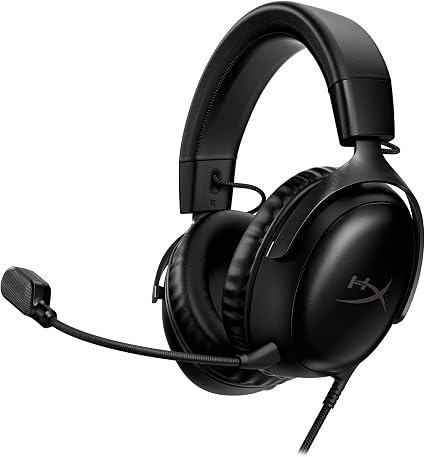
The wired budget crown has passed to the HyperX Cloud III. At $64.99 — a 35% drop from its $99.99 MSRP — it packs the same 53mm angled drivers and aluminum frame as its more famous wireless sibling into a 308g shell with memory foam pads that stay comfortable for hours. The detachable 10mm noise-cancelling boom mic is genuinely good at this price, and DTS Headphone:X spatial audio is included on PC. The main compromise is the neutral, bass-light tuning — a quick pass through the free EQ fixes most of that. An easy recommendation for wired, multi-platform gamers.
For budget wireless, the Logitech G435 LIGHTSPEED hits around $50 and delivers low-latency 2.4GHz via USB dongle plus simultaneous Bluetooth — you can game on PC while taking calls from your phone. At 165g it is one of the lightest wireless headsets available, and the 18-hour battery covers a week of moderate use. The integrated mic is fine for Discord but will not satisfy streamers.
If your priority is microphone clarity at a budget price, the SteelSeries Arctis Nova 1 (wired, ~$60) carries SteelSeries' excellent ClearCast bidirectional mic technology. It is one of the few headsets under $80 whose mic quality does not make you sound like you are calling from 2008. The Nova 1 is also exceptionally comfortable for its price — the lightweight frame and suspension headband reduce fatigue over multi-hour sessions.
If you want to spend even less, the HyperX Cloud Stinger 2 at ~$30 remains a competent wired fallback — just expect a plasticky build that will not survive a drop. And for a bassier budget wireless alternative, the Turtle Beach Stealth 600 Gen 3 ($79) is worth a look.
Mid-Range: $80–$200
This is the most competitive tier in 2026, where the performance-to-dollar ratio peaks — and where the highest-rated headset we have reviewed this year now lives.
**
**
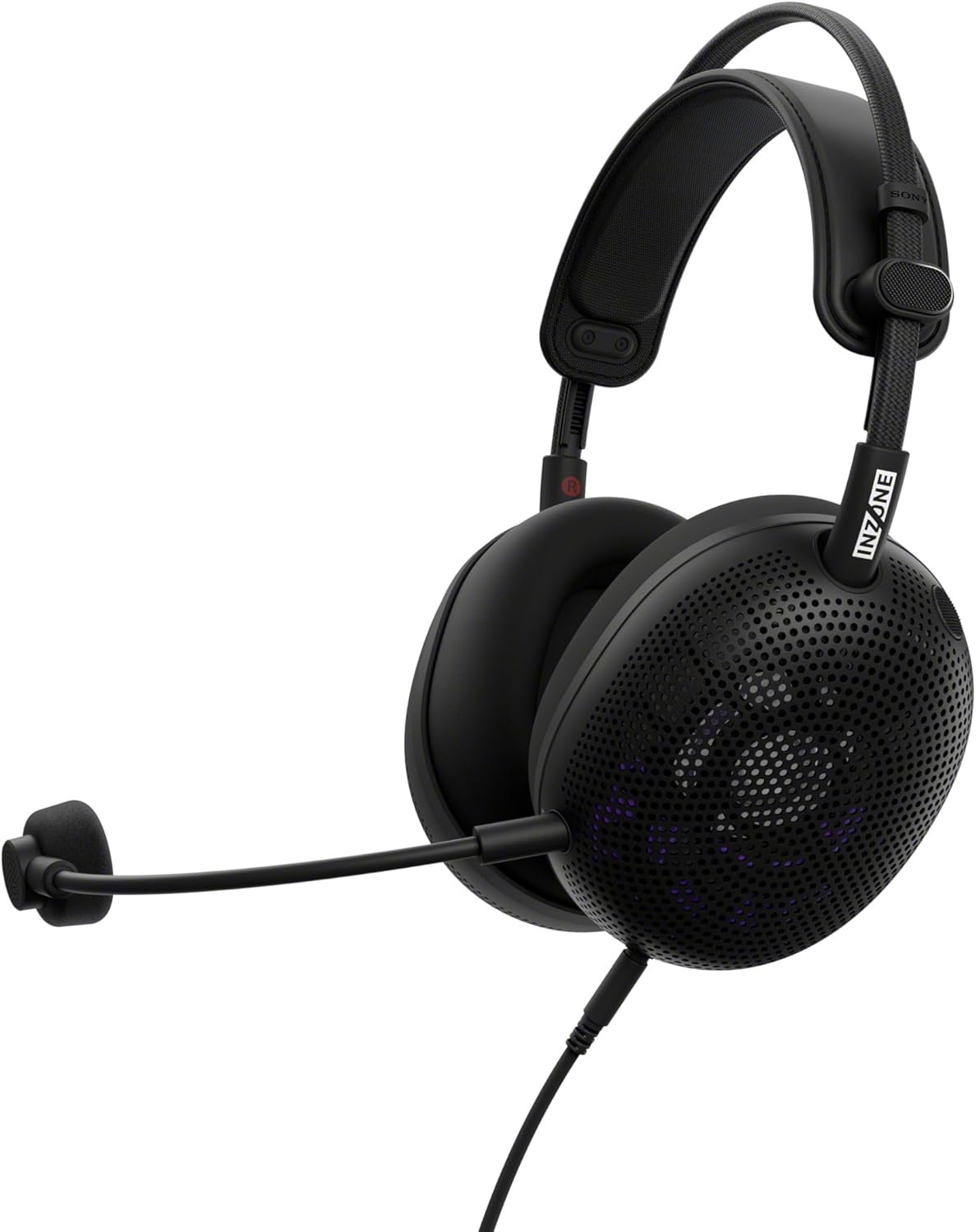
The Sony INZONE H6 Air is the best open-back gaming headset of 2026 and our highest-rated pick in this guide. Sony took the 40mm drivers from its MDR-MV1 studio monitors, put them in a 199g open-back frame, and added a USB-C Audio Box that acts as a desktop DAC — 10-band EQ presets and 360 Spatial Sound profiles save straight to the device, so your tuning follows you anywhere. The sound is spacious, natural, and detailed in a way closed-back headsets rarely match, which makes it genuinely transformative for immersive single-player and RPG gaming. It is wired, so battery anxiety does not exist, and the 3.5mm connection means it works with everything — PC, PS5, Xbox, Switch, and mobile. The catch: open-back design leaks audio and offers zero isolation, so it needs a quiet room, and the companion app is mediocre. At $199.99 it is real money for a wired headset, but nothing in the category comes close for pure audio fidelity.
**

**
At around $130, the HyperX Cloud III Wireless is our mid-range value champion. Its 53mm dynamic drivers are the largest in this price class and deliver a wide, detailed soundstage that competitive FPS players will appreciate for footstep separation. The real headline feature is the 120-hour battery life — you can game daily for three weeks between charges. Build quality is exceptional: an aluminum frame, plush memory foam ear cushions, and a detachable boom mic with LED mute indicator. The tradeoffs are a polarizing bass-light tuning (not ideal for bassheads or explosive-heavy games) and no Bluetooth support — the Cloud III Wireless uses 2.4GHz only. It works with PC and PS5 via USB-A dongle but not natively with Xbox.
**

**
The Fractal Design Scape is the surprise of the year — a stunning debut from a company better known for PC cases. For $199.99 you get clean, detailed sound from 40mm polyetherimide-diaphragm drivers, a magnetic charging dock that doubles as a stand, and genuinely painless EQ through a web app (three presets plus a five-band parametric equalizer, no software install required). Battery life is around 40 hours with RGB off — about half that with the lighting on. The compromises are a firm clamp force that takes time to break in and a divisive microphone. If you want a wireless headset that sounds great and looks like it belongs on a desk, this is it.
**

**
The Alienware AW Pro Wireless is the best all-rounder under $200. Its 50mm graphene-coated drivers deliver excellent sound, hybrid ANC with a transparency mode covers work and travel use, and the 75-hour battery (up to 40 with ANC on) outlasts nearly everything at this price. It weighs just 315g — light for a feature-loaded wireless headset — and 15 minutes of charging buys eight hours of play. Early units had quality-control issues, but a hardware revision and firmware updates have sorted them out. If you want one headset for gaming, work calls, and music, this is the one.
For console-focused buyers, the Turtle Beach Stealth 700 Gen 3 ($149.99) is our pick: 60mm Eclipse dual drivers, a class-leading 80-hour battery, and a CrossPlay dual-transmitter system that lets you mix 2.4GHz game audio with Bluetooth chat simultaneously. The 408g frame is bulky and the companion software is flaky, but the audio and battery are hard to beat at the price.
Two alternatives still hold up in this tier. The Corsair HS80 MAX at around $155 offers Dolby Atmos support, 50mm drivers, and a class-leading 65-hour battery in a build that punches above its price point — the flip-up mute mic is convenient, though the mic itself is a step down from the HS80 it replaces. And if battery life is your obsession, the HyperX Cloud Alpha Wireless at ~$109 is dongle-only but delivers a measured 327 hours of playtime with top-tier comfort. PlayStation and Xbox users should also consider the SteelSeries Arctis Nova 3P (PlayStation) and Nova 3X (Xbox) at around $100 — the Nova platform's dual-device Bluetooth + 2.4GHz and 40-hour battery at a lower price, plus a fast-charge feature (15 minutes for 9 hours of use) that is genuinely useful.
Premium Tier: $200–$350
**

**
At $330, the Audeze Maxwell 2 is the best-sounding gaming headset money can buy in 2026. Its 90mm planar magnetic drivers deliver audio clarity, detail retrieval, and low distortion that no dynamic-driver headset can match — music and cinematic single-player games sound genuinely transformative. The 80+ hour battery life and all-metal build (aluminum yokes, steel headband) are top-tier. Multi-platform support covers PC, PS5, Xbox, Switch, and mobile.
The Maxwell 2 is not without real compromises. At 560g it is punishingly heavy — the heaviest gaming headset on the market — and some owners report it sliding off when looking down due to insufficient clamp force combined with the weight. There is no simultaneous Bluetooth + 2.4GHz audio (you have to switch manually), the mute switch on the left earcup is recessed and hard to find by touch, and there is no ANC (an ANC version has been teased but is not yet available). The mic is merely adequate at this price point. If you want the best audio quality and can tolerate the weight, this is the pick. If you need all-day comfort or ANC, look elsewhere.
The Razer BlackShark V3 Pro ($249.99) is a strong alternative in this tier. It beats the Maxwell in several measured categories and comes with ANC, though its treble-heavy tuning requires EQ adjustment for some listeners. It is significantly lighter than the Maxwell and a good option if you prioritize comfort and ANC over absolute audio fidelity.
If you want effective ANC plus Sony's class-leading mic engineering, the Sony INZONE H9 II ($349.99) pairs WH-1000XM6-derived 30mm drivers with a featherweight 260g frame and a superb detachable boom mic — the tradeoffs are FPS-first tuning and a 30-hour battery.
Premium Plus: $350+
**
**
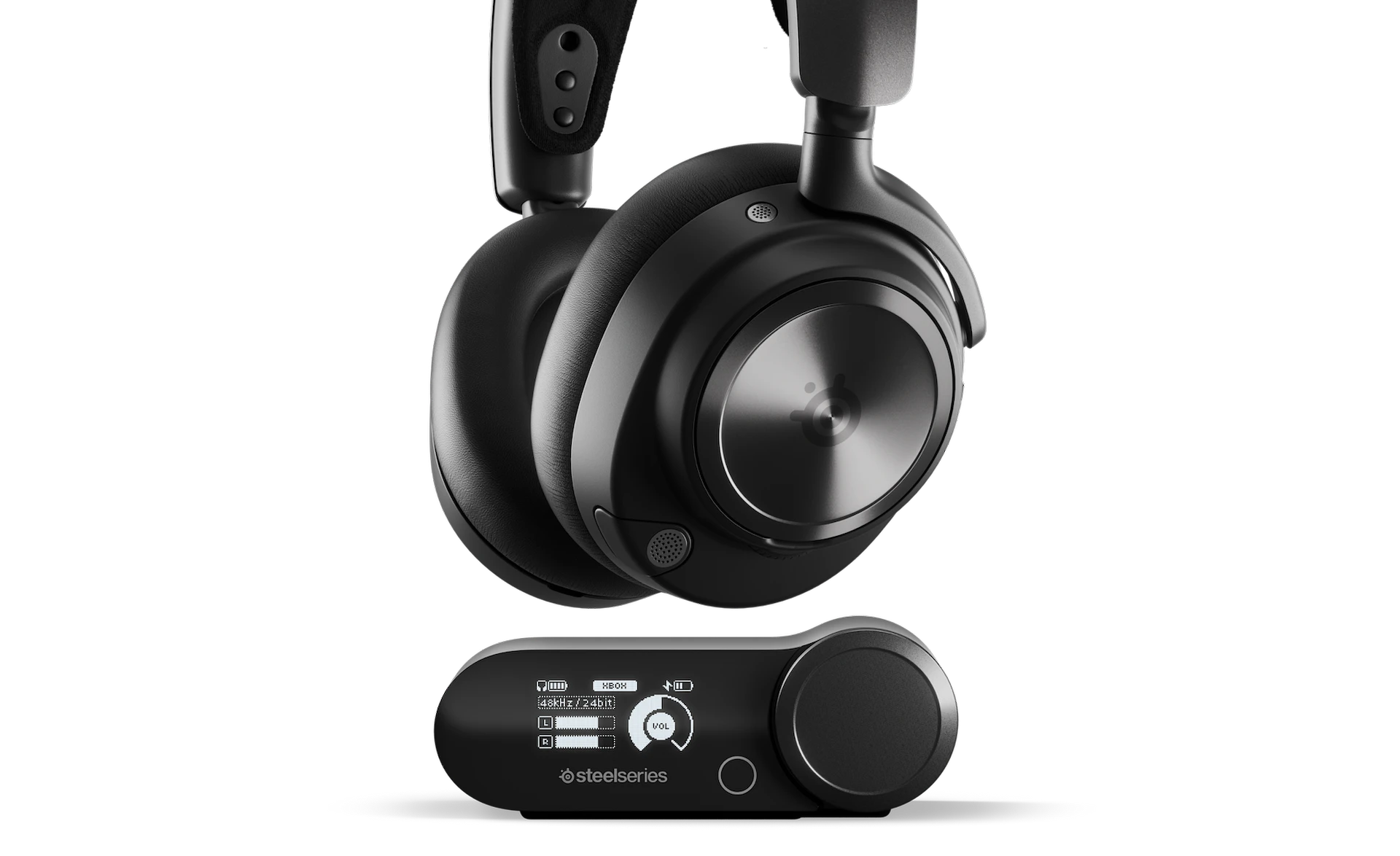
At around $377, the SteelSeries Arctis Nova Pro Wireless is the most feature-complete gaming headset on the market. Its defining feature is the hot-swap dual battery system — one battery charges in the base station while the other powers the headset, giving you infinite battery life with zero downtime. The base station itself is a DAC with dual USB inputs, an OLED display for EQ adjustments and system info, and simultaneous 2.4GHz + Bluetooth support so you can game while taking phone calls.
ANC with Transparency Mode is genuinely useful here — not Bose-level, but enough to cut out an air conditioner or PC fan noise. The ClearCast Gen 2 mic is among the best in any gaming headset, with AI noise cancellation. Sonar software on PC provides studio-grade EQ.
The downsides are a premium price, ear cups that run warm over extended sessions, and ANC that does not compete with dedicated noise-cancelling headphones from Sony or Bose. The sound quality, while excellent for a dynamic-driver headset, does not match the Audeze Maxwell 2's planar magnetic clarity. You are paying for completeness and convenience, not pure audio fidelity.
**

**
The Logitech G Astro A50 X is the only headset with a built-in HDMI 2.1 switcher. Its base station routes your Xbox, PS5, and PC through a single display with 4K 120Hz passthrough, VRR, and ALLM while letting you mix audio from all three systems (PLAYSYNC) — a genuine game-changer for multi-console setups. The 40mm graphene-coated drivers sound excellent, and the flip-to-mute boom mic is one of the best in the business. At $355.88 it is expensive, there is no ANC, and you are tethered to the dock, but if you juggle multiple consoles on one monitor, nothing else comes close.
The SteelSeries Arctis Nova Pro Omni ($379.99) is the Nova Pro's newer sibling — same hot-swap battery comfort and ANC, plus Hi-Res 96kHz/24-bit wireless and OmniPlay mixing across up to three systems via its base station. It is priced in line with the Nova Pro Wireless rather than below it, so choose between them on connectivity needs, not price.
And if money is no object, the SteelSeries Arctis Nova Elite ($599.99) is the most capable gaming headset ever made — best-in-class hybrid ANC, hot-swap batteries, and four-source mixing — though its 380g weight and tight clamp force demand tolerance for flagship compromises.
Also Worth Considering
For open-back enthusiasts — players who value soundstage and natural imaging over noise isolation — the Beyerdynamic MMX 300 Pro (wired, ~$229) remains a top wired pick, with audiophile tuning and exceptional build quality. It requires a quiet room to shine but delivers positional audio that competitive gamers swear by.
PS5 owners who want Tempest 3D Audio without dongle fuss should also consider the PlayStation Pulse Elite ($149.99), which delivers solid wireless sound with a comfortable fit at a fair price.
How to Choose
| Use Case | Pick | Why |
|---|---|---|
| Best all-around value | HyperX Cloud III Wireless | 120h battery, great build, ~$130 |
| Best audio quality, no compromises | Audeze Maxwell 2 | Planar magnetic sound, needs weight tolerance |
| Top-rated open-back | Sony INZONE H6 Air | 8.8/10, 199g, wired, needs a quiet room |
| Best mid-range wireless all-rounder | Alienware AW Pro Wireless | ANC, 75h battery, 315g, ~$180 |
| Infinite battery, wireless convenience | SteelSeries Arctis Nova Pro Wireless | Hot-swap batteries, ANC, best mic |
| Budget wired, any platform | HyperX Cloud III Wired | ~$65, aluminum build, great mic |
| Budget wireless | Logitech G435 LIGHTSPEED | 165g, dual-device, ~$50 |
| Xbox native wireless | SteelSeries Arctis Nova 3X | Best Xbox-specific wireless under $150 |
| Best mic at budget price | SteelSeries Arctis Nova 1 | ClearCast mic rivals $150 headsets |
Prices checked August 2026. We update this guide as new headsets are reviewed.
Related Guides
Buying Guide
Best Gaming Headsets for Glasses Wearers 2026: The Comfort-First Buying Guide
The glasses-comfort problem, solved with data. Every headset we have reviewed that genuinely works with glasses — the Turtle Beach Stealth 600 Gen 3 with its ProSpecs glasses-relief cushions as the best overall pick, the HyperX Cloud III for wired comfort, the featherweight Logitech G435, the premium SteelSeries Arctis Nova 7 Gen 2, and the budget Cloud Stinger 2 — plus what actually matters (memory foam depth, clamping force, weight, over-ear design) and the headsets glasses wearers should skip.
Buying Guide
Best Wired Gaming Headsets 2026: The Complete Buying Guide
The wired category delivers the best sound-per-dollar in gaming audio, and this hub covers every wired headset we've reviewed: the HyperX Cloud III as the best overall wired pick, the Cloud Stinger 2 for budget comfort, the Logitech G432 as the lab-backed PC all-rounder, and the Razer Kraken V3 X for bass and mic on PC. Platform compatibility, durability, and mic quality — the three things that actually decide whether a wired headset works for you.
Buying Guide
Best Gaming Headsets Under $100 in 2026: The Mid-Budget Buyer's Guide
The $50-100 headset band decoded: the Turtle Beach Stealth 600 (Gen 3) as the RTINGS-verified best overall now at $89.99 street, the HyperX Cloud III as the wired value benchmark, plus the Cloud Jet, the sub-30ms Soundcore VR P10 earbuds, and the G435 (whose street price has drifted up toward $70) — with the compatibility traps, battery realities, and mic differences that actually decide whether a mid-budget headset works for you.