Understanding The Finals & Arc Raiders Connection: A Shared Universe?
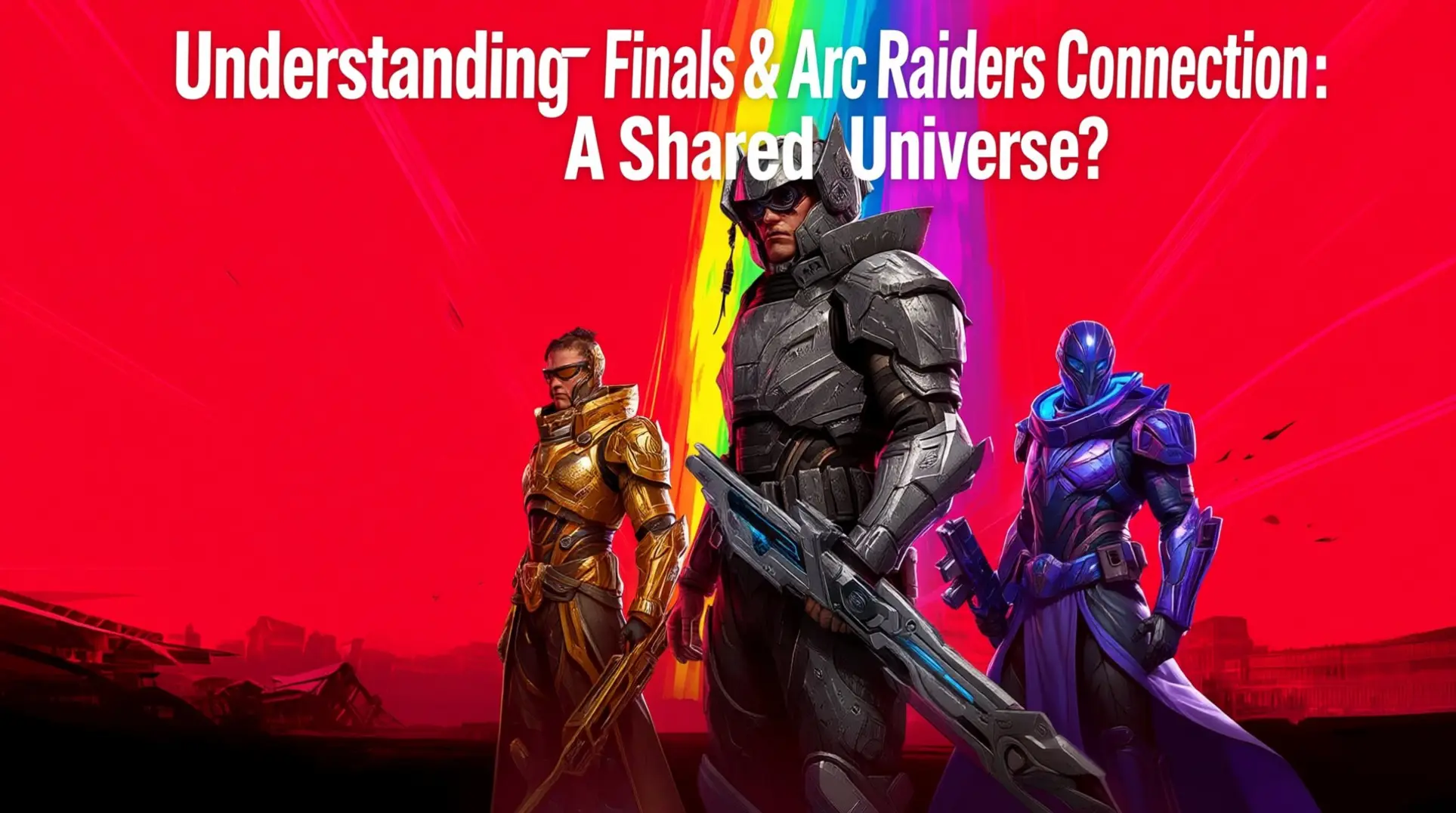
The Embark Studios Dual Launch
With The Finals released in December 2023 and Arc Raiders set to launch in late October 2025, the gaming community takes notice. The Finals released in 2023, and Arc Raiders launches in 2025, creating distinct release windows for the relatively new developer and sparking curiosity about their potential relationship.
The Arc Technology Mystery
Arc Technology: In The Finals, this refers to arena infrastructure and volumetric printing. In ARC Raiders, the Arc refers to the AI robotic ecosystem. While they share visual motifs and a cassette futurism aesthetic, they represent distinct in-universe concepts rather than a single shared technology.
Investigating the Connection
Community speculation has flourished across forums and social media platforms. Players actively dissect visual similarities, thematic parallels, and gameplay mechanics as potential evidence of deliberate world-building. However, these connections remain officially unconfirmed by Embark Studios.
This investigation will separate verifiable facts from enthusiastic fan theories. We will examine developer statements, in-game evidence, and the studio's broader design philosophy to determine whether these games truly exist within a shared continuity. The timing of these releases suggests either a long-term strategy or something more ambitious.
Official developer hints have emerged through interviews and social media posts, but they require careful analysis to understand their true meaning and intent. Our evidence-based approach will provide much-needed clarity on this intriguing possibility.
The Arc: Core Threat and Shared Worldbuilding
The connection between The Finals and Arc Raiders centers on their shared design aesthetics and visual language. While both feature advanced technology, 'ARC' refers either to arena infrastructure in The Finals or the AI enemy ecosystem in Arc Raiders. The underlying worldbuilding suggests a cohesive visual style tied to cassette futurism, though the narrative implementation differs significantly.
This shared universe is explored through two distinct narrative lenses. Arc Raiders presents a direct survival narrative where players battle robotic invaders known the ARC in a desolate, scavenger-based setting. The Finals offers a more mediated experience, reframing destruction as competitive entertainment within a futuristic game show built around hyper-realistic destruction and real-time arena reshaping.
Together, these titles build a speculative world where advanced technology manifests as both existential threat and commercial spectacle. Visual elements serve as the connective tissue, enabling advanced destruction physics as a core worldbuilding element while the post-apocalyptic setting provides a thematically rich backdrop for exploring how different human societies might respond to technological devastation through environmental storytelling in ruined cities and virtual arenas alike.
Arc technology and its role in both titles
ARC Technology: A powerful force that enables advanced destruction physics and shapes the worldbuilding in both games. While the term appears in both, its narrative purpose diverges significantly.
In Arc Raiders, players confront robotic invaders known as the ARC within a post-apocalyptic world. This ARC represents an AI force that has decimated Earth, creating a desolate, scavenger-based setting where survival is paramount.
The Finals employs its ARC technology to create fully destructible arenas, where the environment can be reshaped in real-time during competitive matches. The world of The Finals is built as a futuristic game show, with the ARC tech enabling the spectacle of destruction as a form of mass entertainment.
Both games share a focus on advanced destruction physics as a core part of their worldbuilding. This technological foundation manifests in distinct ways:
- In Arc Raiders, ARC is the existential threat that destroyed civilization
- In The Finals, ARC is the enabling tool for competitive spectacle
- Both leverage tech to create dynamic, transformative environments
Post-apocalyptic setting as connective tissue
Post-apocalyptic Aesthetic: A visual and thematic approach that explores survival, competition, and humanity's relationship with technology through devastated landscapes. Arc Raiders features environmental storytelling through ruined cities, abandoned outposts, and the remnants of human civilization overrun by ARC machines.
These devastated landscapes communicate the history of humanity's fall and the ongoing struggle against mechanical domination. Both games utilize a post-apocalyptic or dystopian aesthetic to explore themes of survival, competition, and humanity's relationship with advanced technology.
This shared thematic framework connects the experiences despite their different gameplay contexts and narrative tones. The Finals is set in a virtual combat arena show, with a world built around hyper-realistic destruction and environmental storytelling. While presented as entertainment, the underlying dystopian vision suggests a society that has turned catastrophic technology into sport, reflecting on humanity's adaptability to disaster.
Shared Lore Beats Across Arc Raiders and The Finals
Arc Raiders and The Finals demonstrate a shared narrative framework through overlapping world-building elements and consistent storytelling approaches, particularly in visual design. The connection appears in both the thematic content of their universes and the methods used to deliver lore to players, creating a cohesive experience across both titles that rewards exploration and attention to detail.
Corporate entities establish power structures after societal collapse, while post-crash culture themes emerge in both titles, showing how society adapts after technological catastrophe. Environmental storytelling through ruins, abandoned structures, and technological debris reinforces these shared concepts, making the world itself a narrative device that players must read and interpret.
The narrative delivery methods also align between the two games. Both use environmental storytelling as their primary method of lore delivery, with item descriptions and codex entries that reveal backstory gradually. Mission context and faction symbolism provide additional narrative depth, while visual design elements suggest a shared aesthetic vision that unifies the post-catastrophe setting.
Core Lore Threads That Appear in Both Games
Players find technological artifacts scattered throughout their worlds from a pre-collapse civilization. These items serve as tangible connections to the lost past, offering players physical evidence of advanced technology. Their placement tells stories about where people were and what they were doing when disaster struck, making each artifact a narrative clue.
Corporate entities: Power structures that appear in both settings, suggesting how post-collapse social organization has evolved. These organizations control resources and territory, creating new hierarchies in the aftermath of technological disaster. Their presence indicates that corporate influence persists even after civilization's fall, shaping the new world order through control of scarce resources.
Post-crash culture themes: The societal adaptations that emerge in both titles after technological catastrophe. The games reveal what happens when advanced civilization falls and survivors must build new cultural frameworks from the wreckage. These adaptations demonstrate humanity's resilience and ingenuity in extreme circumstances, showing both continuity and transformation as new societies emerge.
- Environmental storytelling appears through ruined landscapes and abandoned structures
- Technological debris litters both game worlds, serving as narrative markers
- These visual elements create a consistent post-catastrophe atmosphere across both titles
- Players piece together history through these environmental details
Narrative Motifs and World-Building Methods
Environmental storytelling: The primary method of lore delivery in both games. The world design itself communicates history and context, allowing players to piece together narratives through exploration rather than exposition. This approach makes the environment an active participant in storytelling rather than just a backdrop. Every ruined building and piece of debris has potential narrative significance that observant players can interpret.
Item descriptions and codex entries: Text fragments that reveal backstory gradually. These provide discrete pieces of information that players collect and assemble into a larger understanding of the game world. This method respects player agency and encourages thorough exploration. The fragmented nature of these texts mirrors the broken world they describe, creating thematic consistency.
- Mission context provides narrative depth to player objectives
- Faction symbolism reinforces ideological differences between groups
- Visual design elements suggest a shared aesthetic vision across both titles
- These combined techniques create a cohesive narrative experience that unifies both games
Developer Hints and Official Position
The evaluation of shared universe evidence requires a methodical approach to official sources. Developer statements across multiple channels create a hierarchy of reliability, from controlled press releases to informal social media posts. Understanding this spectrum helps distinguish between deliberate hints and ambiguous language used to maintain mystery.
Analyzing official documents and interviews demands attention to both what is said and what is omitted. Concept materials may reveal planned connections that later statements contradict or clarify. Press interviews provide the most direct access to developer intentions, while conference presentations reveal larger creative visions.
The most reliable connections emerge when multiple source types align. Official press releases establish the studio's official narrative position. When these agree with interview statements and concept materials, the evidence strengthens.
- Prioritize official press releases for definitive statements about canon
- Use interviews to understand developer intentions and thinking
- Cross-reference social media communications for consistency with formal messaging
- Treat concept materials as developmental artifacts that may show early plans
- Note contradictions between source types as potential evolution of ideas
Direct statements from Embark Studios
Official Confirmation: This is the process by which studios formally validate shared universe connections through authorized channels.
Developer interviews often address direct questions about shared universe connections. These interviews serve as a primary vehicle for official confirmation, which typically comes in press releases, interviews, or developer statements. The interactive format can yield both planned and spontaneous information.
Studios may use ambiguous language to maintain mystery while hinting at connections. This deliberate vagueness makes interpretation challenging for players seeking clear answers. Social media communications from developers can provide insight into official position. Less formal than press releases, these channels still reflect studio-sanctioned messaging.
- Monitor gaming press interviews for direct quotes about universe connections
- Track official social media accounts for cryptic hints or clarifications
- Compare language consistency across all communication platforms
- Note when developers deliberately avoid direct answers to specific questions
The role of official documents, interviews, and concept materials
Primary Sources: These are official materials that reveal developer intentions and creative visions.
Press interviews provide the most direct access to developer intentions. These conversations allow journalists to probe for details about shared universe elements that might not appear in prepared statements. The direct questioning format often yields specific answers.
Game documentation and concept materials reveal planned connections. These artifacts show early creative decisions and narrative blueprints. They represent the developmental vision before public release. Developer conference presentations often reveal larger creative visions. These talks showcase the studio's broader narrative ambitions. The presentation format encourages sharing of developmental philosophy.
Official press releases establish the studio's official narrative position. This channel prioritizes clarity and brand consistency. Press releases represent the most controlled communication.
- Review archived press interviews for early development statements
- Examine official art books and collector's edition materials for concept art
- Watch developer conference presentations for creative direction clues
- Analyze press release language for definitive versus ambiguous statements
In-World Evidence: Environmental storytelling, Items, and Lore Bits
Players can discover tangible connections between The Finals and Arc Raiders through careful observation of in-game elements. The evidence appears through environmental storytelling, collectible items, and scattered lore fragments that collectively suggest a shared universe. These discoveries require dedicated exploration and attention to detail across both titles.
The proof emerges from two distinct but complementary sources that players can verify themselves. Environmental artifacts provide visual evidence of shared technology and history through world design. Text-based discoveries deliver explicit narrative connections through overlapping terminology and references. Both categories reveal patterns that point to common origins and suggest the games exist within the same fictional framework.
In-game artifacts and environmental cues
Environmental storytelling provides physical evidence connecting both game worlds. Visual remnants are visible throughout both environments, suggesting a shared technological foundation or aesthetic. Players can observe these details directly while exploring maps and investigating points of interest.
Environmental Storytelling: The design technique where visual details and world geometry convey narrative information without direct exposition.
Ruined buildings and abandoned structures appear in both titles, hinting at catastrophic events that affected both settings. Corporate logos and faction symbols show design consistency across the games, suggesting interconnected power structures. Environmental destruction patterns suggest a common technological cause. These visual elements work together to create a cohesive argument for shared world-building.
The placement and condition of these artifacts tell a story. Players who compare locations in both games will notice parallels in how structures have decayed. The consistent visual language appears throughout both titles.
- Visual remnants scattered throughout both game environments
- Ruined structures indicating shared catastrophic events
- Consistent faction symbolism and corporate branding
- Similar destruction patterns pointing to common technology
Item descriptions, codex entries, and dialogue hints
Text-based lore delivery reveals connections through overlapping terminology and shared references. In-game text elements contain overlapping terminology about advanced technology and its effects. Players can find these details in various menu systems and during gameplay moments.
Lore Fragments: Scattered text entries including item descriptions, codex pages, and dialogue that collectively reveal world-building details.
Players report finding similar code fragments and data logs that reference comparable catastrophic events. NPC dialogue references shared locations and entities across both games. These textual elements provide explicit connections that complement the visual evidence found in environments. The consistency in terminology appears throughout both games' text systems.
Reading through these texts reveals deliberate connections. Specific terms and references echo across both games. This textual layering appears throughout item descriptions and codex entries.
- Code fragments and data logs with similar content
- Item descriptions containing overlapping technology concepts
- NPC dialogue mentioning shared locations and entities
- Codex entries using consistent terminology about the Arc
Timeline, Chronology, and Cross-Title Narrative Feels
The relationship between Arc Raiders and The Finals likely extends beyond shared aesthetics into a cohesive timeline. Both games appear to exist within the same post-catastrophe universe, though their placement along that timeline remains speculative. This section examines the chronological framework while acknowledging the lack of definitive canon.
By analyzing environmental storytelling and narrative context, we can construct a logical sequence that enhances appreciation of both titles. The progression suggests a world gradually transforming from survival to spectacle, with each game capturing a distinct phase of societal adaptation to the Arc event. This interpretation remains grounded in observable details while avoiding definitive statements about official lore. The following subsections explore this potential chronology and its impact on player experience across both games.
Event sequencing across the Arc arc
Arc Raiders appears to occur during the active recovery phase after the Arc catastrophe: the central disaster that shattered civilization. The world shows signs of recent devastation, with humanity struggling to rebuild and survive in the immediate aftermath. Environments suggest ongoing salvage operations and infrastructure rebuilding efforts that characterize this recovery period.
The Finals suggests a later period where destruction has been commodified. Combat arenas and televised matches indicate society has moved beyond basic survival to embrace conflict as entertainment. The gleaming arenas and corporate sponsorships point to a fully established economic system built around competition.
Both games reference pre-Arc civilization and its collapse. These shared historical touchstones ground the narrative in a common past, suggesting the same cataclysmic event shaped both worlds. The ruins and artifacts scattered throughout both titles reinforce this shared heritage.
The timeline suggests Arc Raiders events may precede The Finals setting. This chronological progression shows humanity's evolution from desperate scavengers to organized competitors within a transformed society. The shift from cooperative survival to competitive spectacle marks a clear societal transformation.
Implications for player experience and lore discovery
Players in Arc Raiders experience the aftermath of Arc devastation directly. The gameplay emphasizes survival and resource gathering in a world still bearing fresh wounds. Every mission reinforces the struggle for basic necessities in a shattered landscape.
The Finals represents how society has adapted to Arc technology. Competitive combat and broadcast spectacle show a civilization that has integrated the catastrophe into its culture. Players participate in a system that has normalized and commercialized conflict.
Cross-game discoveries: environmental details and narrative fragments that illuminate the broader timeline when examined together. These elements in each title provide deeper understanding of world history. A ruin explored in Arc Raiders might appear as a reconstructed arena in The Finals.
Player actions in one game may illuminate discoveries in the other. Success in Arc Raiders' salvage missions might parallel the wealth and technology displayed in The Finals' arenas. This creates a meta-narrative layer for dedicated fans.
Community Theories, Debunking, and Engagement
Community theories emerge from player observations and interpretations. This natural process reflects how players actively engage with game narratives and world-building elements to create meaning. The community analysis framework demonstrates that evidence-based evaluation separates verified facts from speculation.
Popular theories from the community
One prominent theory suggests that Arc Raiders is a prequel showing the initial Arc catastrophe. This timeline interpretation positions Arc Raiders as the foundational disaster event that later shapes The Finals universe in significant ways.
Another theory proposes that The Finals represents post-Arc recovery through competitive entertainment. This perspective views the game's tournament structure as a cultural response to rebuild society after the catastrophic Arc event.
A third hypothesis states that both games are simulations within the same universe. This meta-narrative approach suggests the gameplay itself exists as a constructed experience within the larger fictional lore.
The final major theory involves shared corporate entities controlling both settings. This interpretation connects the games through common power structures and organizational interests rather than direct chronological narrative links.
Debunking claims with evidence
Evidence-based evaluation separates verified facts from speculation. This critical methodology requires careful distinction between confirmed information and theoretical possibilities that lack support.
Addressing theories that lack supporting documentation maintains community analytical standards. When no in-game evidence or developer statements support a claim, it properly remains in the realm of speculation rather than accepted fact. Evaluating theories based on in-game evidence and developer statements provides the most reliable validation. Observable game elements and official comments offer concrete foundations for serious analysis and community discussion.
Noting theories that contradict observed game elements helps prevent misinformation spread. When theoretical proposals conflict with established gameplay mechanics or narrative elements, they require careful re-examination by the community. Community engagement drives ongoing discovery and analysis as players test theories against observable in-game evidence, transforming individual observations into collaborative investigations where evidence-based evaluation separates verified facts from speculation.
This systematic approach ensures community theories remain grounded while fostering deeper appreciation for both games, strengthening player connections through shared analytical pursuits, maintaining critical standards necessary to distinguish compelling narrative possibilities from confirmed lore, and creating an environment where creative interpretation enhances rather than obscures narrative design. Ultimately, this process demonstrates how player communities function as valuable extensions of the creative ecosystem while preserving analytical integrity, preventing misinformation from becoming accepted canon, ensuring that speculation serves as engaging discussion rather than false certainty, and reinforcing the principle that theories should always be tested against observable evidence before gaining widespread community acceptance.
Frequently Asked Questions (FAQ)
Are The Finals and Arc Raiders part of the same universe?
Both games share significant world-building elements that suggest a connected universe. These include Arc Technology: While the names sound similar, in The Finals it powers the arena show, while in Arc Raiders it represents the enemy AI. The games also share post-apocalyptic aesthetics and similar destruction physics systems that create visual consistency.
However, developer confirmations remain limited and ambiguous. This leaves the connection unverified despite strong visual and thematic evidence from the games themselves. Environmental Storytelling: Both titles use this method to provide additional connecting threads that players have observed. Community Theories: These continue to emerge as fans analyze shared elements and search for deeper lore connections.
What concrete evidence supports a shared universe?
The strongest supporting evidence includes several key overlapping elements that players have identified through careful observation.
- Visual Design: The games share post-apocalyptic aesthetics and similar destruction physics systems that create a cohesive look and feel.
- Shared Brands: Identical corporate sponsorships and design motifs appear in both titles.
- Environmental storytelling approaches provide subtle narrative connections between the worlds.
These concrete elements combine to create a compelling case for a shared universe, though developer confirmations remain limited and ambiguous.
How should players interpret lore differences between the games?
Lore differences may reflect different time periods within the same universe. Timeline: The potential chronological relationship between the games could explain narrative gaps and world changes observed by players.
Different narrative focuses and gameplay priorities could also explain variations. Each title emphasizes different aspects of the world to serve its specific gameplay needs and story objectives. Players should view these differences as complementary perspectives rather than contradictions. This interpretation allows both games to exist in a shared reality while maintaining their distinct identities and gameplay experiences.
Will future updates deepen the shared-universe connection?
Future updates may provide clearer confirmation of the shared-universe connection. However, developer confirmations remain limited and ambiguous at this time, making any predictions uncertain.
Players should rely on observable in-game evidence rather than speculation. Community theories will likely continue to emerge as players analyze new content and search for hidden connections. The potential for deeper connections exists through timeline expansion and additional environmental storytelling. Concrete answers ultimately depend on developer priorities and creative decisions moving forward.
Conclusion
The evidence for a shared universe between The Finals and Arc Raiders presents a compelling case built primarily on visual and thematic similarities. Shared aesthetics and design motifs serve as the strongest connecting elements, appearing as both destructive force and enabling tool across both titles. Environmental storytelling techniques, overlapping corporate structures, and consistent post-apocalyptic aesthetics further reinforce this connection.
However, this investigation must acknowledge significant limitations. Developer statements remain limited and deliberately ambiguous, preventing definitive confirmation of the shared universe theory. Community theories, while creative and engaging, require careful evaluation against observable evidence rather than acceptance as canon.
For players seeking to explore potential connections, both games reward careful attention to environmental details, item descriptions, and narrative fragments. Cross-referencing discoveries between titles may reveal deeper patterns and connections that enhance the overall experience. The future of this shared universe theory depends largely on developer priorities and creative decisions. Official clarification would provide much-needed certainty, but until then, players can continue their investigative journey through both titles, appreciating the rich world-building elements that suggest a connected narrative framework.
More Arc-Raiders Guides
Arc Raiders Extraction Timer: Grace Period Reality Explained
Discover the truth about Arc Raiders' extraction timer mechanics, grace period claims, and proven strategies for successful extractions.
Is Speranza the Only Settlement? Arc Raiders Theories
Explore theories about other settlements in Arc Raiders beyond Speranza. Evidence suggests a larger underground civilization exists.
ARC Raiders Shield Mastery Guide: Complete Breakdown of Mechanics, Weapons & Loadouts
Learn how shields actually work in ARC Raiders. Master damage mechanics, optimal weapons, and perfect loadouts for PvP and PvE. Break shields efficiently with our expert guide.
AI Tactical Companion
Consult with our specialized tactical engine for Arc-Raiders to master the meta instantly.