Pioneers of Pagonia: Complete Guide to Lore, Factions, and Gameplay
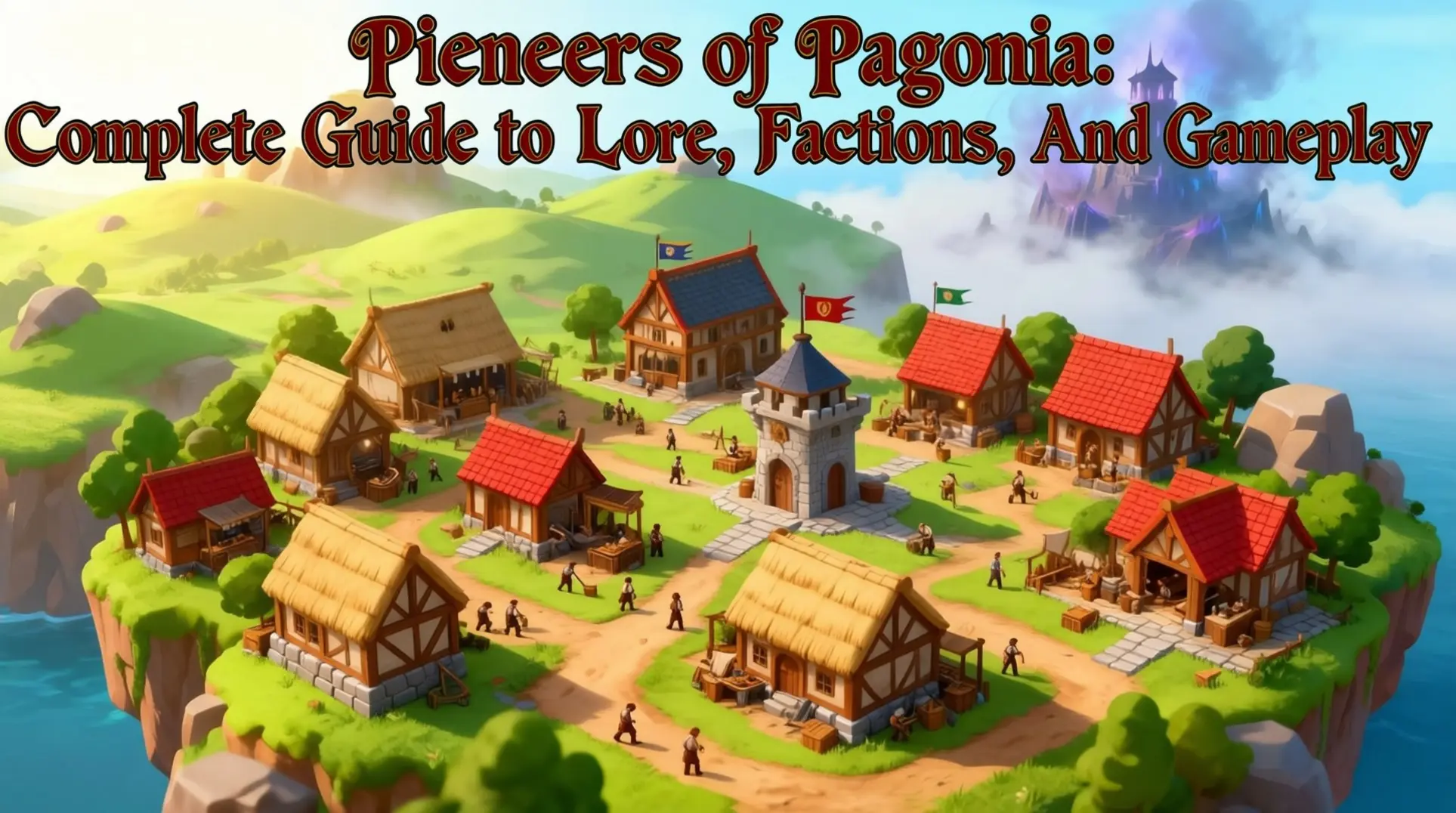
The world of Pagonia was shattered by a magical cataclysm, leaving behind a fractured archipelago haunted by spectral fog and monstrous Hollowed. This guide delves into the lore and mechanics of Pioneers of Pagonia, explaining the origins of the Calamity, the factions that emerged from it, and the strategies you'll need to survive and rebuild. You'll learn how to navigate the story acts, manage artifacts, and ultimately restore the Tower of Visions to secure your legacy.
The Great Calamity: Pagonia's World-Shattering Catastrophe
Origins of the Fog: The Fissures Between Worlds
It started when an impervious magical fog poured from fissures between worlds, and this wasn't just some spooky mist you'd burn away with a torch. The Pagonians had actually learned to tame the magic flowing through their lands, but here's the kicker: the fog didn't just appear - it urged that magic toward every single island, saturating everything. That's where the Spectres come from, by the way. They spawn from a Broken Tomb hidden deep in that fog, rising straight out of those same magical fissures.
The Shattering: Continent to Archipelago
Then came the real damage. A continental-wide tectonic rupture tore Pagonia apart, turning what used to be a single super-landmass into the patchwork of floating islands you're exploring now. We're not talking neat little land divisions here - the continent literally broke into countless shards of earth that drift above a mist-filled abyss. So yeah, the world you see? It's what's left after the planet itself cracked open.
Societal Collapse: The Lost Harmony
Before all this, the tribes of Pagonia lived in actual peace. They'd built a harmonious society across the entire continent, running on continent-wide supply chains that let them trade, inter-marry, and share technology freely. But when the land split overnight, those connections didn't just fade - they snapped completely. Each island got stranded with only a fraction of the resources it needed, and tribes that once were neighbors started developing their own dialects and customs in isolation. That's why every island feels like its own little world now.
The Hollowed: Boss Enemies Born from the Fog
These aren't just bigger wolves with more health. The Hollowed are something else entirely - boss-tier nightmares that seem to be born directly from the fog itself, which gives them an almost elemental, supernatural quality. The revamped 1.0 campaign really leans into this with new cutscenes and mission dialogue that finally explain where these things came from.
You'll only encounter them after clearing specific fog tiles or hitting certain story milestones, so the fog isn't just a passive weather effect - it's a living, hostile ecosystem that's actively spawning bosses to push back against your progress. Each Hollowed fight is a proper boss encounter with massive health pools, unique mechanics, and often multiple phases, so don't expect to just zerg-rush them like regular mobs.
Nature of the Hollowed: More Than Monsters
The key thing to understand is that Hollowed represent corrupted beings stripped of memory and will. They're not wildlife that wandered into the fog; they're manifestations of it. This distinction matters because it affects everything from their combat design to how you counter them. While normal enemies have predictable patterns, Hollowed adapt, phase-shift, and sometimes spawn minions mid-fight.
Key Hollowed Encounters and Mechanics
Werewolves are the worst offenders here. They're arguably the most dangerous creature in Pagonia, and sending standard soldiers against them is basically feeding your own troops to the meat grinder. The real kicker? Your regular units have a high chance of getting bitten and converting into werewolves themselves, which creates this brutal snowball effect where your own army becomes the threat.
The only reliable counter is Fearnaughts - elite swordsmen with built-in critical chance who deliver armor-piercing strikes specifically designed for supernatural enemies. You'll need to recruit them from the Barracks using Silver Blade and Light Armor (one of each per Fearnaught). Once you have them, set patrol points near enemy camps so they can take down werewolves from range before they ever get close enough to bite your other units.
The Tower of Visions: Symbol of Unity and End-Game Objective
Historical Purpose: Seeing Across Time
Post-Calamity Function: Chaotic Visions
Gameplay Significance: Restoration and Victory
Restoring the Tower of Visions is the final chapter (Map 7: The Final Fray) of the campaign, serving as the narrative climax. Completing the campaign unlocks cosmetic monuments and a profile badge. The moment you bring home the fifth artifact, the tower's foundation automatically appears on the central plateau, which means you can't relocate it. Make sure you've pre-cleared the area with watch-towers, because you're stuck with that spot.
Each floor is a construction project with a critical twist: you must perform a one-time rite while the scaffolding is up. Miss the rite and you'll have to demolish the entire floor and start over, so pay attention.
Floor 1 – Threshold needs 40 Stone, 20 Planks, and 10 Torches. The rite, Light the Braziers, requires six villagers assigned simultaneously. It's straightforward, which makes it easy to mess up if you're not paying attention.
Floor 2 – Archive demands 60 Stone, 30 Clay, and five Artifacts. The Inscribe History rite needs three Scholars, and finishing it unlocks lore entries like The First Pacts plus new decorative banners in your build menu.
Floor 3 – Astrolabe costs 80 Iron Parts, 20 Glass, and 10 Copper. The Align Lenses rite is a five-minute channel, and you'll need to protect your scholars the entire time. The payoff is huge, though: your night-time fog-of-war radius permanently shrinks by 15% on every future map.
Floor 4 – Council needs 100 Iron Parts, 40 Glass, and 15 Gold. The Seat the Delegates rite is tricky - each faction envoy must reach the tower alive. If you rescued the Elari, Dondar, Nomad, and Merfolk envoys during side quests on maps 1-3, this unlocks faction embassies in your build menu.
Floor 5 – Vision is the big one: 120 Steel, 50 Glass, 20 Gold, and five Legendary Artifacts. The Restore the Spire rite takes ten real-time minutes, and every single envoy must be present. Once complete, the Legendary Artifacts slot becomes a passive relic altar, with each artifact granting a global buff like +10% crop yield or +5% mining speed.
Once you restore the Tower of Visions, the fog permanently recedes by three tiles in every direction and you get a flat +10% research speed boost empire-wide. That's a massive win, so the restoration is absolutely worth the headache.
Artifacts, Memory Shards, and the Legends System
Artifact Types and Acquisition Methods
You'll run into five distinct treasure families while exploring: Jewels, Scepters, Golden Compasses, Crystalline Skulls, and Miscellaneous. These aren't just collectibles - they're full commodities you can stash in a Treasury and haul between settlements with Carriers.
So where do you find them? Your Treasure Hunters can excavate ruins that hide buried chests, and each ruin typically yields one to three artifacts from any mix of those families. If you want a more direct route, the Community Challenge map has elite bandit champions who drop a guaranteed artifact when defeated.
Once you've got them, you'll need somewhere to store everything. The Royal Treasury is a single building that can be upgraded. The base tier (Tier 1) holds 50 artifacts and provides a +50% combat-power aura to magical troops. Tier 2 requires 30 artifacts and 500 gold, increasing the aura to +100%. Tier 4 requires 80 artifacts, 2000 gold, and a marble quarry, increasing the aura to +200%.
Here's the management headache though: every stored artifact boosts your prosperity by 2%, but it also increases bandit attraction by 1%. Without at least one Guard garrisoned inside or nearby, you're basically asking for theft.
Memory Shards: Lore Currency and Flashbacks
Memory Shards are the game's lore currency, and they unlock playable flashbacks that let you relive how the islands splintered apart. You can earn them from exploring ruins, ghost-town furniture, shipwrecks, and defeating spectral mobs. Artifacts are a separate currency obtained by the Treasure Hunter, and stelae/libraries are structures that consume artifacts to unlock lore and buffs.
If you're lucky enough to stumble across forgotten libraries or shipwrecks, those can dump thirty to fifty shards on you in a single scoop. You can also barter for rare treasure maps from traveling scholars, and seasonal community challenges will mail you a shard bag once the global goal is reached.
Legends Panel and Chronicle System
Hit L to open the Chronicle system, your central hub for every piece of lore you've unlocked. It's split into four panels: Legends, Relic Gallery, Tower of Visions, and Character Codex.
The Legends panel shows a hierarchical tree of legend nodes, and finishing a node rewards you with a building skin, a lore entry in the Codex, and a 5% trust multiplier with whichever faction was featured.
The Relic Gallery is a flexible 3D pedestal grid where your collected relics sit. Hover over any relic and you'll see two key stats: Awe, which provides a passive happiness aura, and Echo, a spendable resource for the Tower of Visions.
Speaking of which, the Tower of Visions features a honeycomb prophecy board where you can flip cards using Echo. These cards reveal miniature comic-strip prophecies that you can actually anchor to your normal mission queue.
Finally, the Character Codex logs every named NPC with their portrait. Toggle the hidden Threads view and you'll see a relationship web linking characters by history, rivalry, or romance, which also reveals gameplay hints like joint expedition buffs.
Factions and Tribes Shaped by the Calamity
The Ember-Bound: Blacksmiths of Memory
You won't encounter the Ember-Bound until Cinder Strand, the fourth story island, but they're absolutely worth the wait. These blacksmiths operate on a mystical principle: they believe every ore retains a 'memory' of the world before the Great Calamity, and their entire culture revolves around coaxing those memories back into the present.
Their signature technique involves a unique alloy called steel-remembers, which you can't craft anywhere else, and the process is specific: first they quench the hot metal in fog-ash, then reheat it using coal soaked in seawater. This leaves behind visible wavy patterns - what they call fog grain - and the stats prove it isn't just for show.
Hollowed armor requires three steel-remembers ingots, two iron, and one hide, and it reduces damage from Greedy Watchers and Vicious Watchers by a flat 20%. The Hollowed longsword needs two steel-remembers, one silver ingot, and one coal, and it adds +15% damage against those same fog-spawn enemies. If you're struggling with late-game Watcher packs, this gear is basically mandatory.
Before you can start trading, though, you have to earn their trust. After you clear the central fog fissure on Cinder Strand, track down their emissary and feed their campfire 50 wood and 10 coal. Once the fire is roaring, the integration questline will trigger.
The Fog Dancers: Nomadic Prophets
The Fog Dancers aren't your typical merchant caravan. They drift into island markets without warning on flat-bottomed reed boats dyed with squid-ink sigils, and they wear masks woven from ghost-reed - a plant that only grows where the fog has swallowed entire settlements. The harvesting process is grim: they gather the reeds at moon-set, then soak them in brine and blood before weaving.
Here's the unsettling part: those masks naturally hollow out over the years, eroding into smooth, eyeless ovals, and the wearer's face beneath withers in perfect synchrony. The Fog Dancers claim this is the cost of their gift, because every month they perform an exposure ritual where they apply fog-resin to their eyelids and let the dawn fog seep into their skin. This creates shared dreams that they reconstruct as spiral patterns in the sand - patterns that serve as their navigation itineraries for the coming month.
What they sell are prophetic lots: small squares of reed-paper carrying fragments of those dreams. You're supposed to sleep with one under your tongue, and if the dream comes true, you pay the Dancers the 'value of what was foreseen' when they return a year later. It's a weird system, but the lots can reveal hidden resource nodes or warn you about incoming Watcher waves, so most players take the gamble.
The Star-Chart Guild: Keepers of Navigation
The Star-Chart Guild is an official, named AI faction in Pioneers of Pagonia. It is a non-expanding faction that starts neutral, occupies a fixed territory, and can be befriended and traded with like other factions.
Campaign Story Structure: Acts and Narrative Progression
Pioneers of Pagonia paces itself across five distinct acts, and each one layers a new system onto your settlement management while the stakes keep climbing. You'll keep your tech and inventory between maps, so the lessons you learn early will stick with you - whether you want them to or not.
Act I: The Navigator's Wake (Tutorial & First Settlement)
You'll wash up on a beachhead with nothing but a single Stockpile and a short list of priorities that the game won't spell out for you. First job: ensure you have at least 50 wood stockpiled and shelter for at least 12 pioneers (typically 3 houses). No road means no progress, which means dead settlers.
Housing is your next choke point. Queue two houses immediately because each one shelters six settlers and unlocks three additional building slots, and you'll hit a population wall fast if you wait. While those go up, drop either a Fisherman's Hut or a Forager's Hut - the former supports 18 settlers, the latter is cheaper - and set both to 'Stock 15' so a food buffer piles up in your warehouse. Running out of food in the first ten minutes is a classic rookie mistake.
Here's where the tutorial can soft-lock you: a scripted bandit raid hits after a few minutes, and if you skip defenses, you're done. Build a Barracks and recruit exactly six soldiers. Six is the magic number - any more and you'll gut your worker economy, any fewer and your settlers get stabbed.
Once the Barracks quest clears, you'll get access to the Scout Hut. Send two scouts along the coastline; they'll trip over the lost-tribe village and, if you're poking around enough, a Captain Kirk easter-egg chest that's easy to miss in the fog.
Act II: Ashes of Trade (Harbor Restoration)
Act II kicks off the moment you agree to reclaim a ruined harbor tile, and this quest has hidden failure conditions that'll drive you nuts. You need to deliver 30 Stone and 20 Planks, but the 6-minute repair timer won't start until both resources hit 100% - and that only happens if your construction carts are free and a road connects the ruin to the nearest warehouse. If either piece is missing, delivery progress sits at 0% and you'll waste time wondering what broke.
Once the clock starts ticking, you'll need to babysit the supply line. After the hammering stops, the harbor becomes a level-1 Trade Harbor with exactly one import slot and one export slot, and the Trade menu unlocks so you can propose deals with any faction at 30+ reputation. Finishing the act also dumps 150 Influence into your lap and hands you the Caravel blueprint, which finally lets you run naval supply lines across the archipelago instead of praying your land routes don't get cut.
Act III: Howling in the Woods (First Combat)
Act III is where the gloves come off and the game throws specters at you - ethereal jerks that ignore all your ordinary soldiers. Only Fearnaughts or Rangers can scratch them, and even then they're barely effective until you tech into magic.
The real fix is scouting. Hidden Broken Tombs litter the woods, and if you find and destroy one, every specter it spawned instantly vanishes. That ends the infinite spawn cycle and saves you a lot of potions.
If you're playing on HARD, the 'Howling in the Woods' fight spawns raiders at the 5-minute mark - not 10 - and you'll need 100 stone, 50 iron, and 20 gold plus continuous firewood to rebuild the ancient beacon before a 6-minute end-wave timer expires. Most players don't realize the clock is that tight until they're watching their settlement crumble.
Act IV: The Shattered Crown (Diplomacy System)
Act IV hands you the diplomacy system, and the goal is to reach exactly 20 Influence with the clans to trigger an annexation cut-scene and finish the map. The Treaty of Cooperation is the mechanism to achieve this, and it requires 20 Influence gained through specific repeatable actions: Gift Routes (+1 each), Alliance Pacts (+5 one-time), and Mediation Quests (+3 each).
Gifts have to be tier-2 crafted goods - copper torches are the go-to because one accepted gift grants +12 trust, and at 75 trust the Treaty unlocks shared vision and military assistance within a 3-tile radius. In the 'Shattered Crown' sub-quest, killing specters inside the Crown's territory grants +5 trust per kill, making co-op elimination the intended low-casualty path to victory.
The 'Warring Clans' scenario is trickier: you want to befriend Iron-Root and Pale-Ash but leave Ember-Tooth neutral. That specific setup blocks the scripted minute-18 feud, which protects the two lake trade posts you absolutely need to capture. Pick the wrong friends and you'll be fighting a three-front war.
Act V: Into the Maw (Final Confrontation)
Act V drops you at the fog-shrouded heart of Pagonia, and Map 7 doesn't mess around. Four fog gates (Western, Central, Eastern, Northern) bar your way, and each opens only when you plant an Explorer's Flag on a stone cairn. Each flag costs 10 wood and 5 tools, so stockpile early.
On HARD difficulty, opened fog gates regenerate after 90 seconds unless a unit stands within 10 tiles of the cairn. Thieves make ideal guards because they're fast and you can spare them from your main army.
One last tip: specters in the final mission can phase-leap 6-tile gaps, so cluster your towers at least two tiles apart or they'll hop straight into your economy district and murder your food chain.
Key Story Characters and Their Quest Lines
If you're trying to figure out which NPCs are worth your time and which ones are just community folklore, you're in the right place. Some characters will hand you game-changing artifacts, while others... well, they don't actually exist.
Captain Kirk: The Navigator's Heir
Captain Kirk is a missing explorer you rescue in Chapter 2's Bandit Coast. The Bandit King (Beron) is the boss in Chapter 2. Defeating the Bandit King grants Kirk's Astrolabe (a navigation artifact), which is found on his body after the fight.
Elara the Sage: Keeper of Knowledge
Elara the Sage is a unique, script-spawned hero appearing on Campaign Map 4 'Ghosttown' and in the challenge map 'The Artifact Hunt'. The Celestial Lens is a major artifact required to complete Map 4's primary quest line, functioning as a mobile world object that must be excavated, carried, and delivered to the Treasury.
Bramble, the Werewolf Prince
Bramble, the Werewolf Prince is a name you'll see floating around, but here's the reality - he's not a story character at all. 'Bramble' is just what players call the bramble werewolves that spawn from Moon-Glen camps in overgrown areas. They're enemies, not allies, and there's no unique building to recruit werewolves.
The Lycan Seal is an unused inventory item found in the game's data, likely a future consumable artifact. Fearnaughts are trained at the Adventurer's Guild using Silver Blades and Light Armor.
Lore Recovery Mechanics: How Story Unfolds Through Gameplay
The Personalized Chronicle System
Every colony you found doesn't just expand your empire - it writes history. The game tracks everything through the Personalized Chronicle, which opens a new chapter for each settlement you build. It automatically grabs screenshots of your founding moments, major milestones, those weird calamity echoes, and any heroic (or tragic) turns your story takes. You're not just playing; you're building a visual record that actually matters.
Here's where it gets interesting: once you collect all the tribal oral fragments - stanzas, shards, and samples - the Chronicle auto-assembles them into something called 'The Lay of the Rift.' This isn't just for show either. Completing these history nodes gives you permanent, empire-wide perks that are tiered (e.g., +2/4/6% production speed, -3/6/10% research cost) that carry over to future islands. So exploring lore directly makes you stronger.
And if you're proud of your saga (which you should be), you can export the whole thing as an HTML file called the Pagonian Saga to share on Steam or Discord. Your friends can see exactly how your version of history unfolded, screenshot by screenshot.
From Settler to Myth-Maker
You don't just colonize Pagonia - you invent its history from scratch. The Great Calamity wiped the slate clean, which means you get mythopoeic authority to write the first post-disaster accounts of Pagonian culture. That's a fancy way of saying you're the founding father of every story they'll tell for generations, and the game knows it.
The system tracks your struggles and turns them into myths. Resource shortages become legends - if you're constantly desperate for grain, you might generate a legend about a 'Winter of Shortages'. The game explicitly has no deities, temples, or divine mechanics; the mythic space is left blank for player actions to fill in a secular context.
Your map becomes a mythological text. The bridges you build and landmarks you discover aren't just structures; they become physical retellings of your choices. Future generations will literally walk through the story of 'the Builder-God' hurling stone across the mist.
And the upcoming 1.0 story campaign is taking this even further. It'll export your island name-sets, heraldic colors, and notable citizen lists into an illuminated manuscript UI, making your Chronicle look like an actual historical text. You're not just playing a game - you're writing the only history Pagonia will ever know, and soon you'll be able to hold it in your hands like a real tome.
Pioneers of Pagonia is more than a survival game - it's a myth-making engine where your choices forge a new history for a broken world. From mastering the fog's threats to uniting scattered tribes, your journey culminates in a pivotal decision that reshapes the land forever. Whether you seal the fog, merge with it, or shatter the tower, your chronicle becomes the definitive saga of Pagonia's rebirth.
More pioneers-of-pagonia Guides
Mastering Tribe Diplomacy in Pioneers of Pagonia: The Complete Guide
A comprehensive guide to mastering tribe diplomacy in Pioneers of Pagonia, covering trust meters, quests, alliances, and late-game strategies.
Complete Pioneers of Pagonia Campaign Guide: Walkthrough, Tips, and Strategies
Master the Pioneers of Pagonia campaign with our complete guide. Step-by-step walkthrough for all chapters, missions, tips on resource management, combat, and post-game content.
The Ultimate Guide to Trade in Pioneers of Pagonia: Mastering Logistics, Diplomacy, and Empire Building
A comprehensive guide covering everything from basic trade mechanics to advanced multi-island strategies in Pioneers of Pagonia. Learn how to optimize logistics, manage factions, and build a profitable empire.
AI Tactical Companion
Consult with our specialized tactical engine for pioneers-of-pagonia to master the meta instantly.