RimWorld Biotech DLC: Complete Guide to Mechanitors & Xenotypes
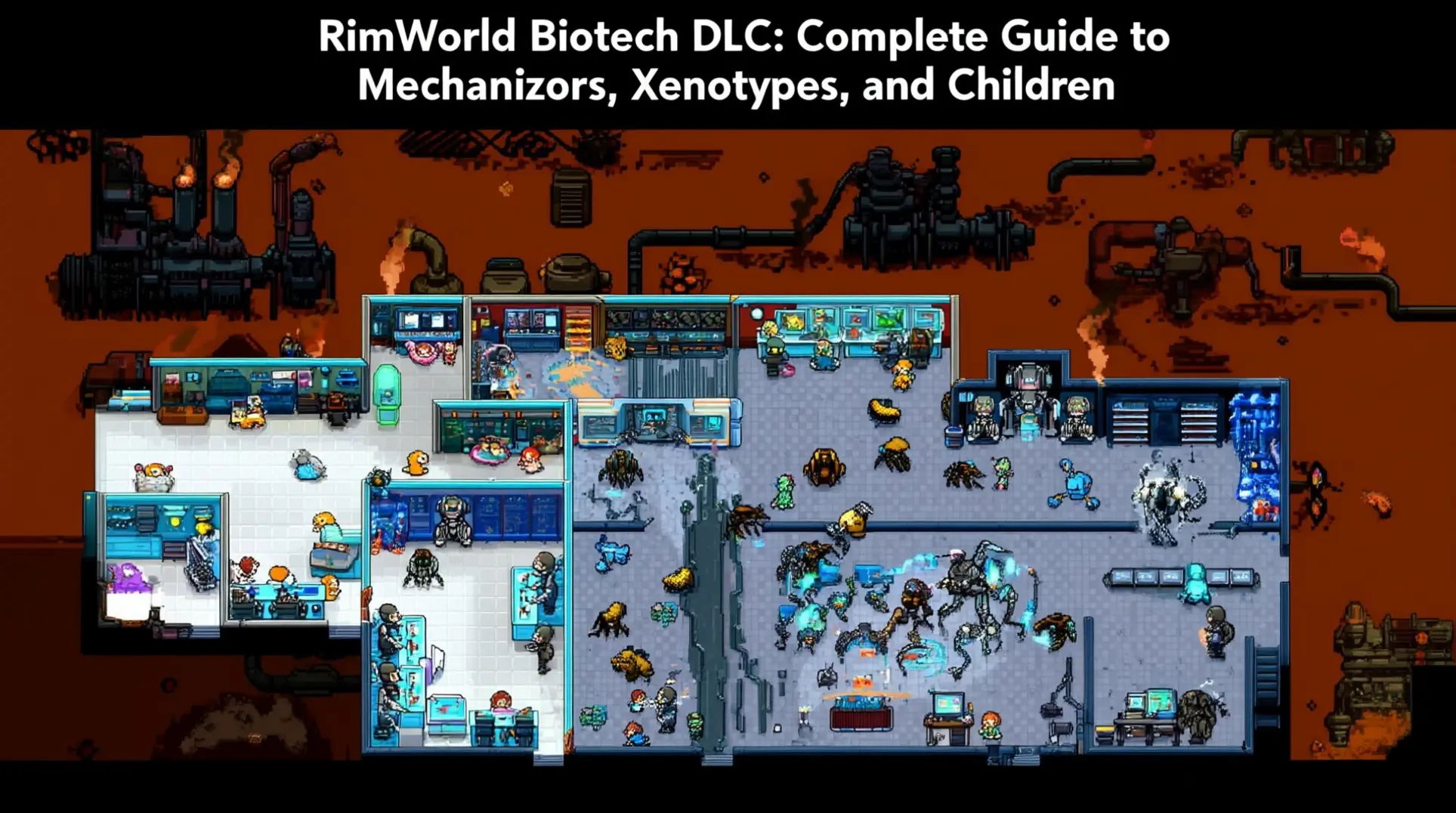
RimWorld's Biotech DLC, released on October 21, 2022, represents one of the most significant expansions to the colony management game. This expansion fundamentally changes how players build and manage their colonies by introducing four major gameplay systems.
These new systems include mechanitors who can command robotic armies, xenotypes for genetic customization, comprehensive children and family mechanics, and environmental pollution systems. Together, they create new challenges and opportunities for strategic gameplay that transform the traditional RimWorld experience.
Mechanitors: Building Your Mechanical Army
What is a Mechanitor?
A Mechanitor is a special type of colonist with the unique ability to control a personal army of mechanoids. They are also the only colonists who can construct the advanced machinery required to build these mechanical units. The Mechanitor is the central figure for any player looking to integrate mechanoids into their colony's defense and workforce.
Mechanitor: A colonist with the skills and authority to build, grow, and command mechanoids.
Mechanoid Types and Control
To grow their mechanical armies, a Mechanitor uses specialized mechanoid gestation pods. These pods are the primary method for producing new mechanoids, allowing a player to customize and expand their robotic force over time. Each pod is dedicated to gestating a single mechanoid until it is ready for activation.
Once created, these mechanoids fall under the direct control of the Mechanitor who gestated them. This control link is essential for commanding the units in tasks like combat, labor, and defense.
Control Bandwidth Management
A player must manage their Mechanitor's control bandwidth effectively. This determines the total number and complexity of the mechanoids they can command at any given time. Most starting Mechanitors have a bandwidth of 3-4, while advanced ones can reach 8-10.
Common Mechanoid Types
Combat Mechanoids:
- Lancer: Fast-moving ranged units with excellent accuracy, costing 1.5 bandwidth
- Scyther: Melee specialists with high damage output, costing 1 bandwidth
- Centipede: Heavy assault units with high durability, costing 2 bandwidth
Labor Mechanoids:
- Constructor: Handles construction and repair tasks, costing 1 bandwidth
- Miner: Specializes in mining operations, costing 1 bandwidth
- Harvester: Efficient crop harvesting and processing, costing 1 bandwidth
Utility Mechanoids:
- Cleaner: Maintains cleanliness and hygiene, costing 0.5 bandwidth
- Guardian: Defensive positioning and area protection, costing 1.5 bandwidth
Xenotypes and Genetic Engineering
Creating Custom Xenotypes
Xenotypes are customizable genetic templates that give colonists unique abilities and traits. This allows you to design specific groups of people with tailored strengths and weaknesses for your colony.
The Biotech DLC adds powerful new tools to this process. These gene modification tools allow players to create custom xenotypes with specific traits, giving you unprecedented control over your colonists' genetic makeup.
Gene Modification Tools
Gene modification is the core mechanic for creating and altering xenotypes. You can use these tools to add, remove, or change specific genes within a person's DNA.
The process allows you to build a custom xenotype from the ground up. By selecting specific traits, you can craft colonists perfectly suited for particular roles or environments within your colony.
Popular Xenotype Examples
Combat Specialists: Enhanced pain tolerance, quick healing, and increased melee skills make these colonists ideal for frontline defense.
Researchers: Improved learning speed, enhanced memory, and reduced sleep requirements create the perfect scientific minds for your research needs.
Survivalists: Increased cold and heat tolerance, efficient digestion, and enhanced immunity help colonists thrive in harsh environments.
Growth Vats: Accelerated Development
What are Growth Vats?
Growth Vats represent a revolutionary advancement in colonist development. These sophisticated chambers can accelerate human development from embryo to adult in a fraction of the natural time, allowing colonies to rapidly expand their population.
Growth Vat Mechanics
Each Growth Vat requires significant resources to operate, including power, sterile environments, and nutrient solutions. The process takes approximately 3-5 days to grow a fully mature adult, compared to the 18+ years of natural development.
Strategic Applications
Growth Vats excel in emergency population replacement scenarios. When colonists die or are lost, Growth Vats can quickly restore workforce numbers. They're also valuable for creating specialized colonists with specific xenotype characteristics, ensuring your colony maintains its genetic identity.
However, Growth Vats come with ethical considerations and potential mood penalties for existing colonists who may view artificial life creation unfavorably.
Children and Family Dynamics
Pregnancy and Child Development
The children system is a comprehensive feature that covers the entire process from start to finish. It includes pregnancy, childbirth, and child development mechanics. This allows colonists to form families and raise the next generation on their rimworld.
As children grow, they progress through distinct life stages. Each stage comes with its own unique mechanics, needs, and developmental tasks, adding a new layer of depth to colony management. Players must guide their development to ensure they become productive adult members of the settlement.
Child Development Stages
Infancy (0-3 years): Requires constant care, feeding, and attention. Colonists can carry infants, but they become less efficient at other tasks.
Early Childhood (3-9 years): Children begin learning basic skills and can perform simple tasks like cleaning or hauling under supervision.
Late Childhood (9-13 years): More capable colonists who can help with farming, crafting, and basic combat training.
Teenage Years (13-18 years): Nearly adult capabilities with improved learning speed and skill development.
Inheritance and Genetic Traits
A child's characteristics are not entirely random. Children can inherit traits and xenotype characteristics directly from their parents. This genetic passing down creates a lineage system where the strengths and weaknesses of ancestors can influence future colonists.
This mechanic is crucial for players focused on long-term colony planning. By selectively breeding colonists with desirable traits or specific xenotypes, you can cultivate a population perfectly suited for the challenges of your world.
Pollution and Environmental Management
Pollution Mechanics
The Biotech DLC introduces a comprehensive Pollution system that significantly impacts the map's environment. This system introduces several new features, including toxic wastelands, pollution pumps, and various environmental hazards.
These new mechanics can create hazardous conditions for your colonists. Pollution can spread across the map, making areas uninhabitable and dangerous. The presence of pollution and its associated hazards requires careful management to keep your colony safe.
Pollution Sources and Spread
Natural Sources: Some biomes naturally generate low-level pollution, while others contain pollution vents that continuously release toxic substances into the environment.
Industrial Sources: Certain buildings and activities generate pollution as a byproduct. Factories, chemfuel processing, and certain research activities all contribute to environmental contamination.
Pollution Pumps: These specialized structures can actively spread pollution across the map, useful for defensive strategies or terraforming projects.
Effects on Colonists
Health Impacts: Prolonged exposure to pollution causes a variety of health problems. Colonists may develop respiratory issues, skin conditions, and reduced immunity. Severe exposure can lead to permanent health damage or even death.
Mood Penalties: Colonists strongly dislike polluted environments. Working or living in contaminated areas causes significant mood penalties, potentially leading to mental breaks and social conflicts.
Performance Reduction: Polluted environments reduce colonist efficiency in all tasks. Workers become slower, less accurate, and more prone to accidents.
Pollution Management Strategies
Air Filtration Systems: Installing proper ventilation and air filtration in buildings helps protect colonists from indoor pollution exposure.
Protective Equipment: Pollution suits and respirators provide temporary protection for colonists working in contaminated areas.
Environmental Cleanup: Pollution can be cleaned through various methods, including natural dissipation over time, specialized cleaning mechanoids, or environmental restoration projects.
Strategic Zoning: Designating clean areas for living and working while allowing controlled pollution in industrial zones helps minimize overall colonist exposure.
Biome Selection: Some biomes are naturally resistant to pollution or have natural cleansing properties, making them ideal locations for pollution-sensitive colonies.
Key Takeaways
- Mechanitors provide robotic workforce and defense capabilities through mechanoid control, with bandwidth management being crucial for effective army building
- Xenotypes enable deep genetic customization for specialized colonists, allowing creation of perfect workers for specific roles
- Growth Vats offer rapid population expansion and genetic consistency, though they require significant resources and ethical consideration
- Children mechanics add generational gameplay and family dynamics, with inheritance systems enabling long-term genetic planning
- Pollution systems create new environmental challenges requiring careful management to protect colonist health and productivity
Conclusion
The RimWorld Biotech DLC transforms the colony management experience by adding five interconnected systems that provide unprecedented depth and customization. Whether you're building mechanical armies with mechanitors, engineering perfect genetic templates through xenotypes, rapidly expanding populations with Growth Vats, raising future generations of colonists, or managing environmental pollution, this expansion offers tools for both immediate tactical advantages and long-term strategic planning.
Mastering these systems will allow players to create colonies that are more resilient, specialized, and capable of overcoming the harsh challenges of the rimworld frontier. The combination of mechanical automation, genetic customization, generational planning, and environmental management creates a rich tapestry of gameplay possibilities that can accommodate virtually any colonial vision.
More RimWorld Guides
RimWorld Pawn Mastery: Complete Colony Control Guide
Master RimWorld pawn management with our comprehensive guide covering colony scaling, automation, and the critical 14-colonist threshold.
The Ultimate RimWorld Colony Blueprint: Mastering Room Sizes, Layout Efficiency, and Defensive Architecture
Complete guide to RimWorld base building covering optimal room dimensions, defensive killbox design, temperature management, and strategic material selection for colony survival.
The RimWorld Material Mastery Guide: From Basic Components to Advanced Fabrication
Complete guide to RimWorld resource management covering components, advanced components, neutroamine, plasteel, steel, and cloth. Learn crafting strategies and acquisition methods for colony survival.
AI Tactical Companion
Consult with our specialized tactical engine for RimWorld to master the meta instantly.