RimWorld: A Core Gameplay Guide for Beginners
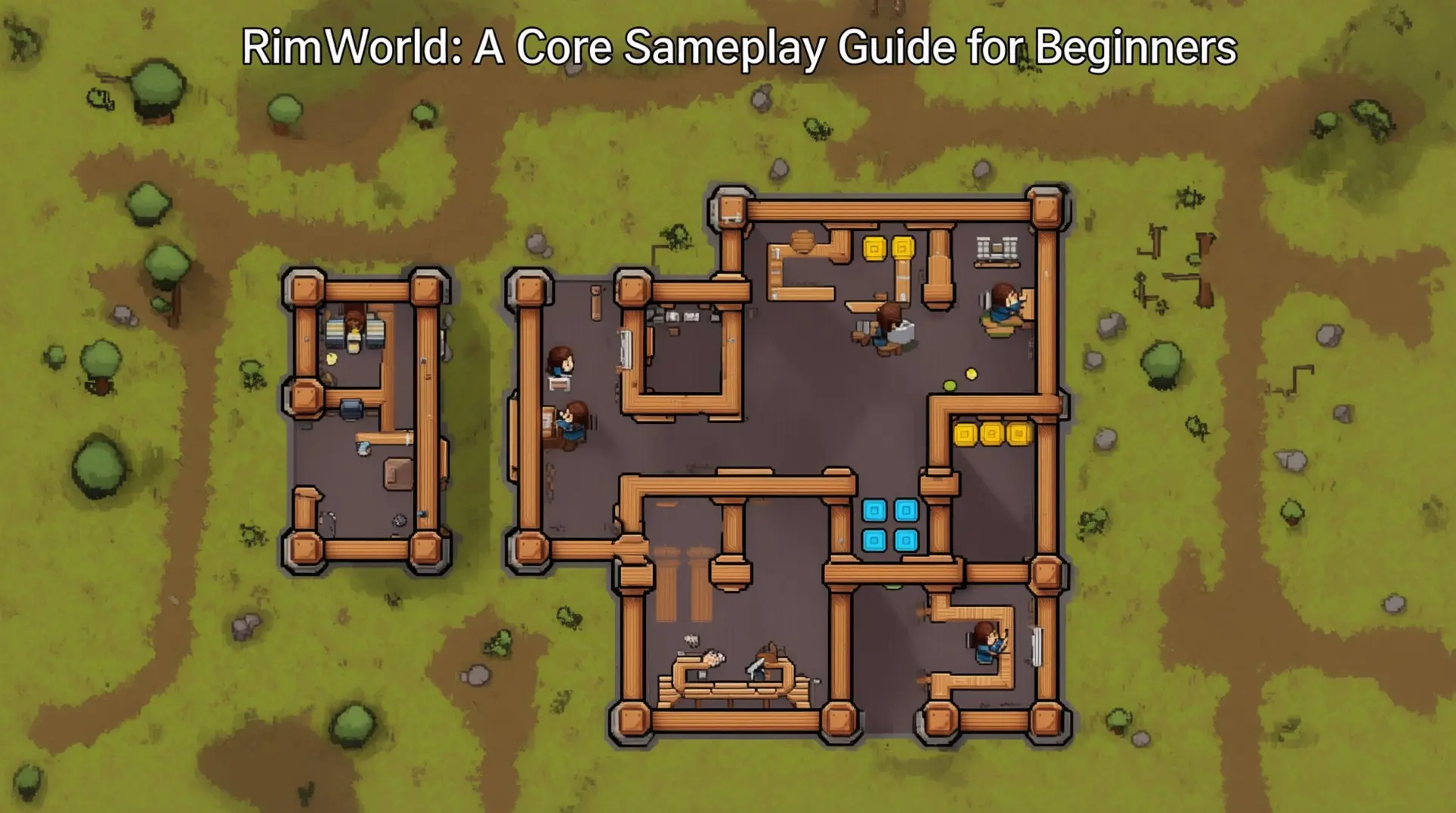
RimWorld is a complex colony management simulator where your survival depends on mastering multiple interconnected systems. As you guide your crash-landed colonists through the challenges of an alien world, you'll need to balance their physical needs, emotional well-being, and defensive capabilities. This guide will walk you through the essential mechanics that form the foundation of a successful RimWorld colony, from selecting your starting scenario to managing complex social dynamics.
Getting Started with Your First Colony
Choosing Your Starting Scenario
RimWorld offers a variety of starting scenarios to define your initial challenge. These include Crashlanded, Rich Explorer, and Naked Brutality, each with a different number of colonists and starting resources.
For new players, the Crashlanded scenario is highly recommended. It provides a balanced start with three colonists and basic supplies, making it the ideal choice for beginners.
Selecting Your Landing Zone
Choosing the right location is critical for your colony's survival. Temperate forest biomes are considered the best for new players because they offer year-round growing seasons and abundant resources, reducing the difficulty of the early game.
When you select a specific landing site within a biome, be strategic. Look for a spot that has fertile soil for farming, natural defenses like mountains to block attacks, and nearby resources such as steel and wood to get your base location off to a strong start.
Understanding Colonist Management
Colonist Skills and Traits
A balanced starting team is fundamental for survival. Your initial colonists should cover core needs with proficiency in:
- Construction (for shelter and defenses)
- Plants (for growing food)
- Cooking (to prevent food poisoning)
- Medical (for treating wounds)
Traits: These are inherent characteristics that affect a colonist's behavior and performance. Focus on acquiring positive traits like Toughness and Industriousness, as they are congenital traits that cannot be trained but provide immense benefits.
Conversely, you should initially avoid colonists with severe negative traits like Pyromaniac or Chemical Fascination, as they can create unpredictable and dangerous situations for a fledgling colony.
Work Priorities System
To gain direct control over your colonists' actions, you must enable Manual Priorities in the Work tab. This system permits you to assign tasks priority levels from 1 (highest) to 4 (lowest) for each colonist.
It is crucial to set critical tasks to a high priority across multiple colonists to ensure immediate handling. These essential tasks include:
- Firefighting
- Patient (emergency medical care)
- Bed Rest
Colonist Scheduling
Effective time management is key to preventing exhaustion and maintaining high morale. You can achieve this by using the Schedule tab to designate specific blocks of time throughout the day for:
Essential Base Building and Layout
Initial Shelter Design
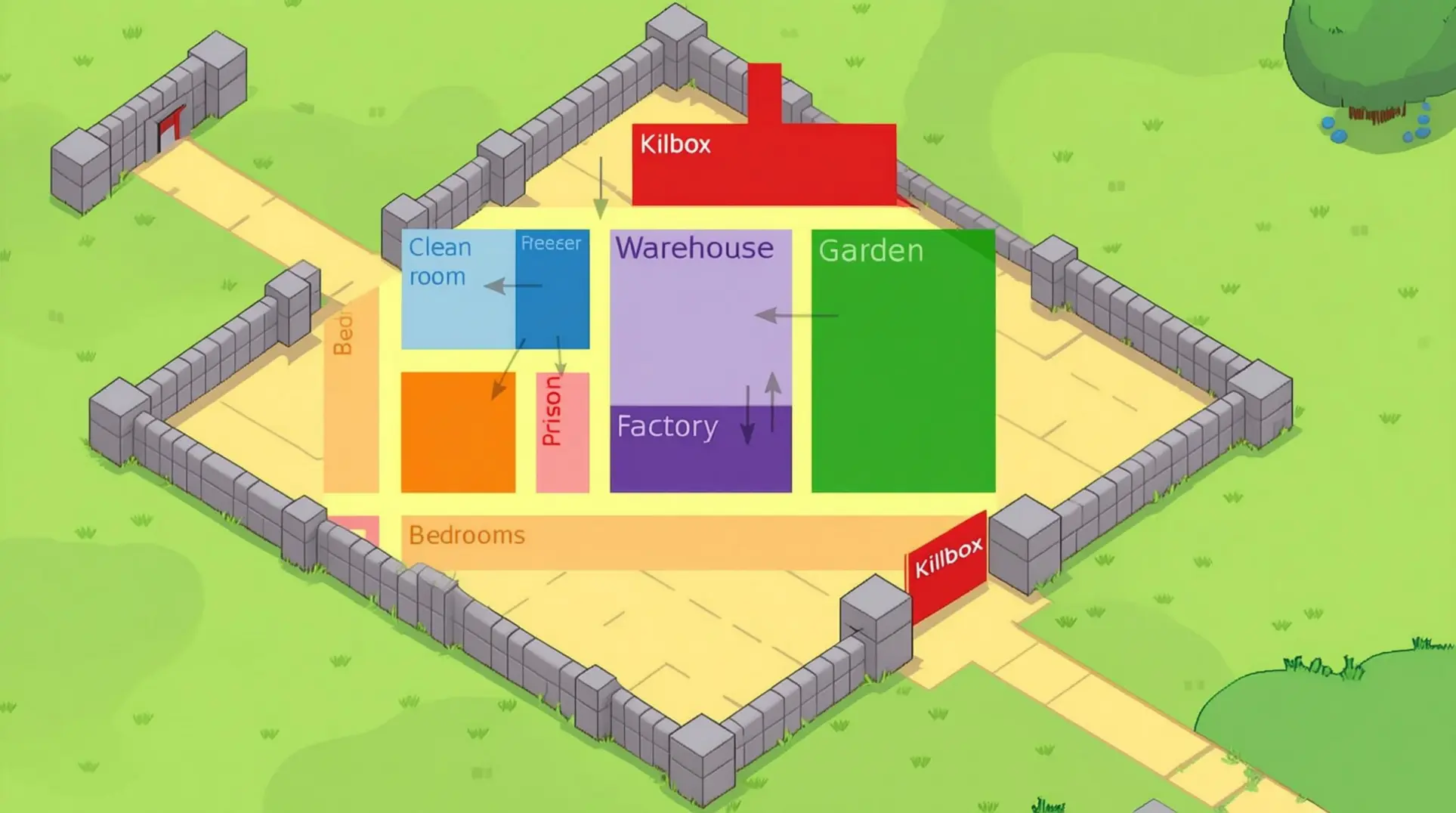
Begin by constructing a small, enclosed initial shelter, aiming for internal dimensions around 11x11 tiles (13x13 exterior). Use readily available materials like wood or locally sourced stone for this first structure.
This initial shelter should serve as a combined barracks, dining room, and rec room to conserve resources and labor early in the game. This multi-purpose approach is efficient for managing your colonists' basic needs with minimal construction.
Room Layout and Specialization
Proper room layout is critical for colony efficiency and safety. For instance, the kitchen must be kept separate from the butcher table. Placing the butcher table in a different room prevents food poisoning from the 'dirty cooking area' debuff.
To minimize colonist travel time, create centralized storage near your workshops and kitchen. Use specialized stockpiles for different items within this central area to streamline production and daily tasks. This organization helps keep your base running smoothly and reduces the time colonists spend walking back and forth.
Defense Structures
Strategic placement of your base is your first line of defense. Building near geographical features like mountains or hillsides provides natural defensive barriers. These features reduce the number of attack angles your enemies can use, saving you precious construction materials and effort.
For active defense, the most effective structure is a killbox. A killbox is a funnel designed to force raiders through a narrow entrance. This entrance is typically lined with sandbags before it opens into a designated killing zone.
Power Systems
Establishing a reliable power grid is essential for colony growth. Batteries are a crucial component when using variable power sources like wind turbines or solar panels. They create a 'cushion' of stored energy, making your power supply more reliable.
Solar generators provide consistent power during the day but generate none at night or during eclipses. In contrast, wind turbines can operate day and night but their power output is variable and depends on weather conditions. Combining these sources with batteries ensures your colony has a steady power supply.
Food Production and Storage
Basic Farming
To establish a reliable food source, you should start with your first farm. A 5x5 or 6x6 rice plot is recommended for quick initial production. Rice grows the fastest of all crops, ensuring your colonists have food sooner rather than later.
While rice provides quick returns, other crops offer different benefits. For example, corn takes significantly longer to grow but yields more food per harvest. This makes corn a great choice for long-term food security once your colony is more established.
Hunting and Foraging
While your farm is growing, you'll need to supplement your food supply. Hunting is a great way to do this, especially in the early game. Targeting small animals like rabbits and squirrels can provide a steady stream of meat until your crops are ready.
In addition to hunting, foraging is another essential survival skill. You can forage for berries and wild healroot to supplement your food supply. This strategy helps bridge the gap while you wait for your first harvest.
Food Storage Solutions
Once you have food, you must protect it from spoiling. The best way to do this is by building a dedicated storage room. A freezer room with a cooler set to below freezing will prevent food from rotting.
You can improve your freezer's efficiency with smart construction. Using double-thick walls provides better insulation. Placing shelves inside the freezer will also keep your food stockpile organized and prevent it from deteriorating on the floor.
Combat and Defense Strategies
Weapon Selection
Choosing the right weapons is critical for survival. Bolt-action rifles are excellent for early-game defense due to their superior range and accuracy, allowing colonists to engage threats from a safe distance.
For close-quarters encounters, you will need reliable melee options. When enemies breach your outer defenses, melee weapons like clubs and knives become essential for fighting back effectively.
Defensive Positioning
Proper positioning can turn the tide of a battle. You should use sandbags and barricades to create effective cover, protecting your colonists from incoming fire.
Another key tactic is to position colonists behind walls with doors. This allows them to open the door to shoot and then close it for immediate protection, creating a safe firing line.
Raid Preparation
Preparing for a raid before it happens is vital. Always keep medical supplies stocked and prepare hospital beds in advance to treat wounded colonists quickly.
Before an attack, take time to assign colonists specific defensive positions. Ensure each fighter is equipped with appropriate weapons and armor to maximize their effectiveness in combat.
Mood Management and Happiness
Recreation and Comfort
To maintain a positive mood, you must meet your colonists' needs for recreation and comfort. Providing a variety of activities is key; you should offer multiple types of recreation like:
- Horseshoes
- Chess tables
- Televisions
This variety helps prevent boredom. Comfort is just as important as fun. Ensuring colonists have comfortable beds and pleasant dining areas will significantly boost their overall mood.
Room Quality and Beauty
The quality of a colonist's environment directly impacts their happiness. Clean rooms with good lighting and artwork provide positive mood bonuses.
You can actively improve a space by focusing on its impressiveness. Using sculptures and high-quality floors to improve room impressiveness will increase colonist satisfaction.
Preventing Mental Breaks
Proactively managing moods is essential to prevent catastrophic mental breaks. You must watch for mood debuffs caused by unmet needs like hunger, tiredness, and other stressors.
When a colonist's mood drops, it is crucial to act fast. You can address negative moodlets quickly by fulfilling colonists' needs and providing recreation.
Success in RimWorld requires balancing multiple systems simultaneously. The key takeaways from this guide include prioritizing a balanced colonist team, establishing efficient work priorities, building a defensible base layout, maintaining sustainable food production, preparing for combat encounters, and managing your colonists' emotional well-being. By mastering these core mechanics, you'll create a thriving colony capable of surviving the many challenges the rim world presents. Remember that each colony is a learning experience, and even failures provide valuable lessons for your next attempt at building a successful settlement.
More RimWorld Guides
RimWorld Beginner's Guide: Complete Guide to Starting Your First Colony
Learn everything you need to start your first RimWorld colony successfully - from choosing colonists and biomes to building your base, managing food, power, and defending against threats.

RimWorld Pawn Mastery: Complete Colony Control Guide
Master RimWorld pawn management with our comprehensive guide covering colony scaling, automation, and the critical 14-colonist threshold.

Escape, Transcend, or Destroy: Your Ultimate Guide to RimWorld's 7 Paths to Victory
Master all 7 RimWorld victory paths with our comprehensive guide covering spaceship escape, royal ascension, Archonexus, mechanitor mastery, and apocalyptic alternatives.
AI Tactical Companion
Consult with our specialized tactical engine for RimWorld to master the meta instantly.