RimWorld Beginner's Guide: Complete Guide to Starting Your First Colony
Welcome to the harsh world of RimWorld, where your survival skills will be tested from day one. The 'Crashlanded' scenario is highly recommended for beginners as it provides three colonists with a balanced set of skills and a modest amount of starting equipment for a manageable challenge. Using the 'Relatively Peaceful' storyteller setting provides a gentler introduction to the game's events for new players. Start in a 'Temperate Forest' biome which has year-round growing season, moderate temperatures, and ample resources. Immediately pause the game upon landing to assess colonists' health, skills, and traits, and designate a temporary stockpile zone near crashed ship chunks. Build a small enclosed shelter before the first night with roofs, beds, and interior storage. Start with rice crops as they grow the fastest, and plant healroot for medicine production. Never let colonists eat raw food due to high risk of food poisoning - always cook meals using butcher table and campfire/stove. Research 'Battery' technology early to store power for nights and eclipses. A colonist with Medical skill level 6+ is non-negotiable for treating wounds and illnesses.
Choosing Your Starting Setup
Selecting Your Colonists
A balanced starting team should cover critical survival needs. Aim for skills like Growing (8+ is excellent), Construction (6+), Cooking (5+), and Medical (4+).
Look for passions, indicated by flames, in skills like Growing, as they accelerate skill improvement. Positive traits to look for include Tough (reduces incoming damage by 50%), Fast Learner, and Industrious. A classic balanced team includes a Grower/Researcher, Builder/Crafter, and Cook/Doctor who can also handle basic hauling and cleaning.
You must also screen for major red flags. Avoid colonists who are incapable of skilled labor for Construction or have serious permanent ailments like bad back or frailty. Ensure your cook does not have the 'Chemfuel or Drugs' incapability, as this prevents them from using the butcher table. Negative traits to avoid include Pyromaniac, Chemical Interest, Gourmand, and Slothful.
Picking a Scenario and Biome
The 'Crashlanded' scenario is highly recommended for beginners. It provides three colonists with a balanced set of skills and a modest amount of starting equipment for a manageable challenge.
For your storyteller setting, using 'Relatively Peaceful' provides a gentler introduction to the game's events for new players.
Temperate Forest is the ideal starting biome for new players due to its long growing season, abundant wildlife, and mild temperatures. If you want a slight step up in difficulty, Arid Shrubland is a good intermediate biome with a longer growing season than forest but fewer trees and resources.
Be prepared for a significant challenge in other biomes. Challenging biomes include Boreal Forest (freezing winters), Tundra (virtually no growing season), Desert (extreme heat), and Sea Ice/Ice Sheet (no soil, plants, or animals). Remember that your colonists' strengths should align with your biome's demands; for example, harsh biomes need a high Growing skill to manage hydroponics.
Essential Early Game Base Building
Establishing Initial Shelter
Your first priority in RimWorld is establishing basic shelter. Quickly building a simple structure with walls and a door protects your colonists from the elements and potential threats. This initial shelter should be just large enough to contain a few beds and a simple food stockpile while you gather more resources for a permanent base.
As you progress, you will want to build more durable structures.
Structures: These are the buildings, walls, and roofs that make up your colony's base and protect your colonists. Using materials like wood is fast, but stone or steel offers far superior protection against fire and attacks.
Designing Your Base Layout
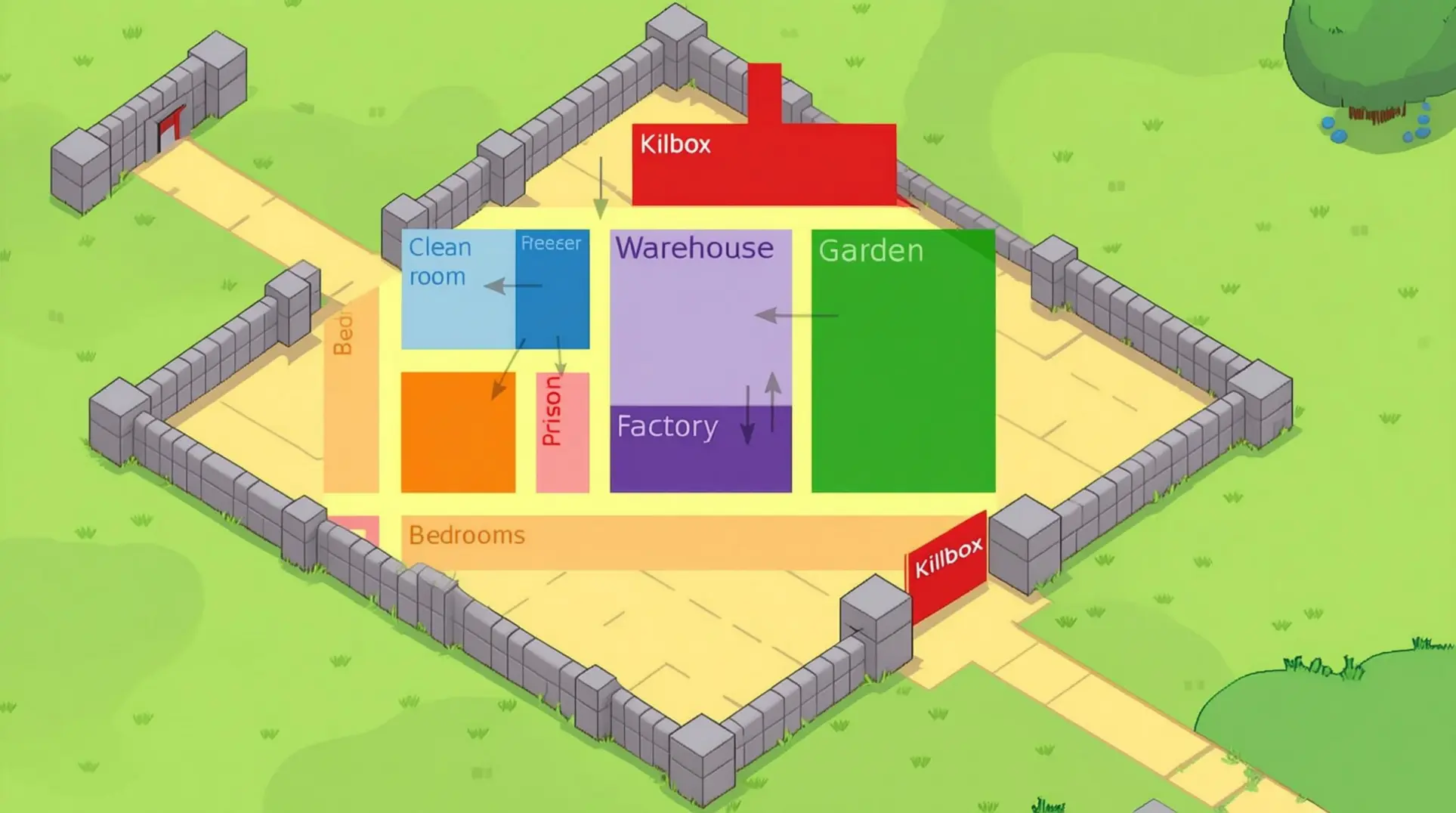
Thoughtful room layout is critical for colonist happiness and efficiency. A common mistake is building one large room for everything; instead, create dedicated spaces for specific functions. For example, bedrooms should be separate from workshops and kitchens to reduce noise pollution for sleeping colonists.
Impressiveness: This is a stat that measures how impressive a room is, affecting a colonist's mood when they use it. You can improve impressiveness by building larger rooms, using high-quality materials, and adding decorative items like sculptures or fine flooring. Ensure your dining room and rec room are impressive to give colonists a consistent mood boost.
Managing Storage
Efficient storage prevents clutter and saves colonists time. Instead of a single large stockpile, create several smaller, specialized stockpiles near where the resources will be used. Place a raw food stockpile next to your kitchen and a wood stockpile near your workshop or butcher table.
You should also manage your storage carefully to prevent spoilage and theft. Building a walk-in freezer with a cooler is essential for preserving meat and other perishables. For high-value items like components or medicine, consider building a secure, ventilated room to protect them from fire and rot.
Creating Production Areas
Strategically placing your production areas optimizes your colony's workflow. Group related workbenches together in a dedicated workshop zone to minimize the time colonists spend walking between tasks. For instance, place the butcher table next to the stove so meat can be processed directly into meals.
Workbenches: These are stations where colonists perform skilled labor like crafting, cooking, or tailoring. Ensure your workshops are well-lit and have enough space around them to avoid collisions. Keep raw material stockpiles close to the relevant workbenches to further streamline production and keep your colony running smoothly.
Food Production and Management
Farming for Survival
Choosing the right crops is vital for your colony's survival. Rice is the fastest-growing crop in RimWorld, taking only 3 days to grow in ideal conditions, which makes it essential for early game food production. For a more established colony, corn has the highest yield per plant but its 11-day growth time makes it a better long-term investment. Potatoes are a versatile option as they grow well in poor soil and resist disease, making them suitable for various biomes. A good starting strategy is to focus on rice crops for their quick harvests.
Hunting for Meat
Hunting provides a valuable source of meat but comes with inherent dangers. Wounded animals may retaliate and attack your colonists, so it is crucial to use ranged weapons when hunting to maintain a safe distance. Once an animal is downed, you will need a butcher table to process the carcass into usable meat and leather. This structure is the foundation for turning wild game into essential food resources.
Cooking and Storing Food
Proper food management prevents spoilage and keeps your colonists healthy. Food spoils quickly unless stored correctly, so you should build a freezer room with coolers set below 0°C to preserve it indefinitely.
Cooking is just as important as storage. Never let colonists eat raw food due to the high risk of food poisoning. Instead, always cook meals using a butcher table and a campfire or stove. The most basic option is a simple meal, which requires 10 nutrition worth of ingredients. For a morale boost, fine meals require both meat and vegetables and provide a mood bonus. For long-term storage without power, pemmican is a long-lasting survival food made from meat and vegetables. To minimize the chance of food poisoning, maintain a clean cooking area and assign skilled cooks with a cooking level of 6 or higher.
Power Systems and Energy Management
Power Generation
RimWorld offers four main types of power generators for your colony: solar generators, wind turbines, fueled generators, and geothermal generators. Each has distinct advantages and challenges that suit different situations and map locations.
Solar Generators: These devices produce power only during daylight hours and their output is affected by weather conditions like rain and fog.
Wind Turbines: These generate variable power depending on wind speed and can be blocked by buildings or trees within their clearance area.
For more consistent power, you can use fueled or geothermal options.
Fueled Generators: These require wood or chemfuel to operate but provide reliable power independent of weather conditions.
Geothermal Generators: These offer a consistent high power output but must be placed on geothermal vents found on the map.
Storing and Distributing Power
Storing excess energy is crucial for surviving nights or events where generation is low.
Batteries are used to store this excess power for times of need, but they can short-circuit and cause electrical fires if not properly managed.
To get that stored power to your buildings, you need a distribution network.
Power conduits are required to transmit electricity from generators and batteries to your devices. These conduits must be connected in a continuous power network to function correctly.
Managing Power Grids
Even a well-designed power grid is vulnerable to random events.
Solar flares are random events that temporarily disable all electrical devices and power systems on the map, leaving your colony in the dark until it passes.
Proactive planning can help mitigate these risks. It is wise to research 'Battery' technology early to store power for nights and eclipses. Building redundant power sources and keeping critical systems on separate, protected grids can also prevent a single point of failure from crippling your colony.
Research and Technology Progression
Prioritizing Early Research
Your first research projects are critical for survival. You should prioritize unlocking fundamental technologies that address your colonists' immediate needs for food, security, and basic production.
- Research: This project unlocks the ability to analyze data, which is the foundation for all other technological advancement.
- Stonecutting: Allows you to turn chunks of rock into usable stone blocks, enabling the construction of proper walls and buildings.
- Brewing: Provides a way to create beer, which is a valuable trade good and can improve colonist mood.
Using Research Benches
To conduct research, your colonists need a dedicated workstation.
Research Bench: This is the basic table required for your colonists to begin analyzing data and unlocking new technologies. Without it, your progression will halt entirely.
Early on, a simple research bench is sufficient. However, some advanced projects require a more sophisticated setup for a faster research speed.
Planning Technology Paths
After securing the basics, you must choose a strategic path for your technology progression.
The MultiAnalyzer is a crucial upgrade for your research area. Building this device next to a research bench will significantly increase your research speed, which is vital for tackling late-game projects more quickly MultiAnalyzer.
While some technologies are universally beneficial, your long-term strategy should guide your choices. For example, focusing on electricity and defensive structures is wise on hostile maps, whereas hydroponics might be a priority in harsh biomes.
Combat and Defense Strategies
Building a Basic Defense
A solid defense is critical for any new colony. The most effective early-game strategy involves funneling attackers into a narrow "kill box." This approach concentrates your firepower and makes enemies much easier to manage. Your main kill box should be protected by a perimeter sandbag wall, which provides excellent cover for your colonists.
- Build your main base structure first.
- Create a single, narrow entrance leading into a clear, open area.
- Line the entrance and the open area with sandbags for cover.
- Place firing positions behind the sandbags for your colonists.
Deploying Turrets and Traps
Turrets: Automated defensive structures that shoot at hostile enemies within range. Placing turrets within your kill box adds a layer of automated firepower, but they are vulnerable to explosions and direct fire. It's best to use them to supplement your colonists, not replace them. You can place stone chunks in front of your turrets to act as additional cover.
Traps: Simple, one-time-use defensive mechanisms that damage or incapacitate enemies. Traps are a great way to soften up raiders before they even reach your firing line.
- Place traps like deadfall traps or IED traps in the choke point of your kill box.
- Be sure to mark the trap area as "Forbidden" so your colonists and animals don't accidentally trigger them.
Handling Raids
When a raid begins, your first priority is to sound the colonist alert. This command will immediately draft all capable colonists and send them to their assigned defensive positions. It is crucial to have colonists with firearms or melee weapons ready to fight. Position your shooters behind the sandbags in your kill box and wait for the enemies to come to you.
Keep an eye on your colonists' mental state during a fight, as being shot or seeing friends die can cause mental breaks. If a raider is too dangerous or your position is being overrun, don't be afraid to temporarily undraft and retreat to a safer fallback position.
Mood Management and Colonist Happiness
Meeting Basic Needs
A colonist's happiness is fundamentally tied to their basic needs being met. The most critical factors are food, rest, and a safe environment. Ensuring your colonists have a consistent supply of meals and comfortable places to sleep is the first step to preventing mood drops.
Another essential need is recreation. Colonists require downtime to relax and de-stress. Providing a variety of Recreation Objects: Items that colonists use to fulfill their recreation need, is crucial for keeping them content.
Improving Living Spaces
The quality of a colonist's personal space has a direct impact on their mood. A well-designed bedroom can provide consistent, positive thoughts. Key elements include a comfortable bed and enough space to avoid feeling cramped.
Beyond basic comfort, the impressiveness of a room matters.
Impressiveness: A stat that measures how a colonist feels about a room based on its quality, size, and decorations. You can achieve this by using high-quality materials, adding flooring, and placing decorations like art or plants.
Dealing with Mental Breaks
When a colonist's mood gets too low, they are at risk of having a mental break. These events can range from minor (like wandering in a daze) to major (like attacking others). The best strategy is prevention through proactive mood management.
If a break does occur, you have a few options for handling it. You can arrest the colonist to contain them or wait for the break to end. To prevent future incidents, identify the root cause of their low mood and address it, whether it's hunger, lack of recreation, or a poor environment.
Key Takeaways and Conclusion
Starting your first RimWorld colony can be overwhelming, but following these key principles will set you up for success. First, choose your colonists carefully - a balanced team with complementary skills is essential. The 'Crashlanded' scenario in a 'Temperate Forest' biome provides the most beginner-friendly experience.
Prioritize building a basic shelter immediately, then focus on food production with fast-growing rice crops. Always cook your food to avoid poisoning, and research battery technology early for reliable power storage. Remember that defense is crucial - create a kill box funnel and use sandbags for cover.
Most importantly, pay attention to your colonists' needs and moods. Keep them fed, rested, and provide recreation opportunities to prevent mental breaks. RimWorld is a game of constant adaptation, so be prepared to adjust your strategies as new challenges arise. With patience and careful planning, your colony will not only survive but thrive in this unforgiving world.
More RimWorld Guides
RimWorld: A Core Gameplay Guide for Beginners
Master RimWorld with this comprehensive guide covering colonist management, base building, food production, combat tactics, and mood management for your first successful colony.
RimWorld Pawn Mastery: Complete Colony Control Guide
Master RimWorld pawn management with our comprehensive guide covering colony scaling, automation, and the critical 14-colonist threshold.

Escape, Transcend, or Destroy: Your Ultimate Guide to RimWorld's 7 Paths to Victory
Master all 7 RimWorld victory paths with our comprehensive guide covering spaceship escape, royal ascension, Archonexus, mechanitor mastery, and apocalyptic alternatives.
AI Tactical Companion
Consult with our specialized tactical engine for RimWorld to master the meta instantly.