Escape, Transcend, or Destroy: Your Ultimate Guide to RimWorld's 7 Paths to Victory
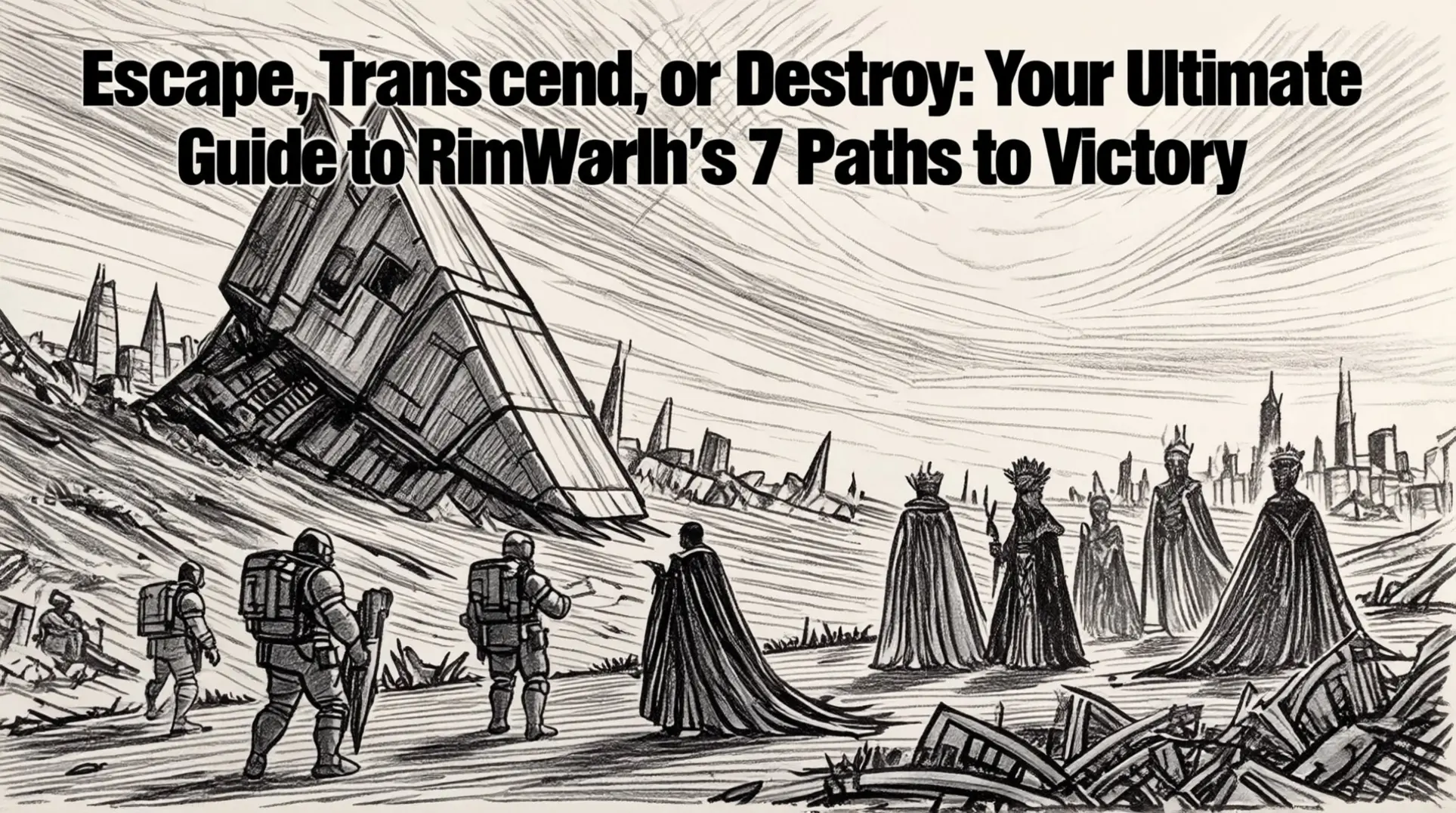
Escape, Transcend, or Destroy: Your Ultimate Guide to RimWorld's 7 Paths to Victory
In the brutal, unforgiving universe of RimWorld, survival is only the beginning. The true test of a colony's mettle comes when players must choose how their story ends—whether through technological triumph, diplomatic ascent, philosophical transcendence, or cataclysmic finality. Unlike traditional games with linear narratives, RimWorld offers multiple victory conditions that serve as profound culminations of your emergent storytelling journey. Each path requires distinct strategies, resource allocations, and philosophical approaches, transforming the endgame from a simple checkbox into a meaningful reflection of your colony's values and your playstyle preferences. This comprehensive guide explores all seven paths to victory, from the classic spaceship escape to the enigmatic Archonexus awakening, providing the strategic insights you need to craft your perfect ending.
Victory Paths Overview
| Victory Path | DLC Required | Primary Focus | Key Resource | Unique Challenge |
|---|---|---|---|---|
| Spaceship Escape | Base Game | Technology & Defense | Massive Materials | 15-day siege survival |
| Imperial Ascension | Royalty | Diplomacy & Prestige | Honor & Wealth | Throne room impressiveness |
| Archonexus Awakening | Ideology | Philosophy & Sacrifice | Wealth (350,000+) | Repeated colony abandonment |
| Cerebrex Destruction | Biotech | Technology & Combat | Bandwidth & Mechs | Final assault on mechanoid core |
| Planetkiller Survival | Ideology | Endurance & Acceptance | Time | Surviving until world destruction |
| Nexus Completion | Biotech | Technology & Exploration | Research & Resources | Complex multi-stage quest |
| Orbital Communications | Royalty | Diplomacy & Technology | Research & Faction Relations | Long-term relationship building |
The Classic Exodus: Building Your Way to Freedom
Of all the endings in RimWorld, the classic spaceship escape represents the ultimate technological and logistical achievement for a colony. It is the culmination of a long-term campaign, requiring immense resource stockpiling, advanced research, and a final, brutal test of a colony's defensive capabilities. This ending involves constructing a functional starship to carry your colonists away from the hostile planet.
Research Requirements
The journey begins with research. Before a single component can be laid, you must first unlock the necessary Spacetime and Shipbuilding techs. These are some of the most research-intensive projects in the game, requiring:
- High Intellectual skill colonists
- Multiple advanced research benches
- Significant time investment for completion
Construction Strategy
Once completed, the ship blueprint becomes available. The core structure consists of several mandatory parts:
Essential Ship Components:
- Spaceship reactor - The power source for the entire vessel
- Spaceship computer core - Navigation and life support systems
- Spaceship engine - Propulsion system for escape
- Cryptosleep caskets - One for each colonist you wish to evacuate
Total Material Investment:
- Over 10,000 steel
- 2,000 plasteel
- 1,000 components
- 100 advanced components
- Uranium and gold for specific parts like the reactor and computer core
Strategic placement is paramount. The construction site becomes the stage for a 15-day siege, so building it in an easily defensible location is critical. Many veterans recommend constructing the ship in the heart of your existing mountain base, leveraging pre-built killboxes and choke points. Others build a dedicated, fortified "silohouse" around the reactor. The key is to create a defensible perimeter with overlapping fields of fire for turrets, strong walls to funnel enemies, and a stockpile of medical supplies and ammunition nearby.
Final Defense
Once the final ship component is installed, a 15-day countdown begins. The ship's reactor spools up, emitting a psychic signal that attracts the attention of every hostile faction on the planet. Your colony will face near-constant raids, mechanoid clusters, and sieges of escalating intensity. This period is a brutal war of attrition. Defense strategies must focus on durability:
- Redundant turrets
- Well-equipped colonists in masterwork or legendary armor
- Stockpiled mortars for counter-battery fire
- Clever use of animal armies or combat robots to absorb enemy charges
The goal is not to eliminate every threat, but to survive until the timer ends.
During this onslaught, colonists must enter their assigned cryptosleep caskets. This process is irreversible once begun; the colonist is placed in suspended animation and cannot aid in the final defense. Therefore, the order of entry is a key tactical decision. Non-essential colonists and incapable fighters should enter first, while your best soldiers and doctors remain outside until the last possible moment to man the defenses. Once the final colonist enters their casket or the 15 days elapse, the ship launches, successfully concluding the game and carrying your survivors to a new life among the stars.
Imperial Ascension: Royalty's Diplomatic Victory
While RimWorld's core game challenges colonists to build a spaceship for escape, the Royalty DLC introduces a path to victory not through technological mastery, but through social and political cunning: the Imperial Ascension. This ending forgoes the immense resource sink of a starship in favor of navigating the intricate and often demanding courtly politics of the Empire, culminating in a grand ceremony that elevates a key colonist to the stars as a new noble of the Stellarch's court.
Building Relationships
The journey to this diplomatic victory is paved with favor. The central mechanic involves building a strong relationship with the Imperial faction by completing their quests, which reward Honor. This currency is used to bestow psylink neuroformers and noble titles upon your colonists, from Acolyte up to the required rank of Count or Countess.
However, with great title comes great responsibility. Each rank imposes escalating requirements, most notably the construction and maintenance of an appropriately grand throne room.
Throne Room Requirements
For a Count/Countess, this is no simple barracks; it is a statement of power and refinement. A Count-level throne room must meet strict specifications:
Essential Requirements:
- Size of at least 100 tiles
- Exquisite flooring (like fine carpet or sterile tile)
- Two braziers or columns
- A grand gold or jade throne
Quality Assessment: The room's quality isn't just binary; it's governed by an Impressiveness rating, a complex calculation derived from its wealth, beauty, space, and cleanliness. A mediocre room risks the noble suffering a severe "-Ugly Throne Room" mood debuff, potentially leading to mental breaks.
Strategically, this demands a significant and ongoing investment of your colony's finest art, materials, and wealth into a single, largely ceremonial room. Furthermore, titles require the noble to be equipped with prestigious apparel, have a suitably impressive bedroom, and be attended to by a minimum number of non-slave pawns, pulling colonists away from other vital work.
The Ascension Ceremony
The climax of this path is the Ascension Ceremony. Once you possess a Count and a flawless throne room, you can call the Stellarch to your colony for a formal visit. This event triggers a multi-day period where you must protect the Stellarch and their entourage from all threats. Succeeding in this defense sees your noble and up to eight other colonists whisked away aboard the Stellarch's personal shuttle, achieving a victory built on diplomacy, prestige, and opulence rather than engineering.
This ending starkly contrasts with building the spaceship. The technological solution is a massive, self-directed project requiring advanced research and the collection of immense raw materials. The Imperial path is a quest-driven, relationship-based endeavor where the primary costs are social (managing noble needs) and artistic (creating beauty and wealth). It offers a unique victory condition for colonies that thrive on engaging with the world's factions and mastering the DLC's new systems of rank and psionics.
For detailed throne room specifications and a breakdown of the impressiveness formula, the RimWorld Wiki provides authoritative and comprehensive guides.
Cosmic Enlightenment: The Archonexus Awakening
Of all the endings available in RimWorld, the Archonexus, introduced by the Ideology DLC, stands apart as the most esoteric and philosophically demanding. It forgoes building a glittering spaceship or awakening a slumbering AI in favor of a path of cosmic enlightenment, achieved by collecting three fragments of a mysterious map. This journey is a grueling three-stage marathon that tests a colony's strategic depth far beyond mere survival.
Fragment Collection
The process begins upon acquiring the first Archonexus map fragment from a quest. To earn the next, you must build a thriving colony of significant 350,000 wealth, not including the value of your chosen pawns themselves. Once this benchmark is hit, you can trade your entire settlement—every building, item, and most colonists—to a mysterious AI in exchange for the next fragment.
You are then cast out onto a new world tile with only your five most vital colonists, carrying nothing but their gear and the fragments. This cycle repeats until you possess all three fragments, culminating in a transcendent conclusion where your pawns merge with a planetary consciousness.
Wealth Management
This ending demands meticulous long-term strategy. Pawn selection for each migration is paramount. You must choose five versatile, highly-skilled, and psychologically resilient colonists who can rapidly bootstrap a new colony from nothing. A construction expert, a skilled grower, a competent medic, and a strong researcher are non-negotiable.
Strategic Wealth Building:
Wealth management becomes a precise science; you must grow your colony's value efficiently without triggering overwhelming raids from overexpansion. This often involves stockpiling high-value, low-volume goods like advanced components, psychic sensitizers, or art, rather than sprawling, inefficient bases.
Economic Optimization:
Furthermore, faction alliances are crucial, as friendly neighbors can provide trade caravans for wealth generation and military support during the vulnerable early days of each new colony.
Risk Management:
The key is balancing wealth growth with raid intensity. Too rapid expansion can overwhelm your defenses, while too slow growth delays your progress toward the next fragment.
The Final Awakening
Philosophically, the Archonexus ending represents a victory not of technology or diplomacy, but of ideological purity and ascetic transcendence. Where the ship ending conquers the stars through engineering, and the royal ending leverages imperial power, the Archonexus requires the repeated abandonment of material wealth and community.
It is the ultimate test of an ideology's tenets, forcing your colony to prove its core beliefs are not dependent on a specific place or possession, but are portable and intrinsic to the chosen few. It is a victory of mind and spirit over matter, achieved by those who seek not to escape the planet, but to become one with it.
For detailed mechanics on wealth calculation and the Archonexus quest, the RimWorld Wiki provides an authoritative breakdown.
Technological Triumph: Biotech's Mechanical Mastery
Of the many paths to closure in RimWorld, the Biotech DLC's mechanitor ending stands apart as a singularly technological triumph. Unlike launching a ship to the stars or submitting to the Archonexus, this conclusion represents a victory not through escape or diplomacy, but through absolute mastery over the planet's most pervasive threat: the mechanoid hive mind. The player, having ascended to the apex of mechanoid control, chooses to end the conflict permanently by destroying its source, the Cerebrex core.
Mechanitor Progression
This ending is the ultimate culmination of the mechanitor's unique gameplay loop. After bonding with a Mechlink and surviving the initial toxifying side effects, the mechanitor grows in power by crafting and controlling an army of mechanoids. This expansion is strictly governed by bandwidth, a resource representing the mechanitor's neurological capacity to issue commands.
Bandwidth Management:
Bandwidth is increased by installing advanced subcores, crafted at the biosculpter pod, creating a direct progression from a lone survivor with a single cleaning bot to a cybernetic overlord commanding legions of colossal centipedes and high-tech tesserons. Every decision—from which mechs to fabricate to how to allocate precious bandwidth—is an exercise in strategic resource management focused on technological dominance.
The Cerebrex Assault
The final mission, assaulting the Cerebrex core, is the ultimate test of this mechanized empire. The core is not merely a heavily guarded structure; it is the nexus of the mechanoid hive intelligence, the source of the psychic signal that directs all mechanoid aggression on the planet.
Strategic Implications:
Destroying it is a strategic masterstroke with profound implications: it severs the connection, causing every remaining mechanoid on the globe to deactivate instantly and permanently. The eternal mechanoid raids cease. The planet is, for the first time, safe from this particular scourge. This act redefines victory on the Rim, transforming it from mere survival to the decisive elimination of a fundamental existential threat through superior applied science.
The Trade-off:
This choice, however, presents a significant trade-off. A functioning mechanitor colony is an economic powerhouse, with mechanoids providing infinite, free labor for farming, crafting, mining, and defense. Continuing to farm mechanoid clusters for their precious components and lootable resources is a sustainable, highly profitable long-term strategy.
Choosing to destroy the Cerebrex core is a sacrifice of this perpetual engine of wealth for the sake of permanent safety and a definitive conclusion. It is the choice to value ultimate security and a clean slate over infinite technological exploitation, cementing the mechanitor's legacy not as a resource farmer, but as the architect of the mechanoids' final defeat.
Apocalyptic Alternatives: When Victory Means Destruction
While most games define victory as overcoming adversity to achieve escape or salvation, RimWorld's apocalyptic alternative endings subvert this premise entirely. Here, winning is not about defiance or flight, but about enduring until a predetermined, inescapable end. The most definitive of these is the Planetkiller ending, a scenario where success is measured not by the colony's survival, but by its ability to persist until the globe itself is annihilated. This represents a profound philosophical shift from traditional victory, framing "winning" as the act of witnessing the final curtain call on one's own terms.
Understanding Planetkillers
The mechanics of this ending are brutally simple. A Planetkiller is a world-ending superweapon, often unleashed by a rival faction, that is slowly moving to obliterate the planet. Players discover this not as a challenge to be overcome, but as an immutable fact—a doomsday clock counting down to zero.
No Escape, No Hope:
There is no stopping it, no hacking the system, and no last-minute reprieve. The only objective is to keep your colonists alive, fed, and sane as the date of absolute annihilation draws near. This transforms the entire late-game into a grim vigil, where every raid fended off and every harvest brought in is a small victory against the dying of the light.
The Final Vigil
The finality of this conclusion is absolute. Where the ship launch ending offers transcendence and the archonexus offers transformation, the Planetkiller offers only silence. The game simply ends, underscoring the nihilistic beauty of this path. You have not escaped the rim; you have outlasted it. You have curated a final, fleeting moment of order and community in a universe hell-bent on chaos and destruction.
Why Choose This Path?
Why would a player choose this somber conclusion over building a glittering starship? The reasons are as varied as the stories RimWorld generates. For some, it is the ultimate roleplaying choice for a colony too battered, too rooted, or too cynical to flee. For others, it is the ultimate test of a colony's resilience, a challenge to create a bastion so formidable that only the end of the world could breach its walls.
It is a victory condition that embraces the game's core themes of tragedy, futility, and the small, personal triumphs found in the face of overwhelming despair. It is not an escape from the cycle of violence and struggle, but a final, definitive participation in it.
For more detailed information on these alternative victory conditions, you can read the official RimWorld ending guide on the Fandom Wiki.
Strategic Showdown: Choosing Your Path to Victory
In Rimworld, your victory condition is not merely a late-game checkbox but the culmination of every decision made since your colonists first crashed. The three primary paths—building the spaceship, achieving royal ascension, or collecting the Archonexus—demand vastly different resources, timelines, and colony structures. Aligning your early-game strategy with your intended endgame is crucial for efficiency and survival.
Foundations: Early-Game Decisions That Pave the Way
Your initial choices create a foundation that naturally favors one victory over others.
Colonist Selection:
- A researcher with high Intellectual skill is non-negotiable for the spaceship, which requires massive research and component fabrication
- Conversely, a socially gifted noble is the cornerstone of royal ascension, as they will need to host quests and gain titles
- The Archonexus, which requires selling two fully-developed bases, benefits most from colonists with high Construction, Mining, and Plants to rapidly expand and profit
Base Location:
- A mountainous base with rich mineral deposits is ideal for the spaceship, providing the steel, components, and plasteel needed for its immense cost
- A royal ascent thrives on a map with diverse wildlife and soil for impressive throne rooms and fine meals to satisfy the nobility's demanding requirements
- The Archonexus profit motive makes a tile with abundant trade goods (jade, gold, fertile land for drug production) or easy raiding for loot extremely valuable
Research Priorities:
- "Microelectronics Basics" and "Fabrication" are absolute priorities for the spaceship to unlock the advanced benches needed
- For royalty, "Complex Furniture" and "Microelectronics Basics" (for comms consoles to accept royal quests) are early must-haves
- The Archonexus run is uniquely flexible, often prioritizing economic tech like "Drug Production" or "Deep Drilling" to amass wealth quickly
Optimizing for Your Chosen Path
Each victory path requires a distinct mid-to-late-game focus.
The Spaceship (Reactor Startup): This is a test of industrial might and defensive endurance. Optimization means:
- Establishing automated manufacturing for components and advanced components
- Stockpiling a colossal amount of steel and plasteel
- Designing a killbox or defensive perimeter capable of surviving the 15-day onslaught triggered by starting the reactor
- Your colony becomes a fortress factory
Royal Ascension: This path is a diplomatic and architectural challenge. The focus shifts to managing wealth and expectations:
- You must carefully manage your noble's psychic heat
- Constantly improve their bedroom, throne room, and dining room to meet escalating requirements
- Optimizing means balancing military strength to complete deserter quests with a robust economy to produce fine apparel, lavish meals, and grand sculptures
- The official RimWorld Wiki provides detailed breakdowns of every title's requirements
The Archonexus: This is a unique economic and logistical puzzle. The goal isn't to build a forever home but to build a highly valuable asset to sell:
- Optimization means specializing in high-profit industries
- Managing wealth to avoid unsustainable raids
- Being prepared to abandon everything twice
- When you accept the Archonexus core, you only keep up to five colonists and their equipped gear, making the selection of who and what to carry a critical strategic decision
- Guides on wealth management, like those found on RimWorld Base Building, are invaluable here
Committing and Pivoting
It's wise to stay flexible until your colony's identity solidifies. A strong research start can easily pivot from spaceship to archonexus. A socially powerful colonist can branch into royalty. However, committing late can be costly; building a spaceship requires a specific, late-game research tree, and developing a high-title noble takes years of favor grinding.
The key is to read your colony's strengths. If you find yourself with a surplus of minerals and manufacturing, commit to the ship. If a colonist becomes a beloved leader and you're excelling at hospitality, embrace the Stellarch's call. If you master the art of profit, let the Archonexus guide you. Your victory should be a natural extension of the story you've already built.
The RimWorld Paradox: What Your Ending Choice Says About You
In RimWorld, victory is not a singular, predefined state but a series of deliberate conclusions, each a profound reflection of the player's values and the narrative they have co-authored with the game's systems. The chosen ending path serves as a final, defining statement on a colony's journey, revealing deep insights into the player's psychological approach to survival, ethics, and the very meaning of purpose within a hostile universe.
Technological Optimism: The Spaceship Builder
The most archetypal ending, constructing a spaceship to escape the planet, embodies a spirit of technological optimism. This player views the rimworld as a problem to be solved through ingenuity, industry, and collective effort. Their narrative is one of perseverance and hope, a belief that a better future exists elsewhere and can be reached through human innovation.
This path prioritizes logistical mastery and defense, framing the colony's suffering as a difficult but necessary step toward salvation. It affirms a faith in progress and the ultimate triumph of rationality over chaos, mirroring classic science-fiction tropes of humanity reaching for the stars.
Diplomatic Ambition: The Royal Ascendant
Conversely, pursuing royal ascension through the Empire represents diplomatic ambition and a desire for structured power. This player engages with the world's factions not as threats to be eliminated or avoided, but as a complex political landscape to be navigated. Victory is achieved not in fleeing the planet but in dominating its social hierarchy.
This path reveals a value system that prizes influence, prestige, and order over pure survival or transcendence. The colony becomes a means to an end—personal empowerment within an established, albeit corrupt, system—suggesting a pragmatic, perhaps cynical, understanding that safety is found in authority, not in isolation or escape.
Philosophical Transcendence: The Archonexus Seeker
The most enigmatic ending, the Archonexus quest, is a pursuit of philosophical transcendence. The player who trades their hard-built colony for a map fragment values knowledge and cosmic understanding above all else. This path is not about survival or power but about solving the galaxy's greatest mystery.
It requires a detachment from material possessions and a willingness to repeatedly abandon security for a higher goal. This player's story is one of obsession and enlightenment, seeking meaning not in a physical destination but in the journey itself and the acquisition of profound, almost gnostic, knowledge.
Nihilistic Acceptance: The Eternal Guardian
Finally, the implicit choice to never seek an ending—to build a perpetual fortress or embrace a cannibalistic empire until a catastrophic raid ends it all—demonstrates a form of nihilistic acceptance. This player rejects the game's prescribed victory conditions entirely, finding meaning not in a finale but in the brutal, emergent drama of the moment.
Their "victory" is the story itself, an embrace of the universe's inherent absurdity and hostility. It is a statement that on the rim, the only true purpose is the one you create for yourself, even if that purpose is mere existence or violent dominance.
The Psychology of Choice
These choices interrogate core themes of human nature: our drive for hope, power, knowledge, or simply to endure. They challenge the player's survival ethics, asking if one should escape, integrate, understand, or succumb to their environment. In doing so, RimWorld solidifies its premise that the most compelling story is not the one written by its developers, but the one lived—and how one chooses to end it—by the player.
This aligns perfectly with the game's core storytelling philosophy, which prioritizes emergent narrative over scripted plots. The final choice becomes a Rorschach test, a point of psychological projection where the player's preferred conclusion reveals their unique relationship with the game's cruel and captivating world.
Conclusion: Crafting Your RimWorld Legacy
The beauty of RimWorld's multiple victory conditions lies in their profound reflection of player agency and emergent storytelling. Whether you choose to build a technological marvel that carries your colonists to safety, navigate the intricate politics of imperial power, pursue cosmic enlightenment through repeated sacrifice, or master the mechanoid threat through superior technology, each path represents a distinct philosophical approach to survival in a hostile universe.
Your ending choice becomes the final chapter in a story co-authored between your strategic decisions and the game's unpredictable AI storyteller—a testament to the unique narrative that emerged from your particular combination of colonists, challenges, and triumphs. In RimWorld, victory isn't just about reaching an endpoint; it's about ensuring that your ending feels like the authentic, meaningful conclusion to the story you've lived together.
Remember, as discussed in our strategic planning section, the path you choose should align with your colony's natural strengths and your preferred playstyle. Whether you're drawn to the technological challenges of spaceship construction, the diplomatic intricacies of royal ascension, the philosophical depths of the Archonexus, or any of the other victory paths, each offers a unique and rewarding conclusion to your RimWorld journey.
More RimWorld Guides
RimWorld Pawn Mastery: Complete Colony Control Guide
Master RimWorld pawn management with our comprehensive guide covering colony scaling, automation, and the critical 14-colonist threshold.
RimWorld: A Core Gameplay Guide for Beginners
Master RimWorld with this comprehensive guide covering colonist management, base building, food production, combat tactics, and mood management for your first successful colony.
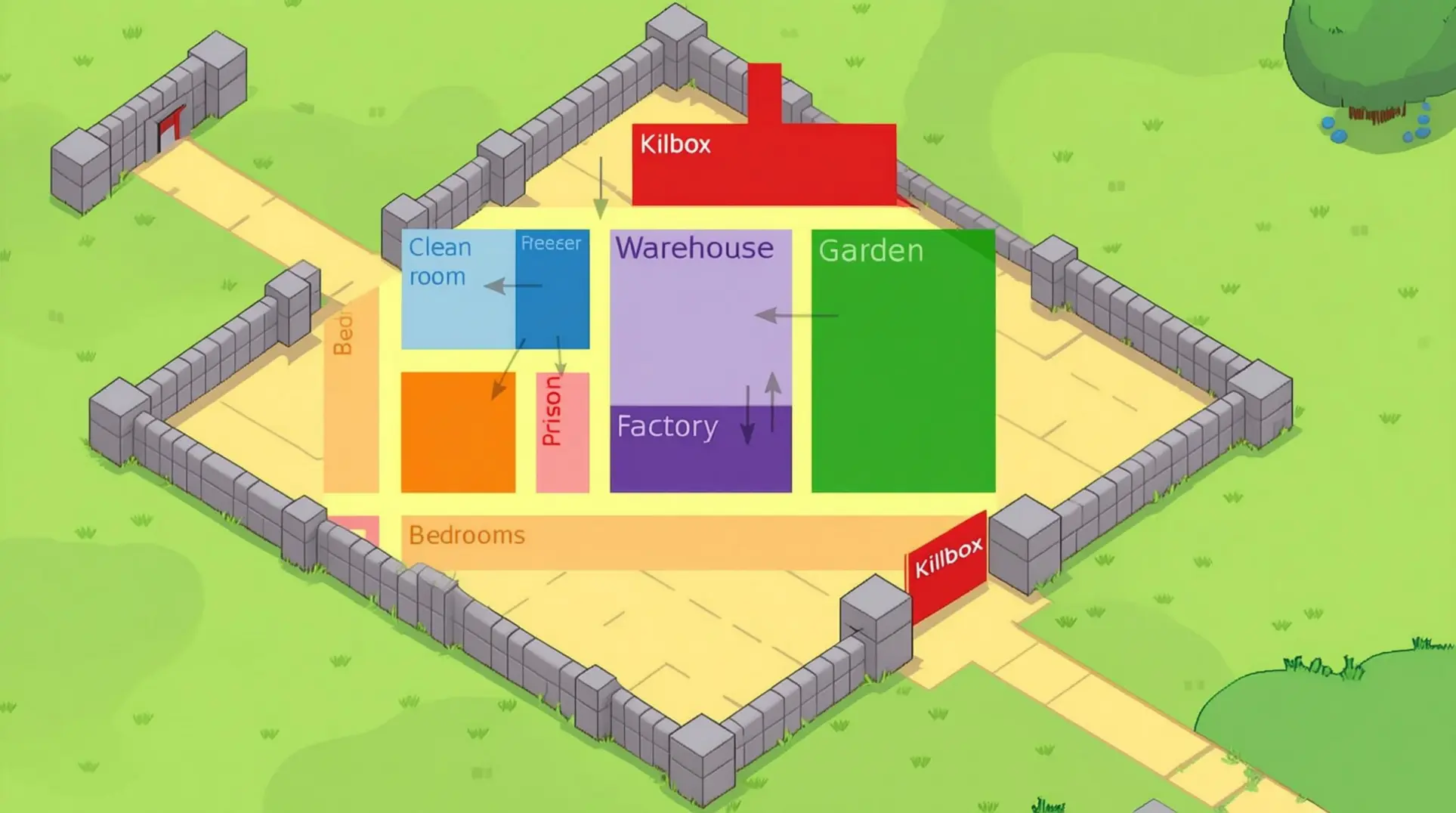
RimWorld Beginner's Guide: Complete Guide to Starting Your First Colony
Learn everything you need to start your first RimWorld colony successfully - from choosing colonists and biomes to building your base, managing food, power, and defending against threats.
AI Tactical Companion
Consult with our specialized tactical engine for RimWorld to master the meta instantly.